Lattics: A New Approach to Knowledge Management
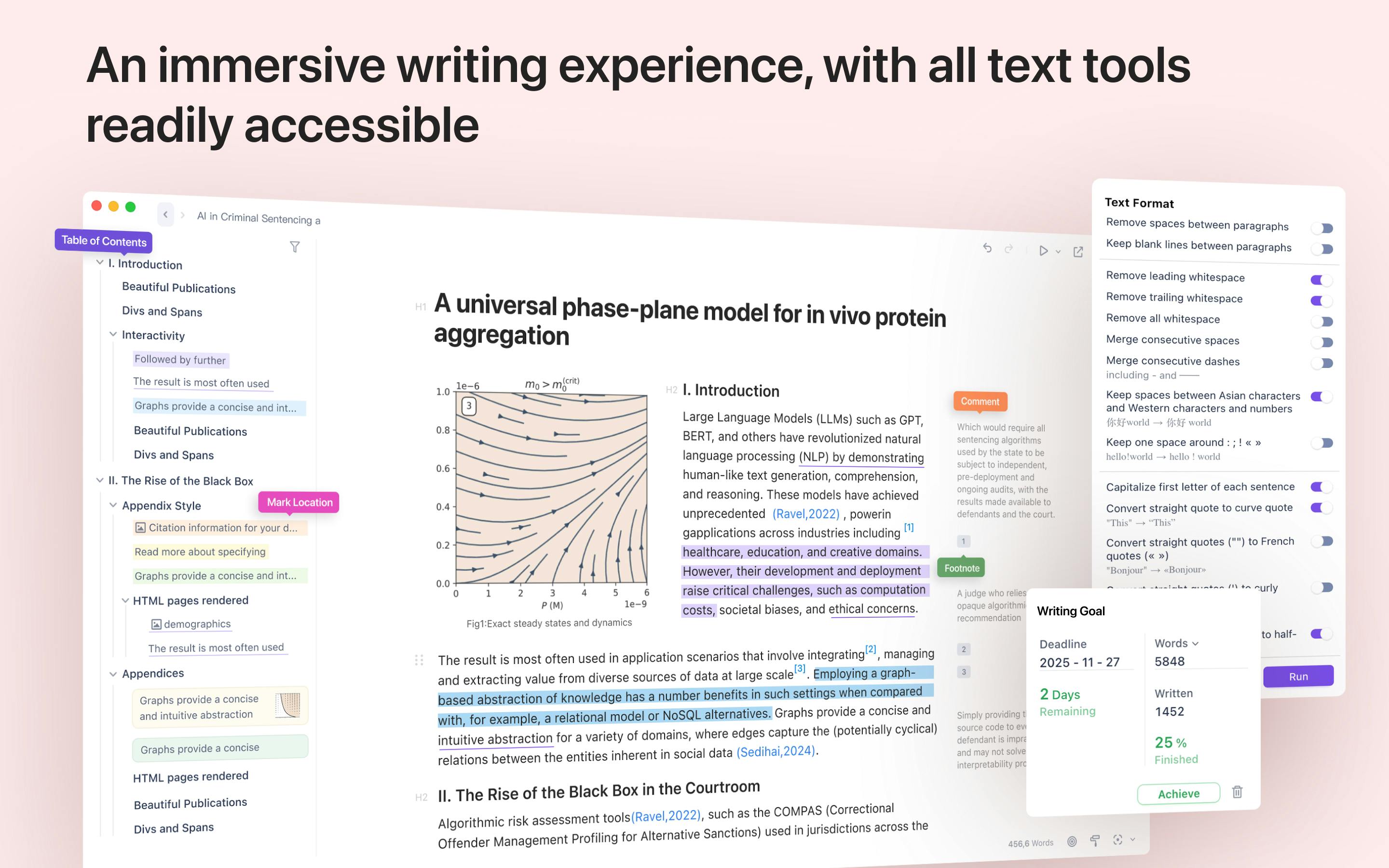
Lattics has emerged with a novel approach to personal knowledge management, positioning itself as a "brain-like knowledge base" that leverages artificial intelligence for both writing and deep research. The platform aims to help users synthesize information, discover connections, and generate insights more effectively than traditional note-taking or knowledge management systems.
At its core, Lattics functions as a dynamic repository for information. Users can input text, links, and other forms of data, which the AI then helps to organize, connect, and analyze. The system is designed to move beyond simple storage, actively assisting in the process of understanding and creating knowledge. This is achieved through a combination of AI-powered writing assistance and sophisticated research capabilities, allowing for a more interactive and productive workflow.
AI-Powered Writing and Research
The AI writing component of Lattics is designed to assist users in articulating their thoughts and findings. Whether drafting articles, reports, or simply summarizing complex topics, the AI can provide suggestions, generate content based on existing notes, and help refine prose. This feature aims to reduce the friction often associated with the writing process, enabling users to focus more on the substance of their work and less on the mechanics of composition.
Complementing the writing tools are Lattics' deep research functionalities. The platform can ingest and process large volumes of information, identifying key themes, extracting relevant data points, and highlighting potential relationships between disparate pieces of information. This capability is crucial for users engaged in in-depth research, academic study, or complex problem-solving, where making sense of vast amounts of data is a significant challenge.
Think of Lattics less like a simple digital filing cabinet and more like an exceptionally well-read and diligent research assistant who never sleeps. It doesn't just store your documents; it actively reads them, cross-references them, and prompts you with connections you might have missed. This active engagement with user-generated and external data is a key differentiator.
Synthesizing Information and Discovering Connections
A primary goal of Lattics is to facilitate the synthesis of information. By creating a interconnected web of notes and research, the platform helps users to see the bigger picture. Instead of siloed notes, Lattics encourages a networked approach, where each piece of information can link to others, forming a complex and navigable knowledge graph. The AI actively helps in identifying these links, suggesting related concepts, and even generating new insights by combining information from various sources.
This interconnectedness is particularly valuable for creative professionals, researchers, and strategists who need to draw upon a wide range of information to develop novel ideas or solutions. The ability to quickly surface relevant connections can spark creativity and accelerate the innovation process. The platform's design suggests a move towards a more fluid and organic way of managing knowledge, mirroring how the human brain makes associations.
Target Audience and Use Cases
Lattics appears to be targeting a sophisticated user base that includes academics, writers, researchers, developers, and entrepreneurs who deal with significant amounts of information and require tools to manage, analyze, and create knowledge from it. For developers, it could serve as a personal codebase documentation manager or a research hub for new technologies. For academics, it offers a powerful way to manage literature reviews, experimental data, and thesis writing.
Content creators might use Lattics to brainstorm ideas, research topics, and draft articles, ensuring a comprehensive and well-supported output. Business strategists could leverage it for market research, competitive analysis, and strategic planning, uncovering trends and opportunities hidden within data. The versatility of an AI-augmented knowledge base means its applications are broad, limited primarily by the user's ability to input and interact with information.
The Future of Personal Knowledge Management?
The launch of Lattics signals a growing trend towards AI-driven tools that augment human cognitive processes. As AI models become more sophisticated, we can expect to see more platforms that go beyond simple automation to actively assist in complex tasks like research, writing, and strategic thinking. Lattics' promise of a "brain-like" knowledge base taps into the desire for tools that can help us manage the ever-increasing deluge of information in a more intuitive and productive manner.
What remains to be seen is how effectively Lattics can scale its AI capabilities to handle an individual's entire knowledge domain, and how it will address potential issues around data privacy and security for users entrusting it with sensitive information. The success of such a platform will hinge on its ability to deliver on its promise of genuine AI-assisted insight generation, rather than just sophisticated organization.