
Late.sh: A Command-Line Clubhouse for Developers
The social networking landscape is expanding beyond graphical interfaces and into the terminal. Late.sh, a new platform, is positioning itself as a "Clubhouse for computer people," aiming to replicate the real-time, audio-driven social experience within the command-line environment. This move signals a growing trend toward integrating social and collaborative tools directly into developers' existing workflows, minimizing context switching and maximizing efficiency.
Unlike traditional social media that requires logging into separate web or mobile applications, Late.sh is designed to be accessed and used entirely through the command line. This approach appeals to developers who spend a significant portion of their day in terminals, managing code, deploying applications, and interacting with infrastructure. By bringing social interaction into this familiar space, Late.sh seeks to foster spontaneous conversations, knowledge sharing, and community building among technical professionals.
The platform's core functionality is built around real-time audio rooms, akin to Clubhouse's original model. Developers can join these rooms to listen to discussions, participate as speakers, or host their own sessions. The command-line interface is intended to be intuitive, allowing users to navigate rooms, manage their presence, and interact with others using simple text commands. This could range from joining a discussion on a new programming language to participating in a live Q&A with industry experts.
Bridging the Gap: Social Interaction in the Terminal
The concept of bringing social networking into the command line is not entirely novel, but Late.sh appears to be one of the more focused attempts to create a dedicated platform for this purpose. Tools like IRC clients, Slack's command-line interface, or even early chat applications demonstrated the viability of text-based communication for community building. However, Late.sh aims to elevate this by incorporating the ephemeral, live-audio aspect that made platforms like Clubhouse popular, but tailored for a technical audience.
The appeal for developers is clear: reduce the friction of context switching. Instead of opening a separate app, checking notifications, and then returning to code, users can potentially engage in social interactions without leaving their primary work environment. This could lead to more organic discussions and quicker dissemination of information within development teams and the broader tech community. Imagine a bug bounty hunter sharing real-time findings in a secure audio room accessible only via a specific command, or a team lead conducting a quick, informal stand-up with their remote developers entirely within their terminal session.
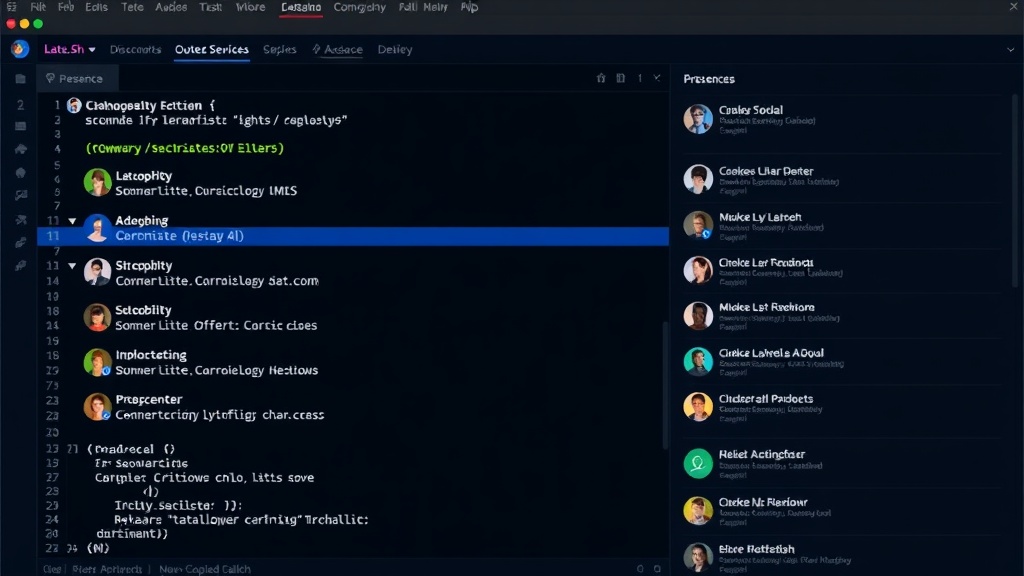
The success of Late.sh will likely depend on its ability to balance the richness of real-time social interaction with the conciseness and efficiency expected of command-line tools. Developers are often wary of tools that add complexity or distraction. Therefore, the user experience must be seamless, allowing for quick entry and exit from conversations, easy discovery of relevant rooms, and straightforward moderation tools for hosts. The platform's design needs to be robust enough to handle multiple concurrent audio streams and user interactions without performance degradation.
The Broader Trend: AI Agents and Terminal-Native Tools
Late.sh's emergence also aligns with a broader trend observed in the tech industry: the increasing development of tools designed for or accessible by AI agents, and a resurgence of interest in terminal-native applications. TechCrunch recently reported on DoorDash's dd-cli, a command-line tool enabling users and AI agents to place food orders directly from the terminal. This signifies a shift towards interacting with services through APIs and structured interfaces, which are more easily consumed by both humans and machines.
For AI agents, the command line offers a predictable and structured environment. Tools that expose their functionality via command-line interfaces or APIs are inherently more accessible to AI. This allows for automation, complex task orchestration, and novel forms of interaction. Late.sh, by existing in the terminal, is naturally positioned to be discoverable and usable by AI agents. An AI assistant could potentially monitor Late.sh for discussions relevant to a developer's project, summarize key takeaways, or even facilitate introductions between users based on ongoing conversations.
This move towards terminal-native and AI-accessible tooling suggests a future where the lines between human and machine interaction blur further, particularly within technical domains. Developers may find themselves collaborating not just with each other, but with AI agents that act as intelligent assistants, information brokers, or even participants in technical discussions. Late.sh, by focusing on real-time social interaction within this environment, could become a crucial node in this evolving ecosystem, fostering both human and AI-driven collaboration.
What's Next for Terminal Socializing?
The implications for the developer community are significant. If Late.sh gains traction, it could redefine how developers network, share knowledge, and build communities. It offers a compelling alternative to existing platforms by integrating directly into the developer's primary workspace. The challenge will be to build a vibrant community and a user experience that justifies its existence beyond a novelty. The success of such platforms hinges on network effects – people join because others are there. For Late.sh, this means attracting a critical mass of users who find value in real-time, terminal-based social interaction.
The surprising detail here is not the concept itself, but the execution focus on real-time audio within a text-based interface. While text-based chat has always been a staple for developers, layering live audio discussions onto it via the command line is an ambitious pivot. It asks users to adopt a new paradigm for social interaction, one that is both immediate and deeply integrated into their professional tools. Whether this becomes the next big thing in developer community building or remains a niche tool depends on how effectively it can foster genuine connection and valuable discourse without overwhelming its users.