Fine-Grained Facial Edits Without Retraining
Traditional methods for personalizing and editing AI-generated images, particularly those involving faces, often fall short. Achieving subtle yet precise modifications to a specific person's likeness without altering their core identity is a significant challenge. Minor changes, like adjusting a smile or eye color, can easily lead to a generation that looks like a different person entirely. This is particularly problematic for applications requiring consistent identity representation across multiple image generations.
A new technique, dubbed Latent-Identity Tuning, directly addresses this limitation. It enables highly precise and consistent facial edits in text-to-image personalization models without requiring any retraining of the underlying large model. Instead of operating on the final image output or fine-tuning the entire diffusion model, Latent-Identity Tuning works by manipulating the internal 'latent' representation of a specific identity within the model's learned space. This approach allows for the generation of diverse images that consistently depict the same edited identity, maintaining coherence across various poses, expressions, and backgrounds.
The innovation centers on exploring the latent space of a pre-trained, frozen encoder that is commonly used for text-to-image personalization tasks. These encoders are responsible for translating textual prompts and identity information into a format the generative model can understand. By targeting this specific stage, Latent-Identity Tuning can make targeted adjustments. Crucially, the core generative model (like Stable Diffusion or similar architectures) remains entirely unchanged, preserving its vast knowledge and capabilities. This 'no retraining' aspect is a significant advantage, drastically reducing computational costs and complexity.
How Latent-Identity Tuning Works
The process begins with an existing text-to-image model that has been adapted for identity personalization. Typically, such models might use a technique like DreamBooth or Textual Inversion to learn a specific identity from a few example images. This process embeds the unique characteristics of a person into a set of learned tokens or embeddings that the model can then use when prompted.
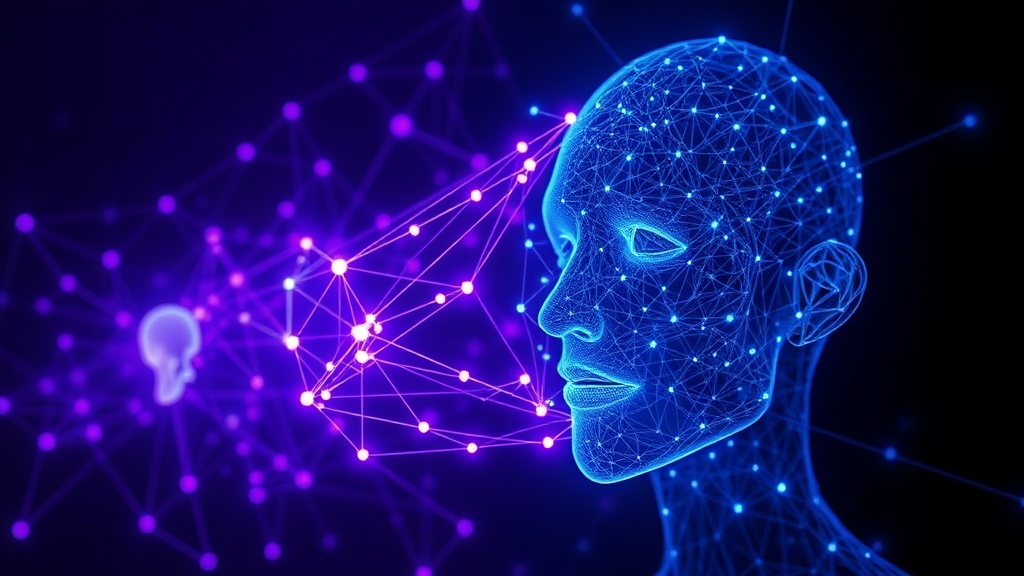
Latent-Identity Tuning takes this a step further. After an identity has been learned and is representable within the model's latent space, the technique identifies the specific latent vector or set of vectors corresponding to that identity. The key insight is that the latent space of these personalization encoders is structured in a way that allows for meaningful edits. For instance, certain directions in this space might correspond to changes in facial features, expressions, or even accessories.
Instead of adjusting the text prompt or retraining the entire system, Latent-Identity Tuning directly modifies these identity-specific latent representations. Imagine the latent space as a detailed map. Standard personalization finds a specific location on that map representing a person. Latent-Identity Tuning then allows you to precisely 'move' that location slightly to represent a modified version of the person—perhaps with a different hairstyle or a subtle smile—while ensuring you stay within the general neighborhood of the original identity. This targeted manipulation ensures that the edits are consistent and that the generated image still strongly resembles the original identity.
The benefits of this approach are manifold. Firstly, it is computationally efficient. Since no large generative model retraining is involved, the process is much faster and requires significantly less hardware. Secondly, it allows for fine-grained control. Developers and users can specify exactly what kind of facial edit they want, and the system is designed to deliver it accurately. Thirdly, it maintains identity consistency. Even with significant edits, the generated faces remain recognizably the same individual, a feat difficult to achieve with simpler prompt engineering or less targeted editing methods.
Implications for AI-Generated Content
The ability to perform precise, identity-preserving facial edits without retraining has profound implications for various fields. For creative professionals, it offers a powerful new tool for generating character concepts, storyboarding, and even final artwork. Imagine a director needing to show a character with a slightly different expression for a specific scene; Latent-Identity Tuning could provide this variation instantly. For designers, it opens up possibilities for personalized avatars, virtual try-ons, and customized marketing materials where a consistent, edited likeness is crucial.
The security and privacy implications are also noteworthy. While the technology enables creative editing, it also highlights the potential for sophisticated identity manipulation. The precision of Latent-Identity Tuning means that generated images could be more convincing, raising concerns about deepfakes and misinformation if misused. However, the same precision can be leveraged for positive applications, such as generating synthetic data for training facial recognition systems that are more robust and less biased, or for creating personalized digital assistants with consistent, user-defined appearances.
The core advantage over existing methods is the balance it strikes. Many personalization techniques focus on capturing an identity but offer limited editing capabilities. Conversely, general image editing tools often struggle to maintain the learned identity's integrity. Latent-Identity Tuning bridges this gap by integrating fine-grained editing directly into the identity personalization workflow at the latent representation level. This makes it a more integrated and effective solution for applications demanding both strong identity preservation and specific, controlled modifications.
The surprising detail here is not the absence of retraining, which is a common goal in AI research for efficiency, but the specific mechanism enabling it: directly probing and manipulating the latent space of the *identity encoder* rather than the generative model itself. This suggests that the semantic structure within these specialized encoders is richer and more accessible for targeted edits than previously assumed, a finding that could influence future research into controllable generative models.
What nobody has fully addressed yet is the scalability of this approach across vastly different identity types and across multiple, simultaneous identity edits. While the current work demonstrates fine-grained control for a single identity, the real-world utility will depend on how well it generalizes to diverse demographics and complex editing scenarios, such as simultaneously altering expression, age, and adding an accessory, all while preserving the core likeness.