Revolutionizing Content Automation with LangGraph
LangGraph is ushering in a new era of AI-powered content automation. It allows developers to construct complex, multi-agent systems that can handle intricate tasks far beyond the capabilities of traditional linear workflows. Instead of a single AI churning out content, LangGraph orchestrates a team of specialized agents, each with a distinct role, to collaboratively produce high-quality, context-aware output. This framework is designed for AI engineers and system architects looking to build intelligent and adaptive content processes that can understand context and make autonomous decisions.
At its core, LangGraph builds upon the LangChain Expression Language (LCEL) and introduces the concept of a stateful graph. This graph allows agents to communicate, share information, and make decisions dynamically. Unlike rigid, predefined pipelines, LangGraph-based systems can adapt their execution path based on intermediate results, leading to more nuanced and effective content generation. The framework’s ability to manage complex agent interactions and state transitions is a significant leap forward for automated content creation.
Key Components of LangGraph Pipelines
The power of LangGraph for content automation lies in its modular design and integration capabilities. Several key components work in concert to create these sophisticated pipelines:
Specialized Agents
LangGraph facilitates the creation of multiple AI agents, each trained or prompted for a specific task. For content pipelines, this could include agents for research, drafting, editing, SEO optimization, fact-checking, and even tone adjustment. By isolating these functions, each agent can perform its task with greater precision and efficiency. This specialization is crucial for tackling complex content requirements that demand diverse skill sets.
Stateful Graph Execution
The stateful graph is the central orchestrator. It defines the nodes (which can be agents, tools, or conditional branches) and the edges (transitions between nodes). The graph maintains a state that is updated as agents execute their tasks. This state can include drafts, research findings, feedback, and performance metrics. The graph’s ability to evolve its execution based on this state allows for adaptive workflows.
Asynchronous Task Management with Celery
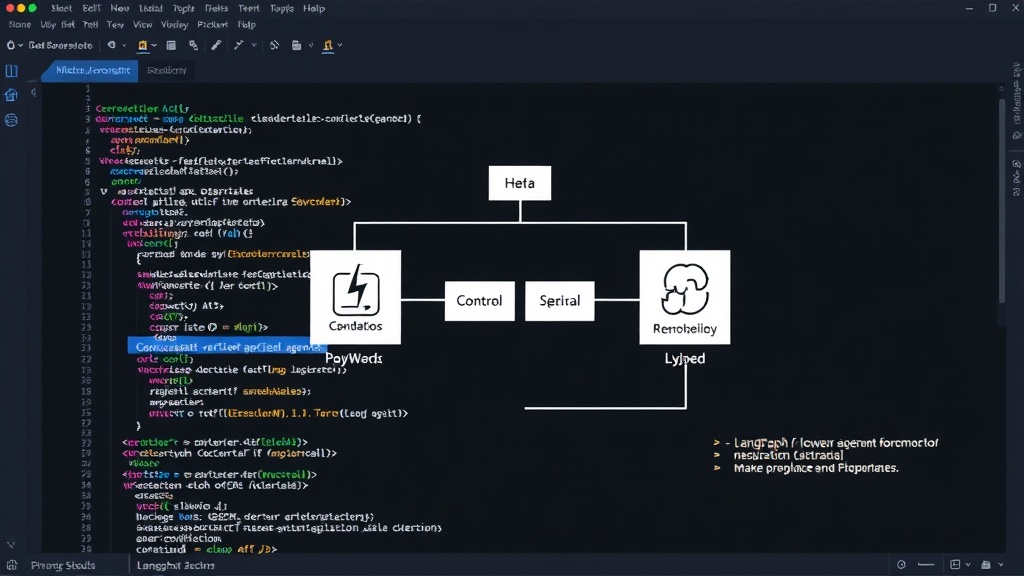
For content pipelines that involve time-consuming operations or require high throughput, LangGraph integrates seamlessly with task queues like Celery. This allows agents to perform their work asynchronously, preventing the main application thread from being blocked and improving overall system responsiveness. Celery handles task distribution, retries, and monitoring, ensuring that even lengthy content generation processes run smoothly in the background.
Efficient State Tracking with Redis
Maintaining and accessing the state of a multi-agent system efficiently is paramount. LangGraph leverages tools like Redis for state tracking. Redis’s in-memory data structure store provides high-speed access to the shared state, enabling agents to quickly retrieve and update information. This fast state management is critical for real-time decision-making and maintaining the integrity of complex workflows.
Advantages Over Traditional Workflows
Traditional content automation often relies on rigid, linear scripts or simple sequential API calls. These methods struggle with tasks requiring judgment, adaptation, or collaboration. LangGraph’s multi-agent approach offers several distinct advantages:
- Dynamic Decision-Making: Agents can make decisions at various points in the pipeline, altering the course of action based on intermediate results. This is unlike static workflows where the path is fixed.
- Complex Interactions: LangGraph supports intricate communication patterns between agents, including feedback loops, parallel processing, and conditional routing, enabling the system to handle sophisticated content requirements.
- Modularity and Scalability: The agent-based architecture makes it easier to add, remove, or update individual components without disrupting the entire system. This modularity promotes scalability and maintainability.
- Contextual Understanding: By passing state and allowing agents to access historical information, LangGraph systems can develop a deeper contextual understanding of the content being produced, leading to more coherent and relevant output.
Building a Multi-Agent Content Pipeline
Constructing a pipeline with LangGraph involves defining the agents, their capabilities, and the graph structure. Developers typically start by outlining the overall content goal and breaking it down into discrete, manageable steps. Each step is then assigned to a specific agent or a sequence of agents.
For instance, a blog post generation pipeline might involve:
- Research Agent: Gathers information on a given topic.
- Outline Agent: Structures the gathered information into a logical outline.
- Drafting Agent: Writes the initial draft based on the outline and research.
- Editing Agent: Reviews the draft for clarity, grammar, and style.
- SEO Agent: Optimizes the content for search engines, suggesting keywords and meta descriptions.
- Final Review Agent: Performs a final check for accuracy and adherence to brand guidelines.
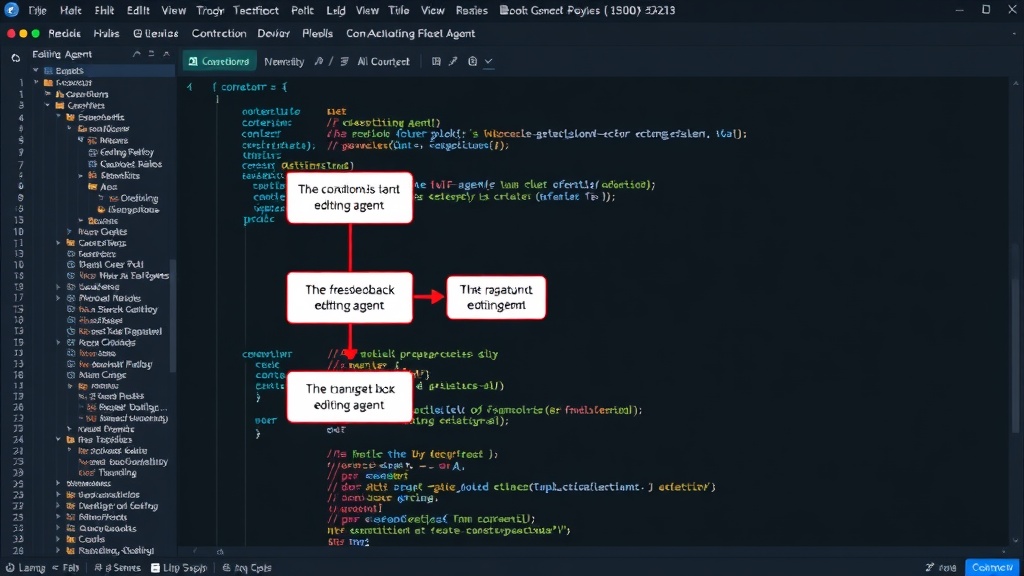
The graph then defines the transitions. For example, the Drafting Agent might transition to the Editing Agent. However, if the Editing Agent identifies significant issues, it might transition back to the Drafting Agent with specific feedback, creating a loop for refinement. This dynamic routing is a hallmark of LangGraph's power.
The Future of Content Automation
LangGraph represents a significant advancement in AI-driven content automation. By enabling developers to build dynamic, multi-agent systems, it unlocks new possibilities for creating sophisticated, context-aware, and autonomously adaptive content pipelines. As AI continues to evolve, frameworks like LangGraph will be instrumental in harnessing its power for complex, real-world applications, moving beyond simple text generation to true intelligent content systems.