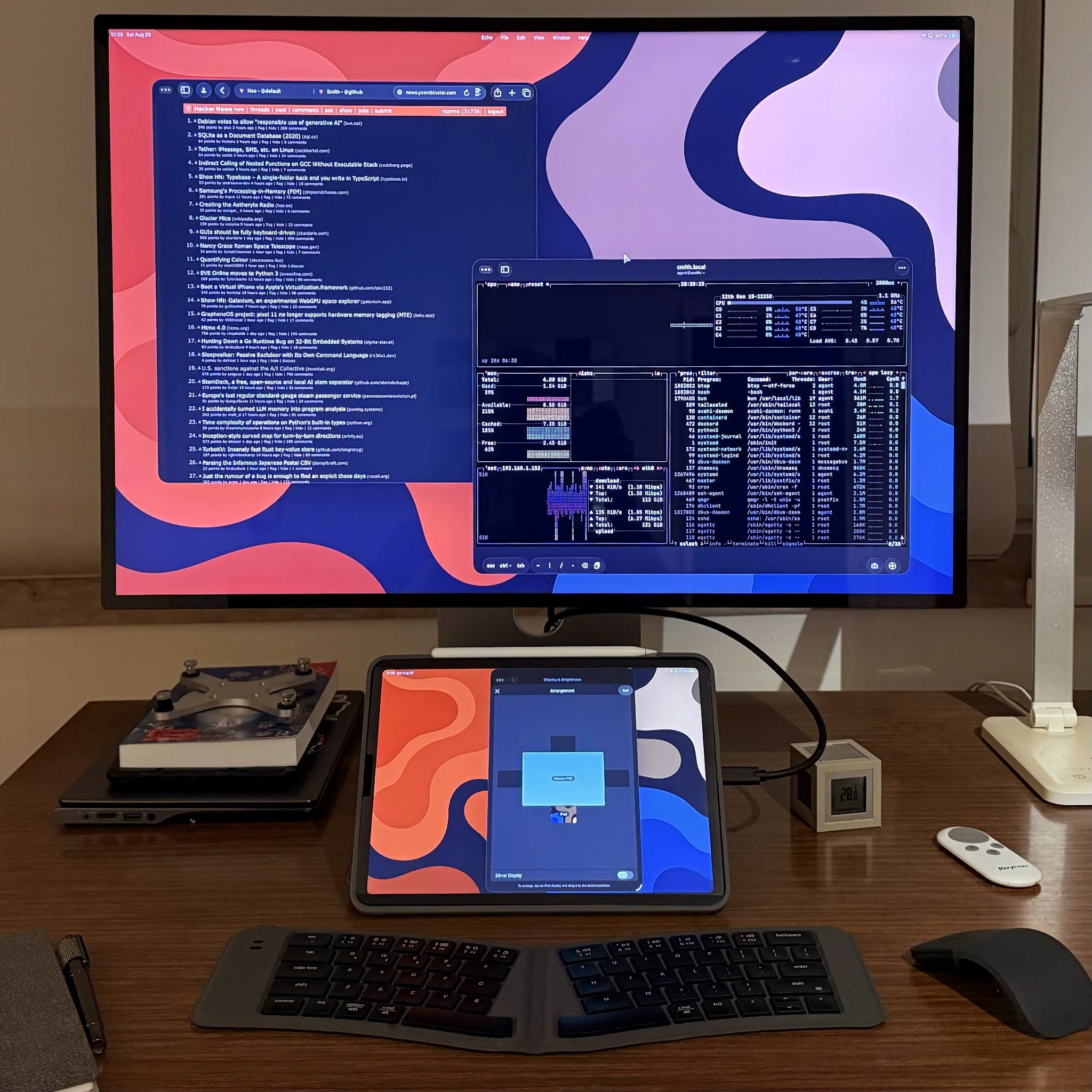
Introducing the Kuycon P20: A New Contender in High-Resolution Displays
The display market is crowded, but every so often, a product emerges that aims to carve out a niche by focusing on specific user needs. The Kuycon P20 is one such device, a 28-inch monitor boasting a substantial 4500x3000 pixel resolution and a less common 3:2 aspect ratio. This combination suggests a focus on productivity and creative workflows where screen real estate and pixel density are paramount.
While specific details about Kuycon as a company and the P20's release date are scarce, the monitor's specifications alone warrant attention. A 4500x3000 resolution on a 28-inch panel translates to an incredibly sharp image. For context, this resolution is 2.5 times that of a standard 4K (3840x2160) display. This means significantly more pixels packed into the same screen area, leading to sharper text, finer details in images, and more usable space for multitasking.
The 3:2 aspect ratio is perhaps the most distinctive feature. Traditional monitors predominantly use 16:9 or 16:10 ratios, optimized for widescreen media consumption and general computing. A 3:2 aspect ratio, however, is closer to that of a full-frame camera sensor and was historically common in professional photography and some older laptop designs. This taller aspect ratio provides more vertical screen space, which is beneficial for tasks like coding, document editing, web browsing, and photo editing, where scrolling is minimized and more content is visible at once.
Target Audience and Potential Use Cases
The Kuycon P20 appears to be engineered for users who demand more from their displays than a standard office or entertainment monitor can offer. Developers, for instance, could benefit immensely from the increased vertical real estate. More lines of code become visible without scrolling, and IDE layouts can be more effectively utilized. Similarly, graphic designers and photographers will appreciate the high pixel density and the potential for accurate color reproduction, although specific color gamut coverage (like sRGB, Adobe RGB, DCI-P3) would need to be confirmed.
For those who work with multiple applications side-by-side, the 4500x3000 resolution offers a canvas that can comfortably accommodate several windows without feeling cramped. Imagine having a code editor, a terminal, and a browser window open simultaneously, all with legible text and sufficient working area. This is a scenario where the P20 could significantly boost efficiency, reducing the need to constantly switch between applications or manage window sizes.
The 3:2 aspect ratio also makes it a compelling option for users who consume content that isn't strictly widescreen. Documents, books, and even some web pages are often designed with a more vertical orientation in mind. The P20's ratio aligns better with these formats, presenting them with fewer black bars or wasted space compared to a 16:9 display.
Technical Considerations and Connectivity
To drive a 4500x3000 resolution at a reasonable refresh rate, a powerful graphics card is essential. Users will need to ensure their system can output this resolution reliably. Connectivity options are not detailed in the initial information, but high-resolution monitors typically require DisplayPort 1.4 or HDMI 2.0/2.1 ports to support the bandwidth needed. The inclusion of USB-C with power delivery would also be a significant advantage, allowing for a single-cable connection for laptops, simplifying desk setups.
The panel technology (IPS, VA, etc.) and features like refresh rate, response time, HDR support, and adaptive sync (FreeSync/G-Sync) are critical for a complete picture of the monitor's capabilities. Given the target audience, an IPS panel would be expected for its color accuracy and wide viewing angles, which are crucial for creative work. A refresh rate of 60Hz or 120Hz would be typical for this class of monitor, balancing performance with the demands of the high resolution.
Market Positioning and Competitive Landscape
The market for high-resolution, productivity-focused monitors is growing, with established brands offering various options. Dell's UltraSharp line, Apple's Pro Display XDR (though at a much higher price point and different size), and offerings from ASUS, LG, and BenQ often cater to professionals with high-resolution panels and specific aspect ratios like 16:10. The Kuycon P20's unique 3:2 aspect ratio at this resolution, if competitively priced, could give it an edge.
However, the lack of readily available information on Kuycon and the P20's specific features makes it difficult to assess its true market potential. Without details on color accuracy, brightness, contrast ratios, build quality, and pricing, it remains an intriguing specification sheet rather than a fully evaluated product. The comments on Hacker News suggest a degree of skepticism and a desire for more concrete information regarding its availability and performance benchmarks.
What remains unaddressed is the specific target market Kuycon is aiming for beyond the general assumptions of 'creators' and 'productivity users.' Is this a niche product for a specific industry, or a broad appeal device? The success of the Kuycon P20 will hinge on its ability to deliver on the promise of its impressive specifications at a price point that justifies its unique features over more mainstream, albeit lower-resolution or different aspect ratio, alternatives.