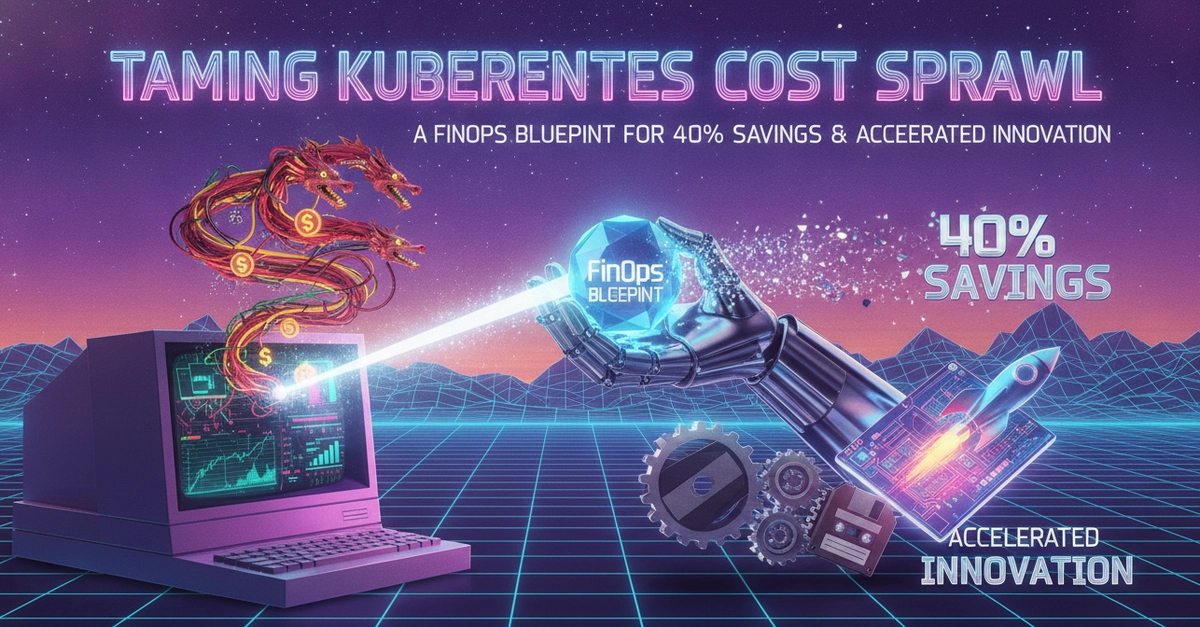
The Kubernetes Cost Conundrum
Kubernetes has become the ubiquitous operating system for modern data centers, enabling unparalleled scalability and agility through container orchestration and microservices. Yet, this power brings a significant challenge: cost management. For CEOs and CTOs, the promise of Kubernetes-driven efficiency is frequently buried under opaque, ever-increasing cloud bills. The dynamic, resource-abstracted nature of Kubernetes deployments makes tracking, attributing, and optimizing spending exceptionally difficult, leading to what is commonly termed Kubernetes Cost Sprawl. This uncontrolled expansion of costs erodes profitability and hinders innovation if not strategically managed.
The core of the problem lies in the inherent complexity and distributed nature of Kubernetes environments. Unlike traditional infrastructure, where costs are often tied to discrete servers or services, Kubernetes abstracts resources, making direct cost allocation a formidable task. Pods, deployments, services, and namespaces are ephemeral and interconnected, making it hard to pinpoint which business function or team is responsible for specific cloud expenditures. This lack of visibility means that inefficiencies can fester unnoticed, leading to significant waste.
Introducing FinOps for Kubernetes
To combat this, organizations must adopt a FinOps (Cloud Financial Operations) approach specifically tailored for Kubernetes. FinOps is a cultural and operational framework that brings financial accountability to the variable spend model of the cloud. It enables engineering, finance, and business teams to make data-driven decisions about cloud usage and cost. For Kubernetes, this means implementing strategies that provide granular visibility, enable accurate cost allocation, and drive continuous optimization.
A successful FinOps strategy for Kubernetes involves several key pillars:
- Visibility: Gaining a clear understanding of where cloud spend is occurring within the Kubernetes ecosystem. This involves breaking down costs by namespace, deployment, team, application, or even business unit.
- Allocation: Accurately attributing costs to the teams or projects responsible for them. This is crucial for fostering accountability and enabling chargeback or showback mechanisms.
- Optimization: Identifying and eliminating waste. This includes rightsizing resources, optimizing storage, leveraging spot instances, and automating shutdown of non-production environments.
- Governance: Establishing policies and guardrails to prevent future cost sprawl. This involves setting budgets, defining acceptable usage patterns, and implementing automated alerts.
Key Strategies for Taming Kubernetes Costs
Implementing FinOps for Kubernetes requires a multi-pronged strategy that addresses both technical and organizational aspects.
1. Granular Cost Allocation with Labels and Annotations
Kubernetes' native labeling and annotation system is fundamental for cost allocation. By consistently applying labels to pods, deployments, and other resources that denote team, application, environment, or cost center, organizations can segment their cloud spend. Tools that integrate with Kubernetes can then leverage these labels to aggregate costs. For instance, a label like team: analytics or application: fraud-detection allows cloud spend to be directly associated with the responsible entity.
The surprising detail here is not the complexity of labeling, but the organizational discipline required to enforce it. Without a clear policy and buy-in from engineering teams, labels become inconsistent or incomplete, rendering them useless for accurate cost attribution. This isn't just a technical problem; it's a cultural one.
2. Rightsizing and Resource Optimization
One of the most significant sources of Kubernetes cost sprawl is overprovisioning. Pods are often allocated more CPU and memory than they actually need, leading to wasted capacity. FinOps practitioners use monitoring tools to analyze actual resource utilization over time. This data informs decisions about rightsizing requests and limits for containers. Tools like the Kubernetes Vertical Pod Autoscaler (VPA) can automate this process, but manual analysis based on historical data is often more effective for initial tuning.
Beyond CPU and memory, storage costs can also escalate rapidly. Implementing policies for storage class usage, identifying and cleaning up orphaned persistent volumes, and optimizing data retention strategies are critical. Similarly, optimizing network egress costs by minimizing cross-zone or cross-region traffic where possible can yield substantial savings.
3. Implementing Budgets and Alerts
Setting clear budgets for teams or applications is a cornerstone of FinOps. Kubernetes itself doesn't natively offer robust budgeting features, so external tools or cloud provider services are necessary. These tools can monitor spending against predefined budgets and trigger alerts when thresholds are approached or exceeded. This proactive alerting mechanism is vital for preventing unexpected bill shocks. For example, an alert could notify a team lead if their namespace's spend is projected to exceed its monthly budget by 15%.
4. Leveraging Spot Instances and Reserved Instances
For workloads that can tolerate interruptions, utilizing spot instances can offer significant cost savings compared to on-demand pricing. FinOps strategies involve identifying suitable workloads and configuring Kubernetes to leverage these cheaper, albeit less reliable, instances. Conversely, for stable, predictable workloads, purchasing Reserved Instances or Savings Plans can lock in substantial discounts over longer commitment periods. The key is to match the instance type and pricing model to the workload's characteristics.
5. Automating Shutdown of Non-Production Environments
A substantial portion of cloud spend often comes from development, staging, and testing environments that are not needed 24/7. Implementing automation to shut down these environments during non-business hours or weekends can lead to dramatic cost reductions. This can be achieved through custom scripts, Kubernetes operators, or third-party tools that integrate with CI/CD pipelines and scheduling mechanisms.
The Role of Executives and Engineering
Successfully taming Kubernetes cost sprawl is not solely an engineering or finance problem; it requires executive sponsorship and a cultural shift. Executives must champion the FinOps initiative, setting clear expectations and providing the necessary resources and tools. They need to understand that optimizing cloud spend is not about cutting corners but about maximizing the value derived from cloud investments.
Engineering teams, often on the front lines of cloud resource consumption, play a pivotal role. They need to be empowered with the knowledge and tools to understand the cost implications of their architectural decisions. This means fostering a culture where cost awareness is as important as performance and reliability. When engineers understand how their choices impact the bottom line, they are more likely to make cost-conscious decisions.
Think of it less like a strict budget cut and more like an efficiency audit for your cloud infrastructure. Just as a factory manager optimizes machine uptime and material usage, a FinOps-savvy engineering lead optimizes compute, storage, and network resources to deliver maximum business value for every dollar spent.
The Unanswered Question: Scaling FinOps Culture
While the technical strategies for Kubernetes cost management are becoming clearer, what remains less addressed is how to scale this FinOps culture effectively across large, distributed organizations. How do you ensure that thousands of developers, spread across multiple teams and geographies, consistently adhere to cost-aware practices without stifling agility? The answer likely lies in a combination of automated governance, continuous education, and incentivization, but the precise formula for sustainable, organization-wide adoption is still being written.
By embracing a FinOps blueprint, executives can move beyond the frustration of unpredictable cloud bills and unlock the true potential of their Kubernetes investments. It transforms cloud spend from a liability into a strategic advantage, driving efficiency and enabling innovation.