
The AI Productivity Paradox: Hype Meets Reality
By 2026, the initial fervor around AI coding assistants has cooled. Tools like Cursor and Devin are now commonplace, yet the anticipated leap in developer productivity hasn't materialized linearly. Instead, teams are encountering the 'Productivity Paradox': AI agents require significant human oversight. Developers spend valuable time re-contextualizing prompts, debugging AI-generated code, and meticulously verifying its output. This constant babysitting negates much of the efficiency gains these tools were supposed to provide.
Compounding this issue is a looming financial crisis for many CTOs. As AI providers increasingly shift to consumption-based token pricing, the operational costs of running sophisticated AI agents are spiraling. Long-running AI tasks, such as analyzing massive 10,000-line codebases, attempting complex refactoring with multiple retries, or getting stuck in infinite error loops, are driving cloud API bills to unsustainable levels. This 'Hidden Bottleneck' threatens to undermine the very economic viability of AI-powered development workflows.
Introducing Kotro Proxy Engine
Kotro emerges as a potential solution to this escalating problem. It's an open-source, ultra-lightweight Rust sidecar designed to act as a local AI governance layer and an edge gateway. Kotro intercepts all Language Model (LLM) traffic originating from an Integrated Development Environment (IDE) directly on the developer's localhost. By acting as an intermediary, Kotro can aggressively manage and reduce token consumption, thereby preventing the runaway costs that plague current agentic workflows. Furthermore, by processing traffic locally, it aims to significantly reduce latency, offering a snappier user experience.
The core innovation lies in Kotro's ability to perform intelligent caching and prompt optimization before traffic even reaches the remote LLM APIs. Imagine an AI agent tasked with refactoring a large module. Without Kotro, each iteration might involve sending the entire module's context to the LLM, incurring substantial token costs. Kotro, however, can analyze the request, identify parts of the context that haven't changed, and only send the deltas or relevant snippets. This intelligent filtering is akin to a highly efficient librarian who knows exactly which books to pull from the shelf, rather than sending the entire library catalog with every request.
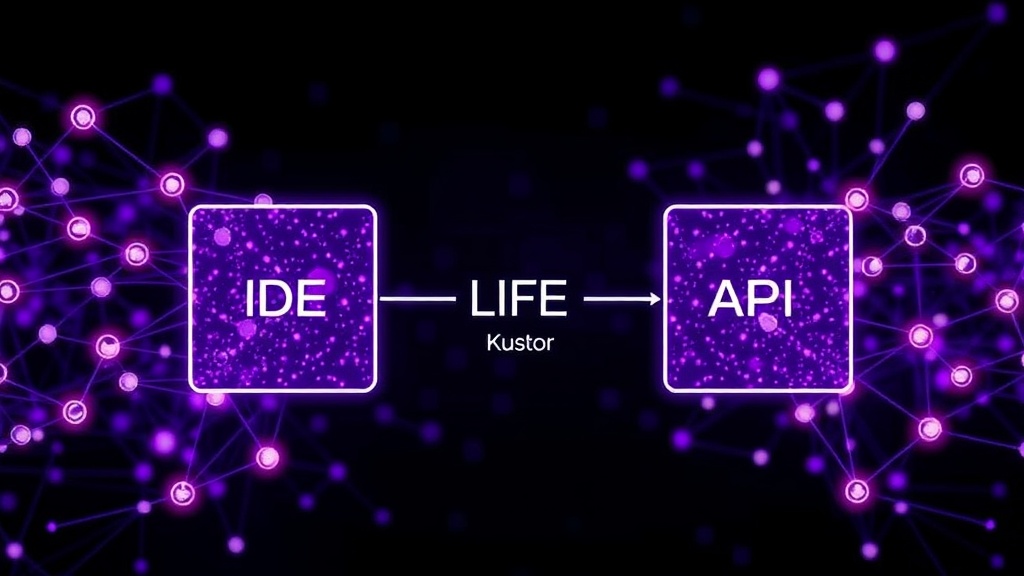
How Kotro Works: Caching, Pruning, and Optimization
Kotro's functionality can be broken down into several key areas:
- Intelligent Caching: Kotro maintains a local cache of previous LLM interactions. If a similar query or context is encountered, it can serve the response from the cache instead of making a redundant API call. This is particularly effective for repetitive tasks or when an AI agent is exploring multiple variations of a solution.
- Context Pruning: It analyzes the context sent to the LLM, removing redundant or irrelevant information. For instance, in a large codebase, Kotro can identify and exclude sections of code that are not directly related to the current task, significantly reducing the token count per request.
- Prompt Optimization: Kotro can rephrase or condense prompts to be more efficient without losing semantic meaning. This might involve using more concise language or structuring the prompt in a way that yields better results with fewer tokens.
- Cost Monitoring and Alerts: The sidecar provides developers and potentially their teams with real-time visibility into token usage. It can be configured to set spending limits or trigger alerts when usage patterns suggest a potential cost overrun, allowing for proactive intervention.
- Latency Reduction: By handling a significant portion of the request processing and response retrieval locally, Kotro minimizes the need for round trips to remote servers, leading to faster feedback loops for developers.
Beyond Cost Savings: Developer Experience and Control
While the primary driver for Kotro appears to be cost reduction, its architecture also offers benefits for the developer experience. By providing a local governance layer, developers gain more granular control over their AI interactions. Instead of a black-box agent consuming resources unpredictably, Kotro offers transparency into what data is being sent to the LLM and how many tokens are being consumed. This can foster greater trust and understanding of AI tools.
The Rust implementation suggests a focus on performance and minimal resource footprint. A lightweight sidecar that runs on localhost is less likely to introduce system performance issues compared to heavier, more intrusive solutions. This makes it suitable for a wide range of developer machines, from high-end workstations to more modest laptops.
The open-source nature of Kotro is also a significant factor. It allows for community contributions, security audits, and customization. Developers can inspect the code, understand its behavior, and even adapt it to specific team needs or preferred LLM providers. This contrasts with proprietary solutions where the inner workings remain opaque.
The Future of Agentic AI Workflows
Kotro addresses a critical, emerging bottleneck in the adoption of advanced AI agents. As these tools become more capable and integrated into daily development, their cost and the need for effective management will only increase. The Productivity Paradox, coupled with the financial implications of token-based pricing, creates a clear market need for solutions like Kotro.
The success of Kotro will likely depend on its ability to seamlessly integrate with a wide array of IDEs and LLM providers, its effectiveness in real-world complex coding scenarios, and its ease of adoption for individual developers and teams. If it can deliver on its promise of significant cost reduction without sacrificing utility or developer experience, it could become an indispensable component of the modern AI-assisted development stack.
What remains to be seen is how LLM providers will react. Will they adapt their pricing models, or will tools like Kotro become essential for making their services economically feasible for widespread enterprise adoption?