Introducing Kobbe: Privacy-First Web Analytics
In an era where user privacy is paramount and regulations like GDPR and CCPA are standard, traditional web analytics tools often fall short. Many rely on intrusive tracking methods that collect vast amounts of personal data, raising ethical and legal concerns. Kobbe emerges as a direct response to this challenge, positioning itself as a privacy-friendly alternative for website owners who need to understand their audience and business performance without compromising user trust.
Kobbe's core proposition is simple yet powerful: deliver essential web analytics data, including traffic patterns and revenue figures, while adhering to strict privacy principles. This means no cookies, no personal data collection, and a commitment to anonymization where possible. For businesses, this approach not only aligns with evolving privacy expectations but also simplifies compliance with data protection laws.
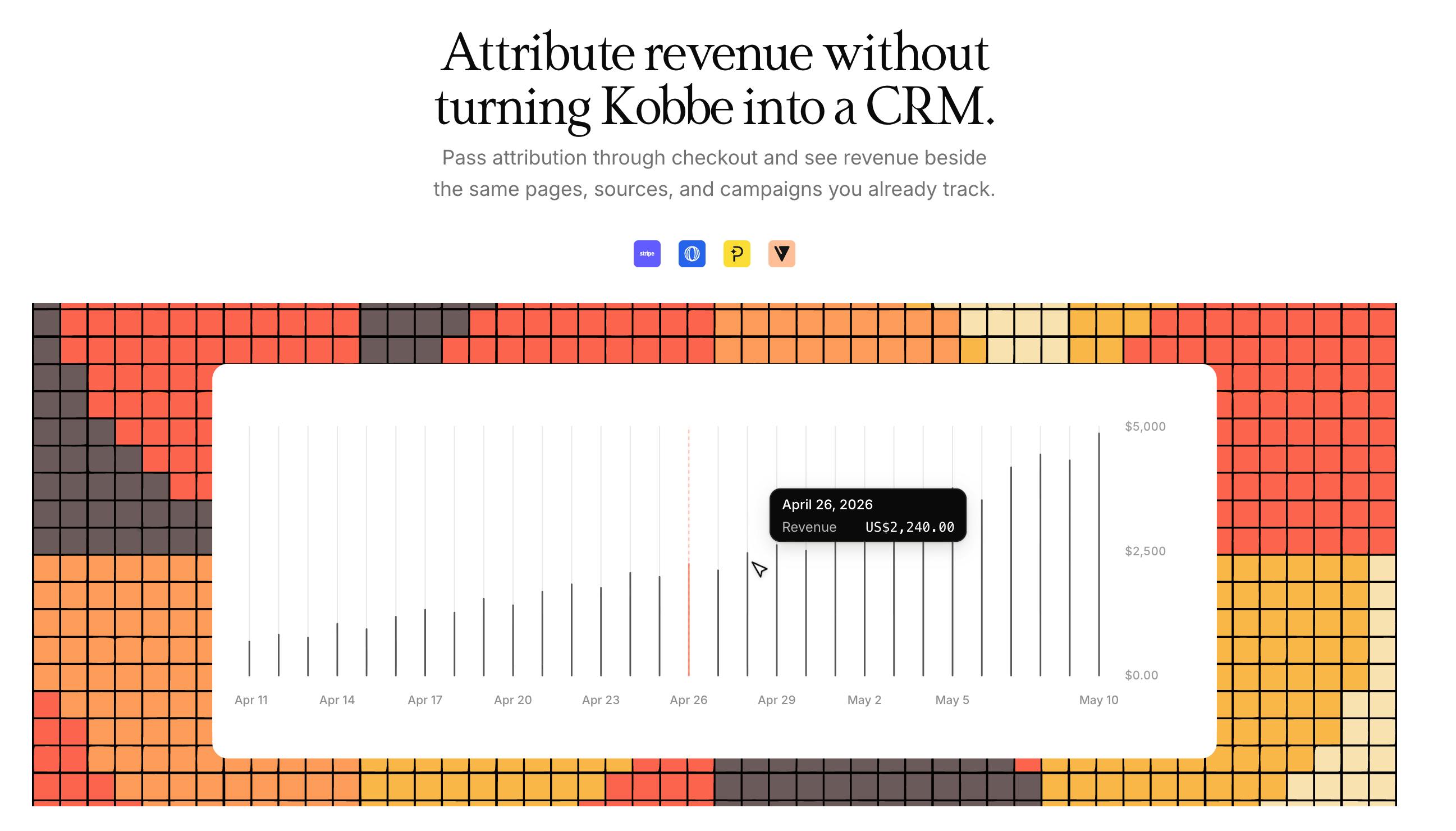
The platform aims to provide a comprehensive view of website performance, enabling users to track key metrics such as unique visitors, page views, bounce rates, and referral sources. Crucially, it differentiates itself by integrating revenue tracking directly into its analytics dashboard. This allows businesses, particularly e-commerce sites, to connect their marketing efforts and traffic sources directly to their financial outcomes, offering a holistic understanding of their online presence.
Key Features and Benefits
Kobbe's feature set is designed to be both robust and straightforward, focusing on actionable insights rather than overwhelming users with raw data. The platform emphasizes:
- Privacy by Design: Kobbe operates without cookies or any form of persistent user identification. This ensures that visitor data is collected anonymously, safeguarding user privacy by default. The architecture is built to minimize data collection, adhering to the principles of data minimization.
- Traffic Analytics: Users gain access to standard yet crucial traffic metrics. This includes understanding where visitors come from (referral sources, direct, search engines), what pages they view, how long they stay, and their engagement levels (e.g., bounce rate). This data helps in optimizing content and user experience.
- Revenue Tracking: A standout feature is the integrated revenue analytics. Kobbe allows businesses to connect their sales data to website traffic, enabling them to see which channels and campaigns are driving actual sales. This provides a clear return on investment (ROI) for marketing activities and helps in allocating budgets more effectively.
- Anonymized Data: Unlike many competitors, Kobbe does not build individual user profiles. All collected data is aggregated and anonymized, meaning it cannot be traced back to a specific person. This is a significant advantage for companies concerned about data ethics and regulatory compliance.
- Simplified Interface: The platform is built with user-friendliness in mind. The dashboard is intended to be intuitive, making it easy for business owners, marketers, and developers to access and interpret the data they need without requiring specialized analytical skills.
Think of Kobbe less like a digital private investigator tracking every move a user makes online, and more like a highly observant but discreet librarian who notes how many people browse certain sections of the library and which books are most frequently borrowed, without ever asking for anyone's name.
The Market Landscape and Kobbe's Position
The web analytics market is dominated by giants like Google Analytics, which, despite its ubiquity, faces increasing scrutiny over its data collection practices. Other players like Matomo, Plausible, and Fathom Analytics also offer privacy-focused alternatives, but Kobbe aims to carve out its niche by specifically emphasizing the integration of revenue tracking alongside its privacy guarantees. This combination is particularly appealing to e-commerce businesses that need to directly link marketing spend to sales conversions.
What nobody has fully addressed yet is the long-term impact of a privacy-first analytics approach on the depth of insights available for highly sophisticated A/B testing or personalized user journeys. While Kobbe excels at aggregate performance, the granular, individual-level data often used for deep personalization is intentionally omitted. This presents a trade-off that businesses must evaluate based on their strategic priorities.
Kobbe's approach signifies a broader shift in the tech industry towards more ethical data handling. As users become more aware of their digital footprint and regulations tighten, tools that offer transparency and respect for privacy are poised for significant growth. Kobbe's launch on Product Hunt suggests a direct engagement with a community that values innovation and user-centric products.
Who Should Consider Kobbe?
Kobbe is an ideal solution for:
- Small to Medium-Sized Businesses (SMBs): Especially those with an online store or service that want to understand traffic sources and sales performance without complex setups or privacy worries.
- Content Creators and Bloggers: Who need to track readership, engagement, and referral traffic to refine their content strategy.
- Startups: Looking for a cost-effective and privacy-compliant analytics solution as they scale.
- Companies Prioritizing User Trust: Businesses that want to demonstrate a strong commitment to data privacy to their customers.
- Developers: Seeking an easy-to-integrate analytics solution that doesn't require extensive JavaScript or complex configurations.
By focusing on privacy and integrating revenue metrics, Kobbe offers a compelling value proposition for a growing segment of the market that is no longer willing to trade user data for insights. The challenge ahead will be to continuously innovate while maintaining its core privacy promise.