Kiro IDE: AI-Powered Development Environment
The developer's quest for enhanced productivity has led to a surge in AI tools. Among these, Kiro IDE and Kiro Crew emerge as distinct offerings, both aiming to improve the daily work of tech professionals. While both leverage AI agents, their fundamental approaches and applications differ significantly. Understanding these differences is key to integrating them effectively into a developer's toolkit.
Kiro IDE positions itself as an integrated development environment (IDE) where AI is a core component of the coding process. It's designed to assist developers directly within their coding environment, offering help with tasks such as code creation, debugging, and optimization. The core premise is to bring AI assistance directly to the fingertips of the developer, making it an extension of their existing workflow rather than a separate tool.
The author, a professional working with Linux, networking, monitoring (Zabbix), Python, and automation, found Kiro IDE particularly useful for automating repetitive coding tasks and generating boilerplate code. The ability to quickly scaffold new projects or implement standard functionalities using AI prompts within the IDE streamlines the initial development phases. This is akin to having a highly knowledgeable pair programmer available 24/7, capable of understanding context and suggesting relevant code snippets or even entire functions.
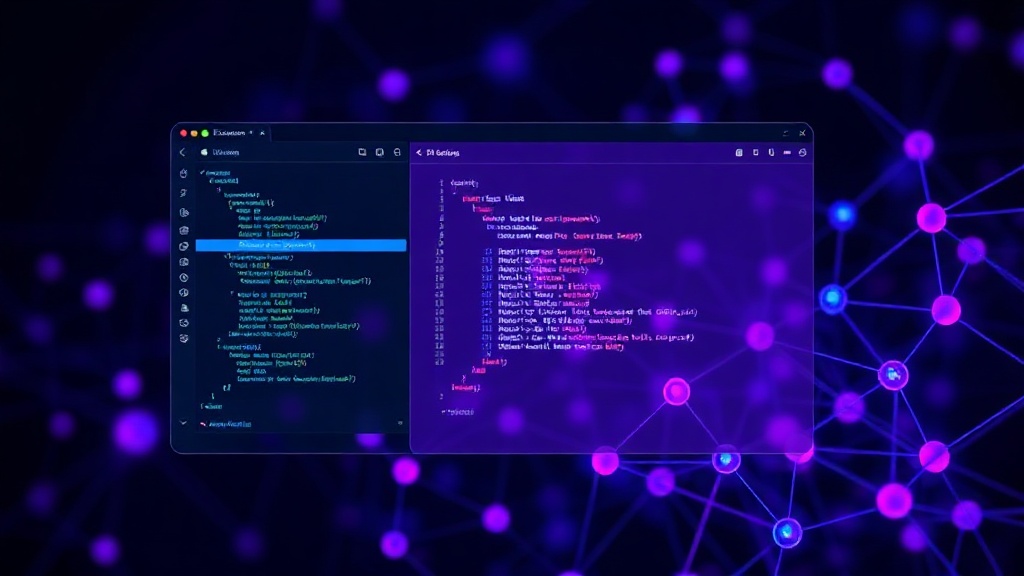
Kiro IDE's strength lies in its contextual awareness. By integrating with the IDE, it can analyze the current project structure, dependencies, and coding patterns to provide more accurate and relevant suggestions. This is crucial for maintaining code quality and consistency, especially in larger projects. The AI agent doesn't just spit out code; it aims to integrate it seamlessly into the existing codebase, respecting established conventions and best practices.
Kiro Crew: AI Agents for Broader Workflow Augmentation
Kiro Crew, on the other hand, takes a different approach. Instead of embedding AI directly into the code editor, Kiro Crew focuses on deploying AI agents as independent workers that can handle a wider array of tasks related to the development lifecycle. These agents are designed to operate more autonomously, tackling challenges that extend beyond direct code writing.
For the author, Kiro Crew proved invaluable for tasks such as research, documentation, and even system administration. Imagine an AI agent that can scour the web for the latest information on a specific technology, summarize complex research papers, or even draft initial versions of technical documentation. This frees up the developer to focus on higher-level problem-solving and strategic thinking.
One of the key distinctions is the nature of the tasks. While Kiro IDE assists with the 'how' of coding, Kiro Crew helps with the 'what' and 'why' surrounding the code. For instance, an AI agent within Kiro Crew could be tasked with monitoring system performance, analyzing logs for anomalies, or researching optimal configurations for a deployment. This is less like a pair programmer and more like a dedicated research assistant or a system administrator's proactive aide.
The author highlights using Kiro Crew for automating the creation of complex configurations, generating reports from monitoring data, and assisting with infrastructure as code (IaC) tasks. This capability transforms how developers interact with their development and deployment environments, moving from reactive problem-solving to proactive optimization and automation.
Synergy and Application Scenarios
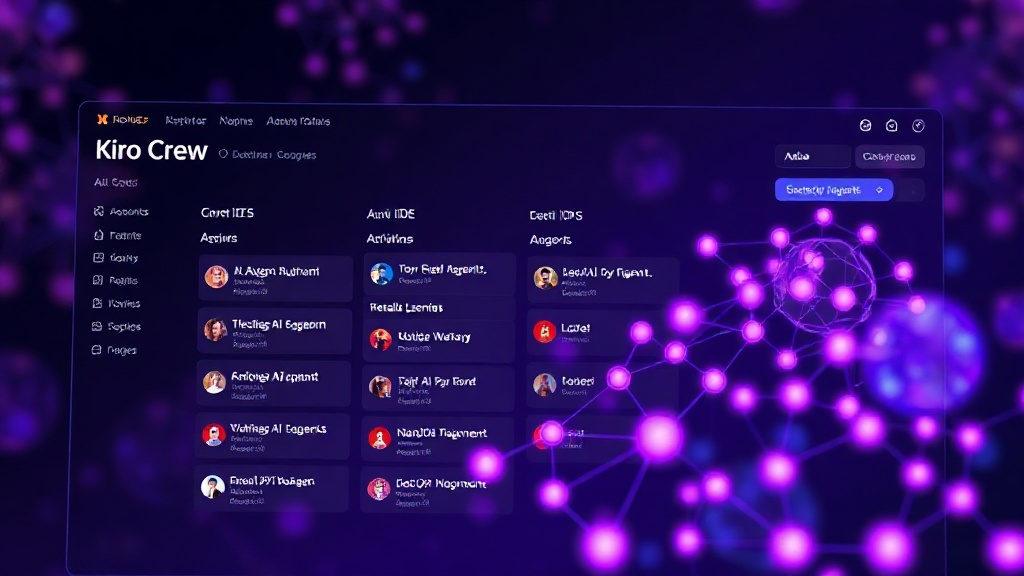
The true power emerges when Kiro IDE and Kiro Crew are used in tandem. Kiro IDE acts as the on-demand coding assistant, accelerating the implementation of features and fixes. Simultaneously, Kiro Crew can handle the surrounding tasks: researching libraries, documenting the new code, setting up monitoring for the feature, or even automating the deployment pipeline. This creates a comprehensive AI-augmented development workflow.
Consider a scenario where a developer needs to implement a new API endpoint. Using Kiro IDE, they can quickly generate the basic code structure, input validation, and response handling. Then, they might task a Kiro Crew agent with researching the best practices for securing such an endpoint, drafting the accompanying API documentation, and configuring alerts in Zabbix if the endpoint experiences high latency or error rates. This layered approach ensures that the code is not only written efficiently but also well-documented, secure, and operationally sound.
The author's experience with Linux, Python, and automation shines through here. For instance, a Kiro Crew agent could be tasked with generating complex shell scripts for system management or automating the deployment of Python applications using tools like Docker and Ansible, while Kiro IDE assists in writing the Python application code itself.
The Future of AI in Development Workflows
The distinction between Kiro IDE and Kiro Crew highlights a broader trend: AI is evolving from a simple code-completion tool to a multifaceted collaborator. This evolution is not just about faster coding; it's about fundamentally rethinking the development process. AI agents can now augment nearly every stage of the software development lifecycle, from initial ideation and research to deployment, monitoring, and maintenance.
What remains to be seen is how these tools will evolve to handle more abstract and creative aspects of development. Can AI agents assist in architectural design or contribute meaningfully to the conceptualization of new product features? The current capabilities of tools like Kiro IDE and Kiro Crew suggest a path towards deeper integration, where AI becomes an indispensable partner in innovation, not just an execution engine. The ability of these agents to learn from context and adapt to specific project needs will be crucial in unlocking this potential. For developers, this means a future where leveraging AI effectively is as critical as mastering a programming language.