Understanding Kiro Crew: Beyond Individual Tools
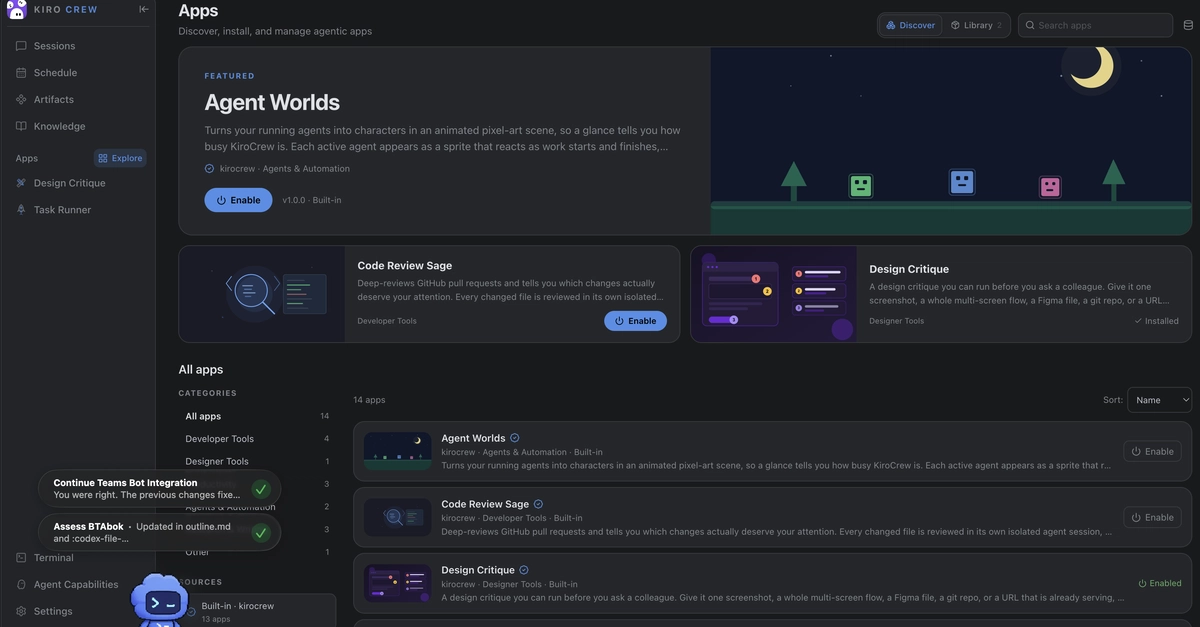
AWS and the Kiro team launched Kiro Crew on August 4, 2026. While the AI coding agent space is crowded, Kiro Crew positions itself as more than just another tool. It aims to be a comprehensive workspace for cloud solution architects, software developers, and DevOps professionals, integrating capabilities previously spread across disparate tools like Kiro IDE, Kiro CLI, and Kiro Web.
The core idea behind Kiro Crew is to provide a unified environment where AI agents can collaborate and execute complex tasks related to cloud infrastructure management, application development, and operational workflows. Think of it less as a single AI assistant and more as a project manager orchestrating a team of specialized AI agents, all within a secure and scalable AWS environment. This approach addresses the growing complexity of cloud-native development and the need for intelligent automation.
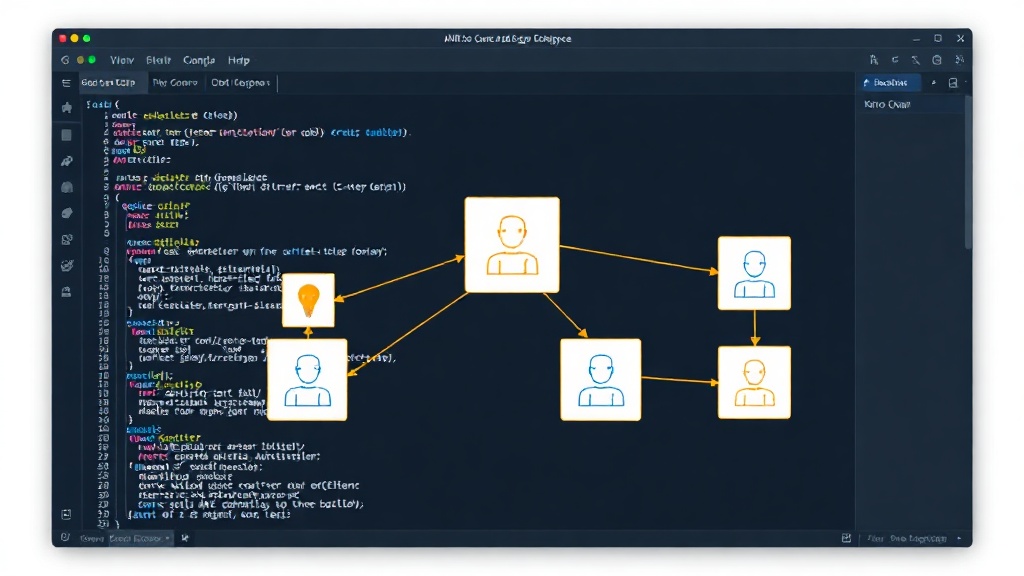
Kiro Crew is built on the concept of autonomous agents that can understand, plan, and execute tasks. These agents can be customized and configured to handle specific responsibilities, from provisioning cloud resources to debugging deployed applications. The workspace provides the necessary infrastructure for these agents to communicate, share context, and collectively achieve larger goals, moving beyond the limitations of single-purpose AI coding assistants.
Key Components and Capabilities
Kiro Crew integrates several key components to deliver its workspace functionality:
- Agent Orchestration: At its heart, Kiro Crew provides a robust framework for managing multiple AI agents. This includes defining agent roles, setting up communication channels, and managing their execution lifecycle.
- Task Decomposition and Planning: The system is designed to break down complex user requests into smaller, manageable tasks that individual agents can handle. This involves intelligent planning to ensure tasks are executed in the correct order and with the necessary dependencies.
- Cloud Integration: Deep integration with AWS services is a cornerstone. Kiro Crew can interact with services like EC2, S3, Lambda, and CloudFormation to provision, configure, and manage cloud infrastructure directly. This allows for end-to-end automation of cloud-based workflows.
- Contextual Awareness: Agents within Kiro Crew maintain context throughout a project. This means they can recall previous interactions, understand the current state of the infrastructure, and adapt their actions based on evolving requirements or issues.
- Extensibility: The open-source nature of Kiro Crew encourages community contributions. Developers can create custom agents, integrate third-party tools, and extend the platform's capabilities to suit specific needs.
Unlike standalone IDEs or CLIs that focus on specific aspects of development or deployment, Kiro Crew aims to be a holistic platform. For instance, a developer might use Kiro IDE for writing code, Kiro CLI for scripting specific commands, and Kiro Web for monitoring. Kiro Crew aims to bring these functions under a single intelligent umbrella, allowing agents to seamlessly transition between coding, deployment, and operational tasks.
Implications for Cloud and DevOps Teams
The release of Kiro Crew signals a shift towards more integrated and intelligent automation in cloud environments. For DevOps teams, this means the potential for significantly reduced manual effort in managing complex cloud infrastructures. Tasks that previously required intricate scripting or manual intervention can now be delegated to AI agents orchestrated by Kiro Crew.
Cloud Solution Architects will find Kiro Crew a powerful tool for designing, prototyping, and deploying cloud architectures. The ability to define infrastructure as code and have AI agents manage its lifecycle offers a new paradigm for cloud strategy. This could accelerate the adoption of cloud-native practices and enable more dynamic, self-optimizing cloud environments.
The open-source aspect is critical. It allows organizations to inspect the codebase, customize agents for their specific security and compliance needs, and contribute to the platform's evolution. This contrasts with proprietary AI solutions where transparency and customizability can be limited. The community-driven approach fosters innovation and ensures the platform remains relevant as cloud technologies advance.
The Future of AI Agents in Software Development
Kiro Crew's emergence highlights a broader trend: the move from single-purpose AI tools to integrated AI agent workspaces. As AI models become more capable, the focus shifts from individual task execution to complex problem-solving through agent collaboration. This is akin to moving from a specialized tool for each job to a fully equipped workshop where intelligent assistants manage the entire project.
The challenge for Kiro Crew will be in demonstrating tangible productivity gains and maintaining security and reliability in dynamic cloud environments. The success of such a platform hinges on its ability to accurately interpret user intent, reliably execute complex multi-step tasks, and seamlessly integrate with the ever-expanding AWS ecosystem. What remains to be seen is how quickly the broader developer and DevOps community will adopt this agent-based approach over established, single-purpose tools.
For now, Kiro Crew represents a significant step towards a future where AI agents are not just coding companions but integral collaborators in the entire software development lifecycle, from initial design to ongoing operations in the cloud.