Building Fillora PDF: Why We Moved Heavy PDF Processing to Client-Side WebAssembly
Every developer who has built document conversion features has likely encountered the same persistent challenges: large file uploads, server memory pressure, processing queues, timeout limits, and user hesitation to upload sensitive documents to third-party servers. These issues plague traditional online PDF tools that rely on remote server processing for every operation.
When building Fillora PDF, we redesigned many of our core PDF manipulation tools to run directly inside the browser instead of relying on server-side processing. This architectural decision was driven by a desire to overcome these common pain points, making PDF editing faster, more secure, and more accessible.
Server Processing vs. Browser-Native Processing
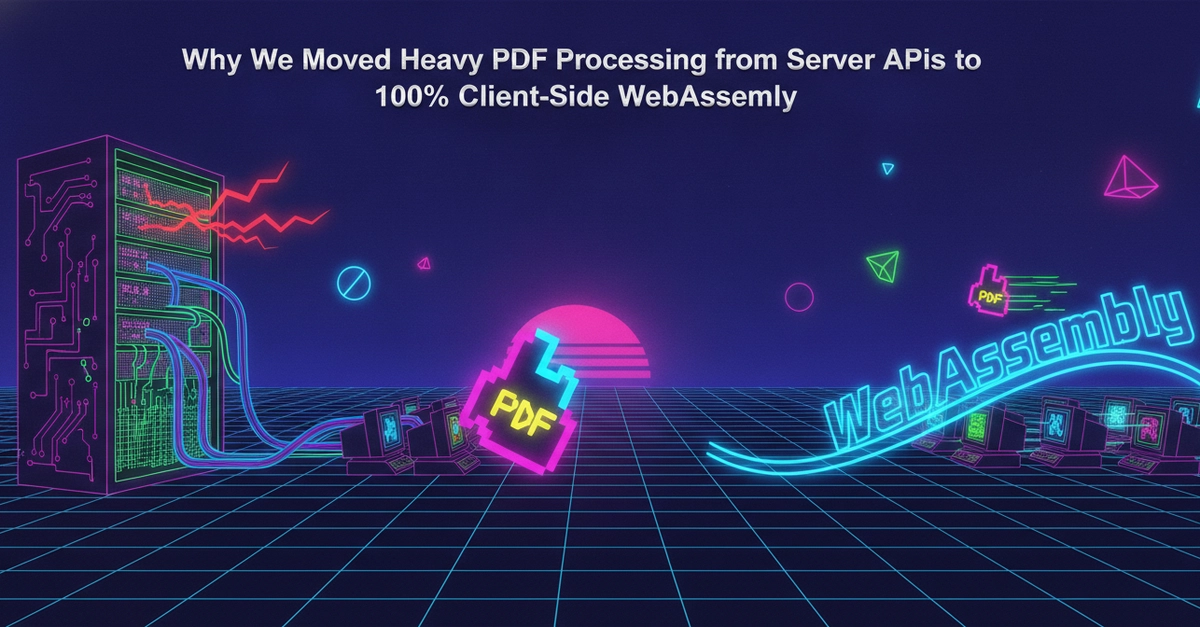
Traditional online PDF tools typically process every operation on a remote server. The workflow looks like this: a user uploads a PDF to the server, the server performs the requested manipulation (e.g., merging, compressing, converting), and then sends the modified PDF back to the user. This model, while straightforward, introduces several inherent limitations.
Large file uploads can strain server bandwidth and storage. Complex operations can consume significant CPU and RAM, leading to processing queues that delay user results. Servers have finite resources, and handling a high volume of concurrent, resource-intensive tasks can quickly become a bottleneck, leading to timeouts and frustrated users. Furthermore, the need to upload sensitive documents to an external server raises privacy concerns for many users, creating a barrier to adoption for business and personal use cases.
Fillora PDF takes a fundamentally different approach. By leveraging WebAssembly (Wasm), we can execute computationally intensive PDF processing directly within the user's browser. This client-side execution model eliminates many of the issues associated with server-side processing.
The Power of WebAssembly for PDF Manipulation
WebAssembly is a binary instruction format for a stack-based virtual machine. It's designed as a portable compilation target for high-level languages like C, C++, and Rust, enabling deployment on the web for client and server applications. Its key advantages for our use case include:
- Performance: Wasm code executes at near-native speeds, making it ideal for computationally heavy tasks like parsing and manipulating complex PDF structures. Unlike JavaScript, which can be subject to garbage collection pauses and JIT compilation variability, Wasm offers more predictable and consistent performance.
- Language Agnosticism: We can leverage existing C/C++ PDF libraries, written by experts over years, and compile them to Wasm. This significantly reduces development time and allows us to benefit from battle-tested codebases.
- Sandboxing: Wasm runs in a secure sandbox within the browser, isolated from the host system's file system and network, except through explicitly defined JavaScript APIs. This provides a secure execution environment.
- Portability: Wasm is designed to run across all modern web browsers, ensuring a consistent experience for users regardless of their device or operating system.
Our migration strategy involved identifying the most resource-intensive parts of our PDF processing pipeline – tasks like rendering pages, converting formats, compressing files, and applying complex edits. These were the candidates for offloading to Wasm.
Architectural Shift: From API Calls to Local Execution
The shift from a server-centric architecture to a client-native one required a significant re-architecture of our application. Instead of making API calls to a backend service for each PDF operation, Fillora PDF now invokes Wasm modules directly from JavaScript running in the browser.
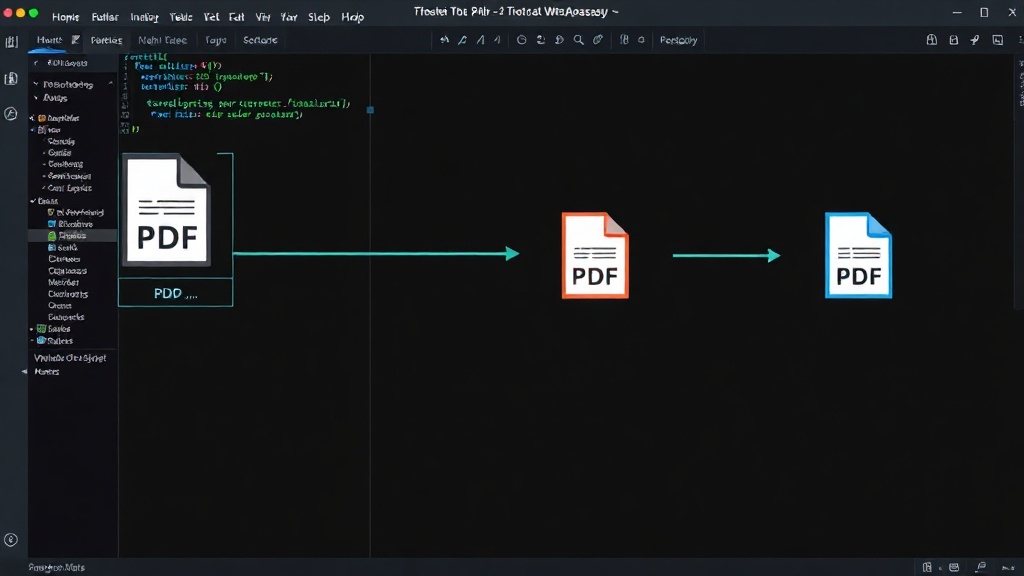
The workflow now looks like this: A user initiates an operation in the Fillora PDF interface. JavaScript intercepts this command and passes the relevant PDF data and parameters to a pre-compiled WebAssembly module. This module, containing the core PDF processing logic, executes directly on the user's machine. Once the operation is complete, the Wasm module returns the processed data back to JavaScript, which then updates the user interface or provides the output file.
This client-side execution has several tangible benefits:
- Reduced Server Load: By moving processing to the client, we dramatically reduce the computational burden on our servers. This translates to lower infrastructure costs and the ability to scale our services more efficiently without proportional increases in server capacity.
- Faster Processing Times: For many operations, especially on powerful user machines, client-side processing can be significantly faster than waiting for a file to upload, be processed on a server, and then downloaded. This is particularly true for smaller to medium-sized files where upload/download latency is a factor.
- Enhanced Privacy and Security: Documents never leave the user's device for processing. This is a critical advantage for users dealing with confidential information, as it eliminates the risk of data breaches on our servers or during transit.
- Offline Capabilities: Once the Wasm modules are downloaded, many PDF operations can be performed even without an active internet connection, offering a more robust user experience.
Trade-offs and Challenges
While the benefits are substantial, the transition to client-side WebAssembly processing isn't without its challenges. One of the primary trade-offs is the initial download size of the Wasm modules. For users with slow internet connections or limited bandwidth, downloading these modules can be a barrier to first-time use. We've mitigated this by optimizing our Wasm builds and employing techniques like code splitting, ensuring that only necessary modules are downloaded when required.
Another consideration is the variability in client hardware. While Wasm offers near-native performance, a user with an older or less powerful device will naturally experience slower processing times compared to someone with a high-end machine. This is an inherent limitation of client-side processing that we manage by setting realistic expectations and providing clear feedback during processing.
Debugging Wasm modules can also be more complex than debugging standard JavaScript. While browser developer tools have improved significantly in their support for Wasm debugging, it still requires a different mindset and approach. We invested in robust tooling and testing frameworks to ensure the reliability of our Wasm components.
Finally, managing the lifecycle and updates of Wasm modules requires careful planning. Ensuring users always have the latest, most secure, and performant versions of the modules deployed is crucial. We've implemented strategies for versioning and transparent updates to address this.
The Future of Browser-Based Document Processing
Moving heavy PDF processing to client-side WebAssembly represents a significant step forward for Fillora PDF. It allows us to deliver a faster, more private, and more reliable document editing experience. This approach not only solves the immediate problems of server load and user privacy but also positions us to take advantage of future advancements in browser technology and WebAssembly capabilities.
We believe this architectural pattern will become increasingly common for applications requiring intensive client-side computation. By embracing WebAssembly, we're not just building a better PDF editor; we're contributing to the evolution of what's possible directly within the web browser.