%22%20%2F%3E%0A%20%20%3C%2Fsvg%3E)
Bridging the STEM Gap for Deaf Students
In Kenya, a significant challenge persists in providing equitable STEM education, particularly for students with hearing impairments. The scarcity of qualified sign language interpreters creates a substantial barrier, leaving deaf students struggling to grasp complex scientific and technical concepts. This educational disparity caught the attention of a young Kenyan engineer who saw not just a social issue, but an engineering problem ripe for a technological solution.
Driven by her passion for mentoring young people in STEM, she encountered deaf students facing immense difficulties in their science and technology classes. The lack of readily available, skilled sign language interpreters meant these students were often left behind, unable to fully participate or comprehend the curriculum. This observation sparked an idea: what if robots could augment or even replace human interpreters in specific educational contexts?
The engineer, whose name is not explicitly mentioned in the provided source but whose vision is clear, recognized that traditional educational models were failing a segment of the student population. Her approach is rooted in the belief that technology, specifically robotics, can be a powerful tool for inclusion and enhanced learning. This isn't about replacing human interaction entirely, but about providing a consistent, accessible, and specialized form of support where human resources are limited.
The Vision: Robots as Educational Aids
The core concept revolves around developing robots capable of performing a crucial function: translating spoken or written STEM terminology into sign language, or vice versa. This would involve sophisticated natural language processing (NLP) to understand technical jargon and advanced robotics to articulate signs clearly and accurately. For students who rely on sign language, this technology could unlock access to lectures, discussions, and learning materials previously out of reach.
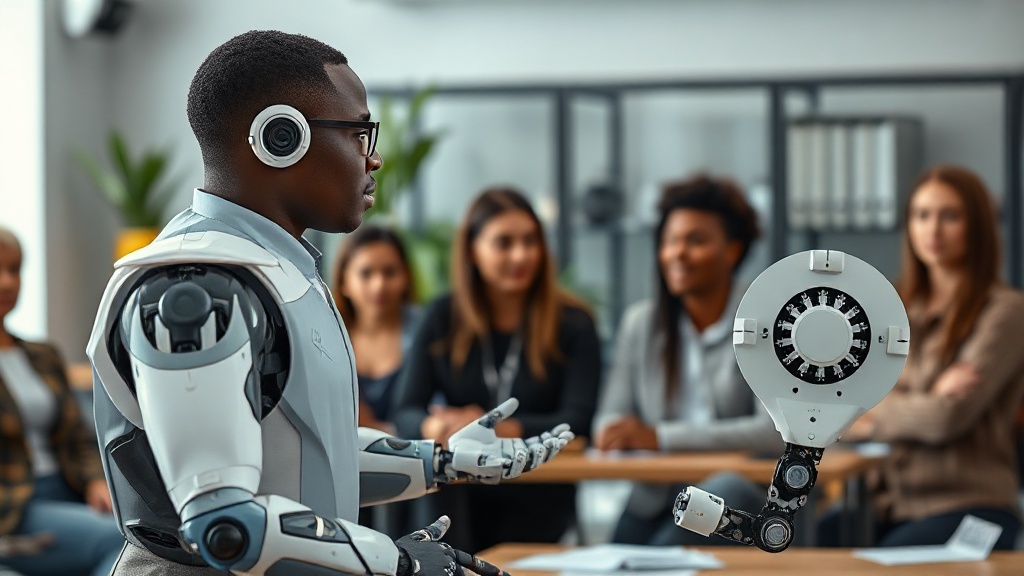
Imagine a classroom where a robot stands at the front, its articulated arms moving with precision to sign complex mathematical equations or intricate biological processes as they are explained. This robot would act as a tireless, always-available interpreter, ensuring that no student misses a critical piece of information due to communication barriers. The engineer's insight is that while human interpreters are invaluable, their availability can be a bottleneck. Robots, once developed, can be deployed more widely and consistently.
This vision extends beyond simple sign language translation. The robots could also be programmed to display visual aids, diagrams, or even 3D models related to the STEM subject matter, further enhancing comprehension for visual learners. The goal is to create a multi-modal learning experience that caters specifically to the needs of deaf students, empowering them to excel in fields that have historically been less accessible.
Engineering Challenges and Future Potential
Developing such a system presents significant engineering challenges. The accuracy of sign language interpretation is paramount. Robots would need to be trained on extensive datasets of sign language, encompassing regional variations and the specific nuances of STEM vocabulary. The mechanical design of the robots would require high dexterity and expressiveness to convey signs effectively. Furthermore, the integration of AI for real-time translation and adaptation to different learning paces adds another layer of complexity.
However, the potential impact is immense. By providing robust technological support, this initiative could democratize STEM education for deaf students in Kenya and potentially across the globe. It shifts the paradigm from adapting existing, often scarce, human resources to creating scalable technological solutions. This approach could also have broader implications for other assistive technologies in education, demonstrating how engineering can be a force for social good.
The engineer's focus on this specific problem highlights a critical aspect of innovation: identifying unmet needs and applying technical expertise to solve them. Her work is a testament to the power of a human-centered approach to technology development, where the ultimate goal is to improve lives and create opportunities. The journey from identifying the problem with deaf students struggling in STEM classes to envisioning robots as educational aids is a powerful narrative of ingenuity and a commitment to inclusive education.
The Road Ahead
While the source does not detail the current stage of development or specific technological implementations, the underlying philosophy is clear. This is an ambitious project that requires interdisciplinary collaboration, drawing on expertise in robotics, artificial intelligence, linguistics, and special education. The success of such an endeavor would not only benefit deaf students but also serve as a model for how technology can be harnessed to address educational inequities worldwide.
The engineer's perspective that this is an