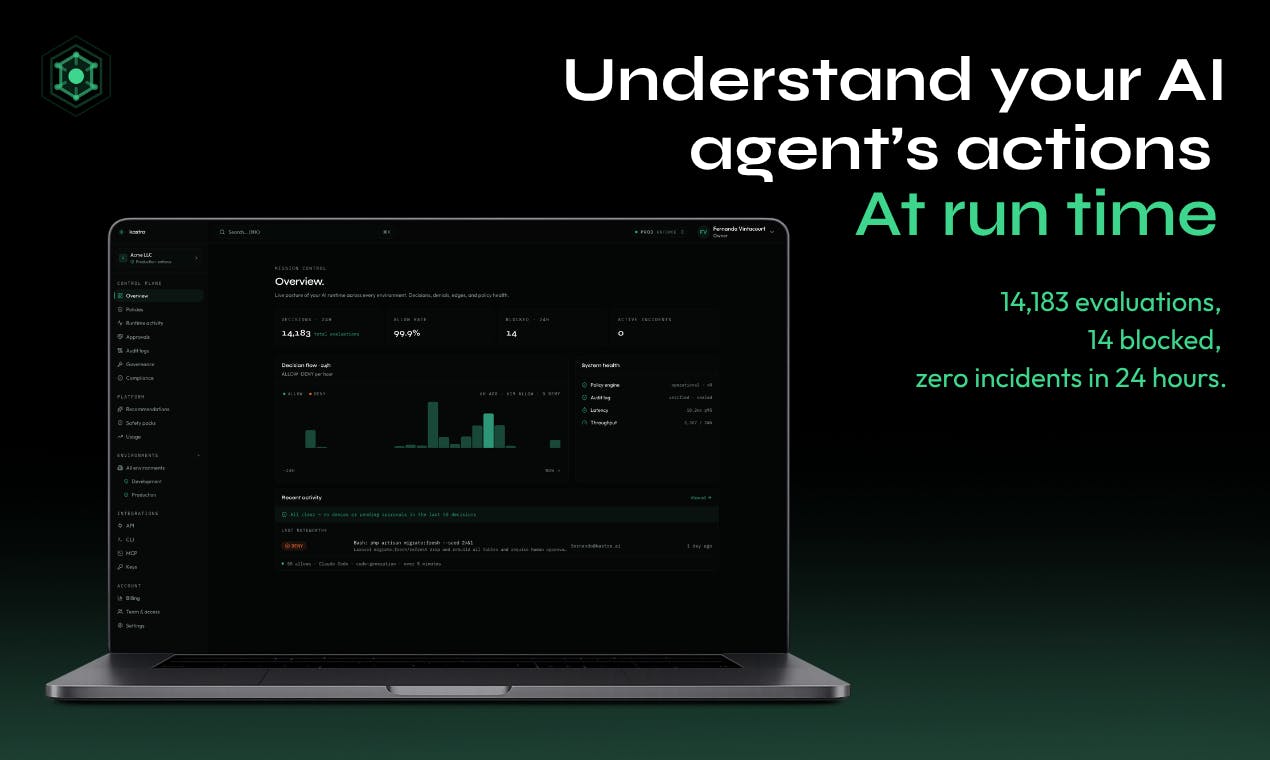
Kastra: Runtime Authorization for AI Models
Kastra has launched a new product aimed at providing runtime authorization for a range of popular AI models. The service is designed to offer control and security over how these powerful models are accessed and utilized, extending its reach to cover Claude, Cursor, Codex, and OpenClaw.
In the rapidly evolving landscape of artificial intelligence, the ability to manage and secure access to AI models has become paramount. As developers and organizations increasingly integrate these tools into their workflows and products, ensuring that only authorized users or systems can interact with them, and that these interactions adhere to predefined policies, is a critical challenge. Kastra positions itself as a solution to this growing need.
Addressing the Need for AI Model Security
The integration of large language models (LLMs) and other AI technologies into business processes and consumer applications brings immense potential, but also new security considerations. Without proper authorization mechanisms, sensitive data could be exposed, unintended actions could be triggered, or models could be misused. Kastra's offering addresses this by providing a layer of control at runtime, meaning that as the AI model is actively processing requests, Kastra can verify and enforce authorization policies.
Think of Kastra less like a static firewall that blocks traffic at the network edge, and more like a vigilant bouncer at the door of a private club, checking IDs and guest lists for every single person trying to enter, even if they've been there before. This real-time verification is crucial for dynamic AI environments where access needs can change rapidly or depend on the context of the request itself.

Supported Models and Integrations
Kastra specifically calls out support for several prominent AI models and platforms. This includes Claude, a family of LLMs developed by Anthropic, known for its safety features and performance. Cursor, an AI-first code editor that integrates AI capabilities directly into the development workflow, is also supported. Codex, OpenAI's AI system that translates natural language into code, and OpenClaw, an open-source framework for building AI applications, round out the initial list of supported technologies.
The breadth of these integrations suggests Kastra aims to be a central point of control for organizations using a diverse set of AI tools. Whether a company is leveraging cutting-edge LLMs for customer service, using AI to accelerate software development, or building novel AI-powered applications, Kastra seeks to provide a unified approach to managing authorization.
The Runtime Authorization Model
Runtime authorization is fundamentally about making decisions about access and permissions as an action is happening, rather than before it starts. For AI models, this could manifest in several ways:
- User Authentication: Verifying the identity of the user making a request to the AI model.
- Role-Based Access Control (RBAC): Ensuring that users only have access to AI functionalities or data that align with their defined roles within an organization.
- Context-Aware Policies: Implementing rules that depend on the specific context of the request. For example, an AI model might be allowed to generate code snippets for internal developers but not for external clients.
- Data Access Control: Limiting which datasets an AI model can access or process based on the user's permissions.
- Action Enforcement: Preventing the AI from performing actions that are outside its authorized scope or that violate compliance policies.
By implementing these checks at runtime, Kastra can provide a more dynamic and responsive security posture compared to traditional static authorization methods. This is particularly important for AI, where the output and behavior can be highly variable and dependent on the input prompt and underlying model state.
Implications for Developers and Organizations
The introduction of Kastra signifies a maturing market for AI security and governance tools. As AI becomes more embedded in critical business functions, the demand for robust security solutions that can keep pace with the dynamic nature of AI interactions will only grow. Developers integrating AI models into their applications can leverage Kastra to delegate the complex task of authorization, allowing them to focus on core functionality.
For organizations, Kastra offers a path to greater compliance and reduced risk. By providing clear visibility and control over AI model usage, companies can better protect intellectual property, prevent data breaches, and ensure that AI is used ethically and responsibly. The ability to monitor and audit AI interactions at a granular level is also a significant benefit for internal governance and external regulatory requirements.
What remains to be seen is how seamlessly Kastra integrates with the underlying infrastructure where these AI models are hosted, whether on-premises, in private clouds, or via public cloud providers. The effectiveness of runtime authorization is heavily dependent on its ability to interject itself into the AI model's execution flow without introducing significant latency or complexity.