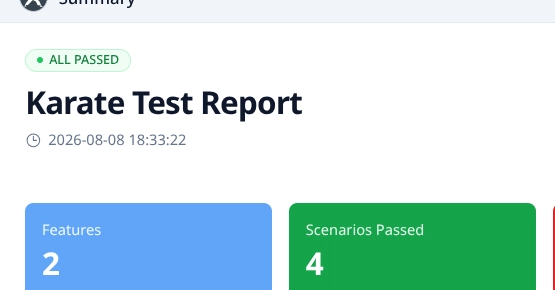
The Challenge of Manual API Validation
In today's complex microservice ecosystems, the traditional approach to API endpoint validation using tools like curl or Postman has become a significant bottleneck. This manual process not only slows down development cycles but also compromises the overall reliability of the system. As architectures evolve, particularly with stacks like Quarkus and Redis, the need for robust, automated integration testing solutions that are both powerful and accessible is paramount. This is where Karate DSL emerges as a critical enabler for modern development practices.
Karate DSL: A Differentiated Approach to API Testing
Karate DSL distinguishes itself in the API testing landscape by leveraging the Behavior-Driven Development (BDD) format, Gherkin. Its core technical advantage lies in its ability to execute HTTP requests directly from .feature files. This eliminates the need for extensive Java boilerplate code often associated with traditional testing frameworks. The simplification not only accelerates test creation but also makes tests more readable and maintainable, even for team members who are not seasoned Java developers.
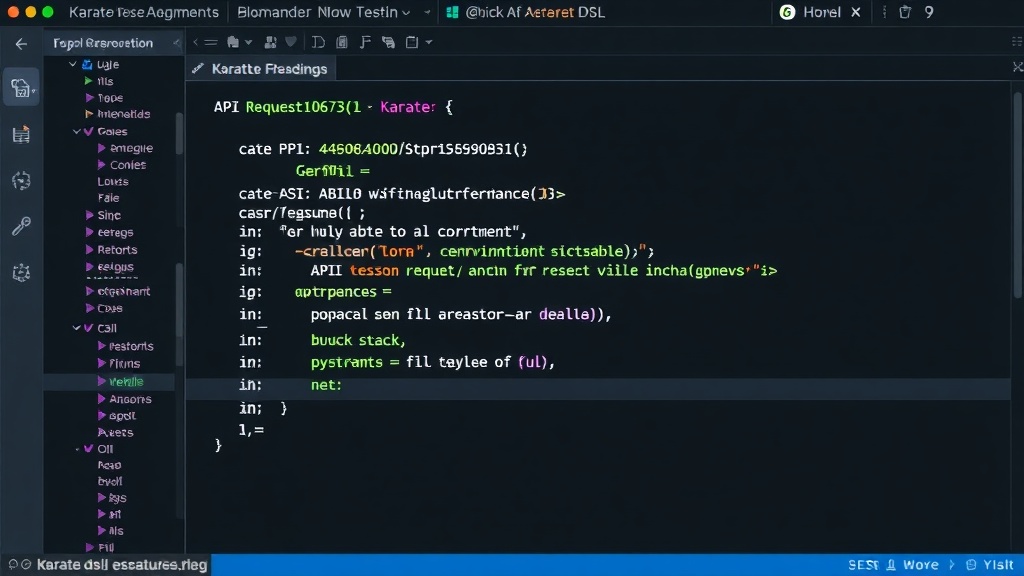
The DSL is designed for ease of use. A typical Karate test file, written in Gherkin syntax, allows developers to define the API endpoint, the HTTP method, request payloads, and expected responses in a clear, structured manner. For instance, a test might define a GET request to a user endpoint, followed by assertions on the status code and specific fields within the JSON response. This declarative style means that complex testing scenarios can be expressed concisely, reducing the cognitive load on the testing team.
Furthermore, Karate's built-in capabilities for handling various aspects of API testing are noteworthy. It natively supports JSON and XML, with robust assertion capabilities for validating response structures and data. This includes powerful features for data-driven testing, allowing tests to be executed with multiple data sets, which is crucial for comprehensive validation. The framework also includes support for authentication mechanisms commonly used in APIs, such as Basic Auth, OAuth, and token-based authentication, simplifying the setup and execution of secure API tests.
Integrating Karate with Quarkus and Redis Architectures
The recent implementation of Karate DSL within an architecture built on Quarkus and Redis exemplifies its practical application in optimizing integration testing. Quarkus, a Kubernetes-native Java stack, is known for its fast startup times and low memory footprint, making it ideal for microservices. Redis, an in-memory data structure store, is often used for caching, message brokering, and session management, further contributing to performance and scalability.
Integrating Karate with such a stack involves setting up Karate as a dependency within the Quarkus project. This can be achieved through Maven or Gradle. Once integrated, developers can write their API tests directly within the project structure. The tests can then interact with the Quarkus application endpoints as they would with any other external API. This tight integration ensures that the tests are running against a realistic representation of the application, providing high confidence in the integration points.
For scenarios involving Redis, Karate can be used to validate the interactions between the application and the Redis cache or data store. This might involve testing that data is correctly written to Redis after an API call, or that cached data is retrieved efficiently. While Karate primarily focuses on the HTTP layer, it can be extended to interact with other services or databases if necessary, though for direct Redis interaction, it often complements other testing strategies. The key benefit here is that the tests remain within the familiar Gherkin syntax, abstracting away the complexities of interacting with underlying data stores.
Beyond Basic Assertions: Advanced Features
Karate's capabilities extend far beyond simple request-response validation. It includes features for mocking external services, which is invaluable for isolating the service under test. This mocking capability allows teams to create realistic test environments without relying on the availability of dependent services, thereby accelerating test execution and improving reliability. The mock server can be configured to return specific responses, including error conditions, enabling thorough testing of edge cases.
Another significant feature is its ability to handle dynamic data. Tests can generate data on the fly, extract values from previous responses, and use them in subsequent requests or assertions. This is crucial for testing APIs that involve complex state management or sequential operations. For example, after creating a resource, the test can capture its ID and use it in a subsequent GET or PUT request.
Karate also offers built-in support for performance testing and load testing, although it is often recommended to use specialized tools for large-scale load testing. However, for basic performance checks and identifying immediate performance regressions, Karate's HTTP request execution can be leveraged. The framework's ability to run tests in parallel further enhances its efficiency for these types of checks.
The Impact on Development Agility and Reliability
The adoption of Karate DSL directly addresses the agility and reliability challenges in microservice development. By automating API integration tests and making them accessible to a wider range of team members, development cycles can be significantly shortened. Developers can receive rapid feedback on their changes, identifying integration issues early in the process. This contrasts sharply with manual testing, where issues are often discovered much later, leading to costly rework.
The use of Gherkin syntax also promotes better collaboration between developers, testers, and business analysts. The human-readable format of the tests serves as living documentation, ensuring that everyone on the team has a shared understanding of the API's behavior and expected outcomes. This shared understanding is critical for building robust and reliable systems.
The surprising detail here is not just the reduction in boilerplate code, but how Karate’s declarative syntax, inspired by BDD, allows for a level of test expressiveness that is rare in API testing tools. It bridges the gap between technical implementation and business requirements effectively, making tests a valuable communication tool.
What the Future Holds
As microservice architectures continue to dominate software development, the demand for efficient and effective API testing solutions will only grow. Karate DSL, with its focus on simplicity, power, and BDD principles, is well-positioned to meet this demand. Its continuous development and active community support suggest that it will remain a relevant and valuable tool for teams looking to optimize their API testing strategies. The ongoing challenge for organizations will be to fully integrate such tools into their CI/CD pipelines to realize the full benefits of continuous testing and delivery.
What nobody has addressed yet is the long-term impact on the skill sets required for QA professionals in a world where BDD-driven API testing is the norm. Will traditional QA skills become less critical, or will they evolve to encompass more sophisticated test design and automation strategy within these DSLs?