Automating Security for Decentralized Marketplaces
Securing platforms that handle digital assets and sensitive user data is paramount. MyZubster, a decentralized marketplace for tokenized real-world assets using Monero (XMR) payments, faced this challenge. Instead of relying on traditional, often expensive, security measures, the platform’s creator, Daniel Ioni, developed an autonomous security bot. This bot integrates penetration testing tools with a local AI model to proactively defend the marketplace.
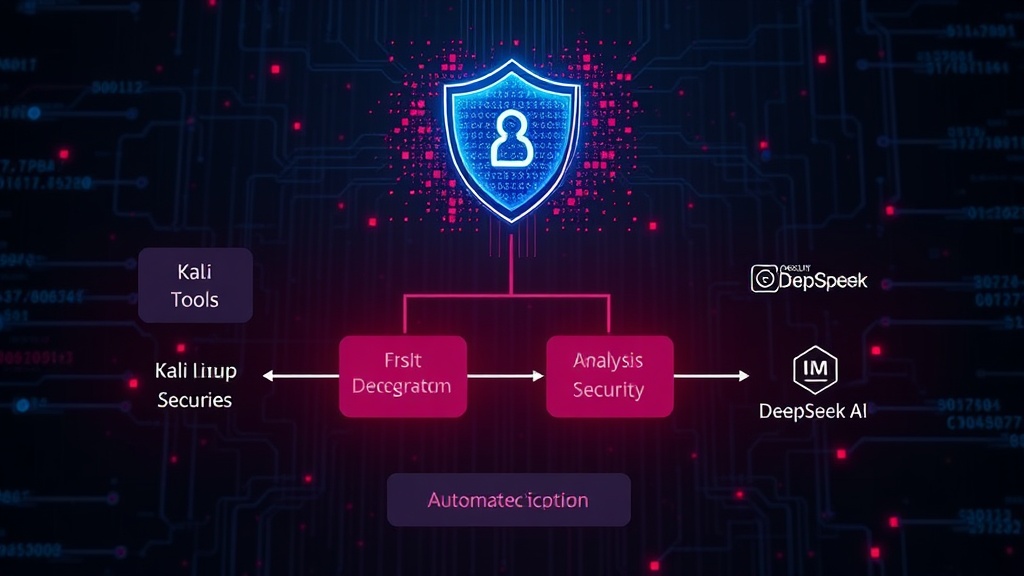
The core of this self-defending system lies in its ability to perform continuous scans, intelligent analysis, and automated response. The bot operates on a regular schedule, scanning the marketplace’s gateway every hour. This constant vigilance is achieved by leveraging a suite of powerful tools from Kali Linux, a distribution renowned for its penetration testing capabilities. Specifically, tools like nmap for network discovery and port scanning, nikto for web server vulnerability scanning, and sqlmap for detecting and exploiting SQL injection flaws are employed.
AI-Powered Threat Analysis
The raw output from these security scans, which can be extensive and complex, is then fed into a local AI model. The chosen model is DeepSeek R1:1.5B, a relatively lightweight yet capable language model that runs entirely on local infrastructure via Ollama. This local deployment is a key design choice, ensuring data privacy and reducing reliance on external services. The AI’s role is to analyze the scan results, identify patterns indicative of malicious activity, and assess the severity of potential threats. By processing this data locally, the system avoids the latency and cost associated with cloud-based AI APIs.
The integration of Kali Linux tools with a local AI like DeepSeek creates a potent combination. Kali provides the offensive security capabilities to probe for weaknesses, while the AI offers the analytical power to interpret the findings in real-time. This allows the system to go beyond simple threshold alerts. Instead, it can understand the context of findings, correlate events, and make informed decisions about appropriate actions.
Automated Defensive Actions
Once the AI model identifies a threat, the bot is designed to take immediate, automated actions. This is where the system transitions from passive monitoring to active defense. The predefined actions include:
- Blocking Suspicious IPs: If an IP address is found to be engaged in scanning or attempting exploits, the bot automatically adds it to a blocklist, preventing further access to the marketplace.
- Suspending Users: For user accounts exhibiting suspicious behavior or linked to malicious activity, the bot can automatically suspend them, preventing them from conducting transactions or accessing their data.
- Canceling Open Orders: In cases of detected fraud or exploitation attempts targeting active orders, the bot can cancel these orders to prevent financial losses or misuse of the platform.
The entire process is designed to be self-contained. Everything runs locally, from the scanning tools to the AI model and the action execution. This architecture offers several advantages: enhanced security through reduced external attack surface, greater control over data privacy, and potentially lower operational costs compared to relying on third-party security services. The choice of MyZubster as the platform for this demonstration highlights the critical need for robust, adaptable security in the burgeoning space of decentralized marketplaces.
Building a Local AI Security Framework
The setup involves configuring Kali Linux tools to output their findings in a structured format that the DeepSeek model can easily parse. This might involve scripting the tools to generate JSON or plain text reports. Ollama, acting as the local LLM runner, simplifies the deployment and interaction with the DeepSeek model. A custom script or application then orchestrates the workflow: triggering scans, collecting results, querying the AI, and executing defensive measures based on the AI’s recommendations.
This approach represents a significant shift towards proactive, intelligent security. By bringing powerful security analysis tools and AI capabilities directly into the platform’s infrastructure, MyZubster can achieve a higher level of resilience. The system learns and adapts, becoming a vigilant guardian of the decentralized marketplace. The underlying principle is that the best security is often built-in, leveraging the specific context and needs of the platform itself.