Juni: A New Paradigm for Web Game Development
The landscape of web game development is often a compromise. Developers grapple with the ubiquity of JavaScript and TypeScript, or they face the steep learning curve and complex tooling required for native engine integration. Enter Juni, a new statically typed systems language designed to bridge this gap. Created by developer [Name Not Specified in Sources], Juni aims to offer Python-level readability while providing C++-like control over memory and execution, all compiled directly to WebAssembly (WASM).
The core motivation behind Juni is to enable game logic authoring in a single language that can run efficiently in the browser without relying on a separate JavaScript/TypeScript scripting layer. This approach eliminates a common source of truth discrepancies and simplifies the development pipeline. Juni's compiler targets WASM, allowing the game logic to execute close to native speeds within the browser environment. The host environment, a thin JavaScript runtime, handles essential functionalities like 2D Canvas and WebGPU rendering, input management, audio, and the management of Entity-Component-System (ECS) scenes.
The Juni Language and Its Core Philosophy
Juni is not just another scripting language; it's positioned as a systems language. This means it provides explicit control over memory management and references, eschewing a garbage collector. This design choice is crucial for performance-sensitive applications like games, where predictable memory usage and low latency are paramount. The language syntax is designed for readability, drawing inspiration from Python to make it approachable for a broader range of developers. However, beneath this accessible surface lies the power and control typically associated with languages like C++.
The unification of these two seemingly disparate philosophies – Python's ease of use and C++'s performance – is Juni's central promise. By compiling to WASM, Juni code can achieve performance levels that JavaScript often struggles to match for complex computations. This makes it a compelling option for developers looking to build more sophisticated games and simulations directly within the web browser.
JunoEngine: The Ecosystem Around Juni
Juni itself is the language, but JunoEngine represents the broader ecosystem developed to support it. As of version 9.2, JunoEngine includes several key components:
- Compiler: Written in Rust, the compiler handles the entire process from parsing Juni code, performing static checks, and generating WASM bytecode. It also includes Language Server Protocol (LSP) components to provide rich editor support.
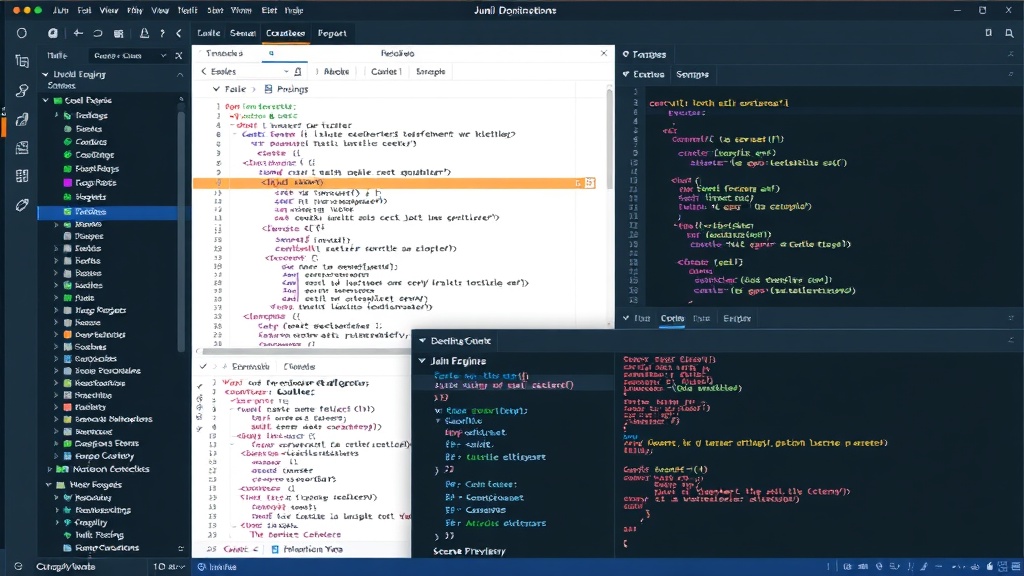
- Browser IDE: Built using Vite and the Monaco editor (the core of VS Code), this in-browser Integrated Development Environment allows developers to write, compile, and run Juni code directly within their web browser. It features an integrated scene editor and tile brush tools, streamlining the workflow for game asset creation and manipulation.
- Tauri Desktop Shell: For developers who prefer a desktop environment, JunoEngine provides a Tauri-based shell, enabling Juni applications to run as native desktop applications.
- Game/Sim Runtime: A lightweight runtime environment is included for executing games and simulations built with Juni, optimized for WASM deployment.
The inclusion of an integrated IDE with a scene editor is a significant step towards lowering the barrier to entry for web game development. Developers can iterate rapidly, seeing their changes reflected almost instantly without complex build configurations or context switching between multiple tools.
Why WASM and Why Now?
WebAssembly has matured considerably, moving beyond its initial perception as a niche technology for running C++ in the browser. It is now a robust compilation target for multiple languages, offering near-native performance, a secure sandboxed execution environment, and predictable memory layouts. This maturity makes it an ideal foundation for a language like Juni, which relies on efficient execution and fine-grained control.
The demand for richer, more performant web experiences, particularly in gaming and interactive applications, continues to grow. Traditional web technologies, while improving, often hit performance ceilings. WASM, and by extension languages like Juni that compile to it, offer a path to overcome these limitations. Juni's approach of providing a familiar, readable syntax on top of this powerful execution model positions it to capture developers who might otherwise be deterred by the complexities of existing solutions.
The Future of Web Game Logic
Juni and JunoEngine represent a bold step towards simplifying and empowering web game development. By uniting Python's developer-friendliness with C++'s performance characteristics and targeting the efficient WASM runtime, Juni offers a compelling alternative to current workflows. The success of such a language will depend on its adoption, the continued development of its tooling, and its ability to deliver on the promise of seamless, high-performance game logic authoring directly in the browser.
What remains to be seen is how Juni will handle the complexities of larger, more ambitious game projects. Will its memory management model scale effectively? How will its interoperability with existing JavaScript libraries evolve? These are questions that only time and broader developer adoption will answer. For now, Juni presents an exciting prospect for anyone looking to build games on the web with greater ease and performance.