
Introducing Juggler: A Visual Approach to AI-Assisted Coding
Julian Storer, the acclaimed creator of the JUCE framework for cross-platform audio applications, has launched Juggler, an open-source graphical user interface (GUI) coding agent. This new tool aims to democratize AI-assisted coding by providing an intuitive visual interface for interacting with large language models (LLMs) for software development tasks. Unlike many existing AI coding assistants that operate primarily through text-based prompts and code completions, Juggler offers a more structured and visual approach, making complex AI capabilities accessible to a broader range of developers.
The core philosophy behind Juggler is to bridge the gap between human intent and AI execution. Developers can define tasks, provide context, and review AI-generated code through a clean GUI. This visual paradigm is particularly beneficial for complex projects where understanding the flow of logic and the interdependencies of code components is crucial. Storer, known for his work on JUCE which powers countless audio plugins and applications, brings a deep understanding of developer workflows and the challenges of building sophisticated software.
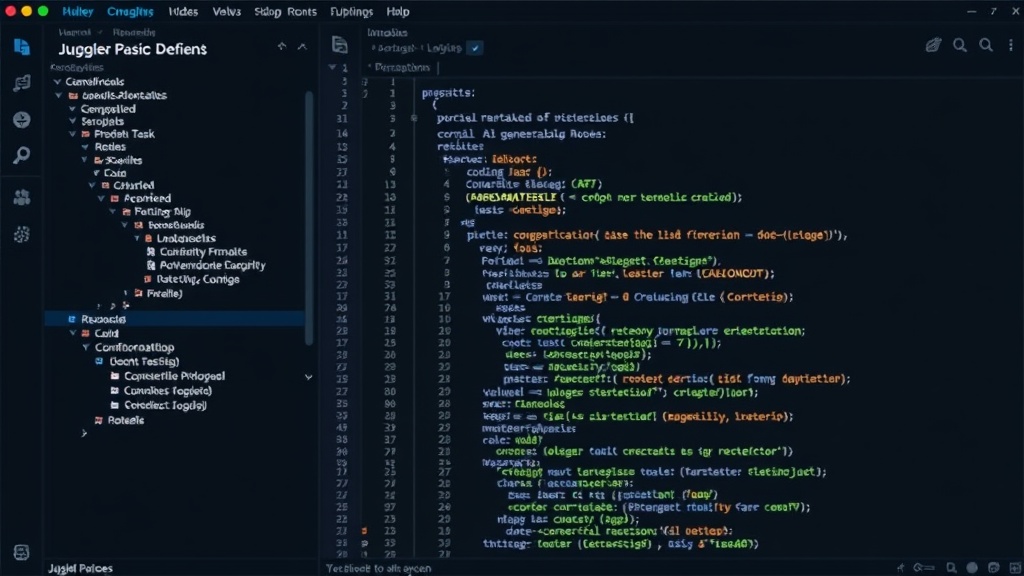
Key Features and Design Philosophy
Juggler is built with a focus on extensibility and user control. It allows developers to integrate various LLMs, including local models, providing flexibility in how and where the AI processing occurs. This is a significant departure from proprietary, cloud-based solutions, offering greater privacy and customization. The agent can perform a variety of tasks, from generating boilerplate code and refactoring existing functions to writing unit tests and documenting code. The GUI acts as a central hub, allowing users to manage prompts, review outputs, and iteratively refine the AI's suggestions.
One of the most compelling aspects of Juggler is its emphasis on transparency. The interface clearly displays the prompts sent to the LLM and the responses received, enabling developers to understand the AI's reasoning process. This transparency is vital for debugging and for learning how to better leverage AI tools. Storer has indicated that the project is designed to be modular, allowing developers to contribute new features, integrations, and LLM backends. The open-source nature fosters community involvement, a hallmark of successful developer tools.
The JUCE Legacy and Juggler's Potential
Julian Storer's creation of JUCE established him as a key figure in the audio development community. JUCE is a C++ framework that simplifies the creation of cross-platform applications, particularly digital audio workstations (DAWs) and audio plugins. Its success lies in its comprehensive feature set and its ability to abstract away platform-specific complexities. This background suggests that Juggler will likely be designed with a similar focus on developer productivity and robust functionality.
The transition from a framework like JUCE to an AI coding agent like Juggler signifies a broader trend in software development. As AI models become more sophisticated, tools that can effectively integrate them into existing workflows are becoming indispensable. Juggler’s GUI-centric approach could be particularly impactful for developers who are less comfortable with command-line interfaces or who benefit from a more visual representation of their work. It also positions Juggler as a potential competitor to established AI coding assistants, offering a more open and customizable alternative.
The project's debut on Hacker News as a "Show HN" indicates a deliberate effort to gather early feedback from the developer community. This approach is common for open-source projects aiming for rapid iteration and broad adoption. The response from the community will likely shape Juggler's future development roadmap, with a strong emphasis on community contributions and addressing real-world developer pain points.
Implications for AI-Assisted Development
Juggler enters a rapidly evolving landscape of AI-powered development tools. While many tools focus on code completion or generating small code snippets, Juggler's ambition to act as a more comprehensive "agent" suggests a higher level of autonomy and task management. The GUI aspect is key; it transforms the interaction from a series of text commands into a more collaborative process. Think of it less like a smart autocomplete and more like a junior developer you can visually direct and supervise.
The open-source nature is a significant differentiator. It allows for greater transparency, customization, and community-driven development. Developers can inspect the code, contribute fixes, and even modify it to suit their specific needs. This is particularly important for sensitive projects where proprietary, cloud-based AI tools might raise privacy concerns. Furthermore, the ability to integrate local LLMs means that Juggler could potentially be used in air-gapped environments, a critical consideration for many enterprise and government applications.
What remains to be seen is how Juggler scales to handle extremely large codebases or highly specialized domains. While the JUCE creator's pedigree suggests a strong foundation, the practical performance and utility of Juggler as a comprehensive coding agent will be tested by its early adopters. The success of Juggler will depend not only on its technical capabilities but also on its ability to foster a vibrant community that contributes to its growth and evolution.