
The Divergence in AI Tool Pricing
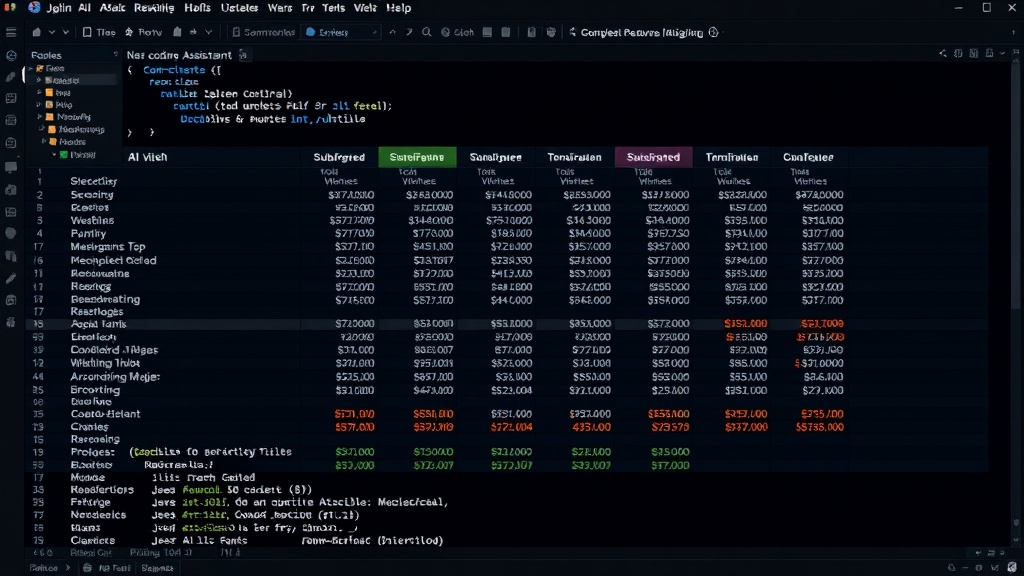
A review of late 2025 AI tool roundups from Juejin reveals a subtle but significant shift in how these tools are presented, specifically concerning their pricing structures. While broad-market roundups and category-specific guides have historically shared a common frame of reference for cost, this is no longer the case. This divergence, termed the "price-anchor split," leaves developers to manually calculate cumulative monthly costs across various subscription tiers, a task that is becoming increasingly complex and time-consuming.
The problem is most evident when comparing different types of roundups. Broad market analyses often present tools with a focus on overall utility and feature sets, sometimes omitting granular pricing details or presenting them in a simplified, less actionable format. Conversely, category-specific guides, such as those focused on coding assistants or frontend development, delve deeper into features relevant to a particular niche. However, even these specialized guides are failing to maintain a consistent pricing anchor, making direct cost comparisons across different tool categories difficult.
Consider the December coding ranking, which scored Tencent CodeBuddy at 9.6, Sourcegraph Cody at 8.2, Replit Ghostwriter at 8.0, and Codeium at 7.8. While these scores provide a relative performance indicator, they do not readily translate into a clear understanding of the financial commitment. Developers are left to piece together pricing information, which often involves multiplying per-scenario subscriptions or feature-based tiers, leading to a hidden cumulative monthly bill that neither format is transparently presenting.
The Impact on Developer Decision-Making
This price-anchor split has direct implications for developers making critical tool selection decisions. Without a standardized way to compare costs, developers are forced to perform intricate mental arithmetic or create their own comparison matrices. This not only consumes valuable time but also increases the risk of underestimating the total cost of ownership for AI tools. What was once a relatively straightforward comparison of monthly or annual fees has become a convoluted exercise in subscription aggregation.
The absence of a common pricing anchor means that a tool that appears cost-effective in a broad market roundup might become prohibitively expensive when its specific usage-based pricing is factored into a developer's actual workflow. Conversely, a highly specialized tool, which might seem expensive in isolation, could prove more economical when its targeted utility is considered against the cost of broader, less efficient solutions. The lack of clarity obscures these nuances.
This issue is not confined to coding assistants. Similar trends are emerging in roundups for frontend development tools, AI-powered design assistants, and even general-purpose AI platforms. Each category develops its own pricing vernacular, making cross-category comparisons even more challenging. The engineer doing the actual selection is left to be a de facto financial analyst for their tool stack, a role for which they are neither trained nor compensated.
Why This Matters for the AI Tool Ecosystem
The price-anchor split is more than just an inconvenience; it represents a potential structural flaw in how AI tools are being evaluated and adopted. If this trend continues, it could lead to a hardening of these format splits, making it permanently difficult to gain a holistic understanding of the AI tool landscape. This lack of transparency can stifle innovation by making it harder for new, potentially cost-effective tools to gain traction against established players who might have more complex, opaque pricing models.
The situation mirrors earlier instances in software development where a lack of standardization in metrics or pricing led to confusion and market inefficiencies. For example, the early days of cloud computing saw various providers offering different pricing models for compute, storage, and bandwidth, requiring users to become experts in each provider's unique system. The current divergence in AI tool roundups risks repeating this pattern.
What remains unaddressed is the incentive structure for AI tool providers and the platforms that host these roundups. It is unclear whether this split is an intentional strategy by vendors to obscure costs or an unintentional byproduct of evolving pricing strategies. Regardless of the cause, the effect is a more opaque market that disadvantages the end-user – the developer.
Moving Towards Clarity
To counter this trend, a concerted effort is needed to re-establish a common price-anchor framework. This could involve:
- Standardized Cost Metrics: Encouraging roundups to adopt a uniform set of cost metrics, such as a "fully-loaded monthly cost for a single developer" or a "per-project cost estimate for a small team."
- Transparent Pricing Breakdowns: Requiring vendors to provide clear, itemized breakdowns of their pricing, including all potential surcharges, tier limitations, and usage-based fees.
- Cross-Category Comparisons: Developing new formats or methodologies for roundups that explicitly bridge the gap between broad-market and category-specific analyses, facilitating better cost-benefit assessments.
Without such measures, developers will continue to navigate a confusing landscape, potentially overspending on AI tools or missing out on solutions that could significantly boost productivity, simply because the true cost remains hidden in plain sight.