
Introducing Jolt: A Modern Clojure Compiler
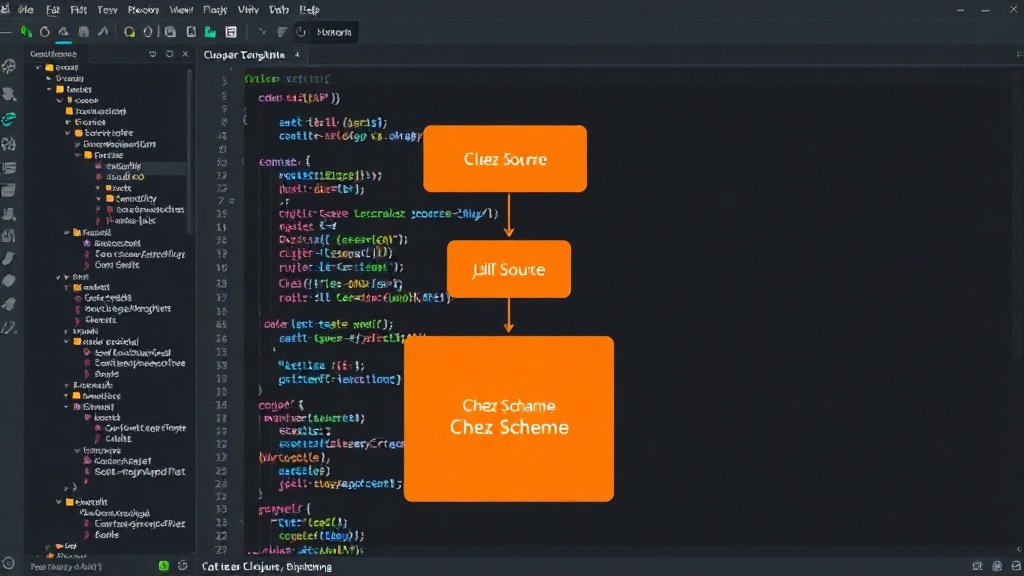
A new project, Jolt, is emerging in the Clojure ecosystem with a significant architectural shift: it's a Clojure compiler implemented in Chez Scheme. This approach aims to deliver a high-performance compiler, offering a fresh alternative to existing Clojure compilers which are often implemented in Java or Clojure itself. The project, originating from the vibrant Clojure community, seeks to harness the speed and efficiency of Chez Scheme, a well-regarded, high-performance Scheme implementation known for its robust compiler and runtime.
The core motivation behind Jolt appears to be the pursuit of a faster compilation cycle and a more streamlined development experience for Clojure developers. Traditional Clojure compilers, while mature and feature-rich, can sometimes be a bottleneck in the development workflow, especially for large projects. By building the compiler from the ground up in a language optimized for compiler construction like Scheme, the Jolt team is betting on significant performance gains. This is not merely an academic exercise; it's a practical endeavor to make Clojure development more efficient.
Why Chez Scheme for a Clojure Compiler?
The choice of Chez Scheme is deliberate and strategic. Chez Scheme is renowned for its advanced compiler technology, including sophisticated optimizations and a highly efficient virtual machine. Its ability to generate fast native code makes it an attractive foundation for a performance-critical component like a language compiler. Implementing a compiler in a language that is itself a compiled language, and one that is performant, can lead to a self-reinforcing cycle of efficiency.
Unlike compilers written in interpreted languages or those heavily reliant on a large, complex runtime like the JVM, a Chez Scheme-based compiler can potentially offer faster startup times and lower memory overhead. This is particularly appealing for developers who frequently recompile their code during the iterative development process. Furthermore, Chez Scheme's Lisp heritage means it shares many conceptual similarities with Clojure, such as macro systems and functional programming paradigms. This shared ancestry could simplify the task of translating Clojure's abstract syntax tree (AST) into Scheme code, which then gets compiled by Chez Scheme.
Potential Benefits and Challenges
The potential benefits of Jolt are substantial. Firstly, improved compilation speed could significantly shorten development feedback loops. Imagine compiling a large Clojure project in seconds rather than minutes. Secondly, a compiler implemented in Chez Scheme might offer better interoperability with systems written in Scheme or other Lisp dialects, potentially opening new avenues for integration. Thirdly, it represents a diversification of the Clojure toolchain, reducing reliance on a single dominant compiler implementation and fostering innovation.
However, the project is not without its challenges. The Clojure language specification is extensive, and faithfully implementing all its features, including its powerful macro system and advanced concurrency primitives, within a new compiler is a monumental task. Ensuring full compatibility with the existing Clojure ecosystem, including libraries and tools, will be critical for adoption. Developers are accustomed to the stability and maturity of the current Clojure compilers. Jolt will need to demonstrate comparable reliability and feature completeness to gain traction.
Another hurdle is developer mindshare. The Clojure community is already well-served by mature tools. Convincing developers to switch to a new compiler, even one with performance benefits, requires a compelling case. This includes not only performance but also ease of use, debugging capabilities, and integration with popular development environments. The project's success will hinge on its ability to deliver on its performance promises while also providing a robust and user-friendly experience.
The Road Ahead for Jolt
The Jolt project is still in its early stages. As with any ambitious compiler project, it will likely undergo iterative development, with ongoing work on feature implementation, performance optimization, and bug fixing. The community's engagement will be vital, providing feedback, contributing code, and testing the compiler in real-world scenarios. The trajectory of Jolt will be watched closely by Clojure developers interested in performance and alternative compiler architectures.
While the exact roadmap and timeline are still being defined by the Jolt contributors, the fundamental idea of a Chez Scheme-based Clojure compiler represents an exciting exploration of compiler design and language implementation. It's a testament to the enduring power of Lisp-family languages and the continuous drive for better tools within the software development community.
What remains to be seen is how Jolt will handle the nuances of Clojure's host interop, particularly with the JVM. If Jolt aims for full parity, it will need a sophisticated strategy for interacting with Java libraries and the Java runtime, which could reintroduce some of the complexities it seeks to avoid. The long-term viability will also depend on sustained community involvement and the project's ability to attract and retain contributors passionate about making Clojure even more performant.