FTC Settlement Mandates Repair Access for John Deere Owners
John Deere, the agricultural machinery giant, has reached a settlement with the Federal Trade Commission (FTC) that will grant farmers greater access to repair their own equipment. This agreement resolves an FTC investigation into the company's practices, which farmers and consumer advocates have long criticized for restricting their ability to perform maintenance and repairs on tractors and other farm machinery.
The core of the settlement hinges on John Deere's commitment to provide farmers and independent repair shops with the necessary tools, software, and documentation to diagnose and fix issues. Historically, John Deere has employed digital locks and proprietary diagnostic systems that effectively forced farmers to rely on authorized dealerships for even basic repairs. This often resulted in significant downtime during critical planting and harvesting seasons, increased costs, and hampered the operational efficiency of farms.
Under the terms of the agreement, John Deere must make available diagnostic software, diagnostic trouble code (DTC) information, wiring diagrams, and service manuals for its agricultural equipment. This access is crucial for independent mechanics and farmers themselves to identify problems and execute repairs, circumventing the need for dealership intervention for many common issues. The FTC's involvement underscores a growing national movement advocating for the "right to repair," which seeks to empower consumers across various sectors, from electronics to automobiles and now, agriculture.
The Digital Lock Dilemma in Modern Agriculture
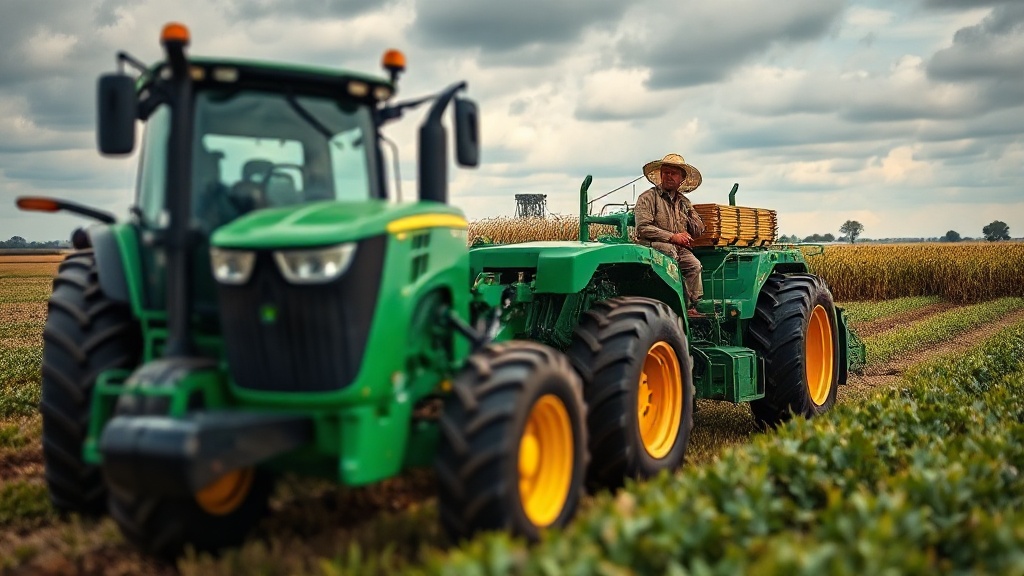
Modern agricultural equipment is increasingly sophisticated, integrating complex computer systems and software that control nearly every aspect of operation. While this technology offers significant benefits in terms of precision farming and efficiency, it also creates a dependency on manufacturers for maintenance and repair. John Deere, like many heavy equipment manufacturers, has leveraged this technological integration to maintain control over the service and repair market.
Farmers have reported instances where a single sensor failure or software glitch could render a multi-million dollar piece of equipment inoperable, with the only recourse being an expensive and time-consuming service call from an authorized dealer. This situation is particularly acute during peak agricultural seasons, where even a few days of downtime can lead to substantial financial losses. The inability to access diagnostic tools meant that farmers were often at the mercy of dealership schedules and pricing.
The "right to repair" movement argues that manufacturers should not use digital restrictions to prevent owners from servicing products they have purchased. This principle extends beyond consumer electronics and into complex machinery where repairability is vital for economic sustainability. The FTC's action against John Deere aligns with this broader objective, recognizing that the productivity and economic well-being of the agricultural sector are directly impacted by these repair restrictions.
What the Settlement Means for Farmers and the Industry
The settlement is a significant victory for farmers and a notable step for the right to repair movement. It signals that regulatory bodies are willing to intervene when digital control mechanisms are perceived to stifle competition and harm consumers. For farmers, the immediate benefits include:
- Reduced Downtime: The ability to perform more repairs in-house or through local, independent mechanics can significantly cut down on the time equipment is out of service.
- Lower Repair Costs: Competition among repair providers and the elimination of manufacturer-imposed service monopolies are expected to drive down the cost of repairs.
- Increased Operational Autonomy: Farmers regain a degree of control over their equipment, reducing dependency on a single service provider.
- Access to Information: Crucially, access to diagnostic codes, manuals, and software allows for more informed decision-making regarding maintenance and repairs.
The settlement is not a blanket endorsement of all third-party repairs. John Deere will likely continue to offer its authorized service network, and complex, safety-critical repairs may still require dealership expertise. However, the core principle established is that farmers should have the necessary information and tools to perform a wide range of repairs themselves or choose their own service providers.
Broader Implications and Unanswered Questions
This FTC settlement with John Deere has far-reaching implications. It sets a precedent for other manufacturers of complex, digitally-enabled products, particularly within the agricultural and heavy machinery sectors. The success of this advocacy effort could embolden similar right to repair initiatives targeting other industries.
However, several questions remain. The practical implementation of providing this access will be key. Will the diagnostic tools be user-friendly for farmers? Will the necessary software updates be provided in a timely manner? What constitutes a "safety-critical" repair that still requires dealership intervention? Furthermore, while the FTC has settled this case, the broader legislative landscape around the right to repair is still evolving. Many states are considering or have passed their own right to repair laws, creating a patchwork of regulations that manufacturers must navigate.
The long-term impact will depend on John Deere's adherence to the settlement terms and the willingness of farmers to utilize the newly available resources. It represents a significant shift in the balance of power between manufacturers and their customers in the high-tech agricultural equipment market, a shift that many believe is long overdue.