A Typographic Approach to QR Codes
Jim Paris, a developer, has released a novel TrueType font that allows users to generate QR codes directly within text documents, spreadsheets, and design applications. Dubbed "Jim's TrueType QR Code Font," this project offers a unique, typographic method for embedding scannable QR codes. Instead of relying on dedicated QR code generation software or libraries, users can now simply type out a QR code like any other character.
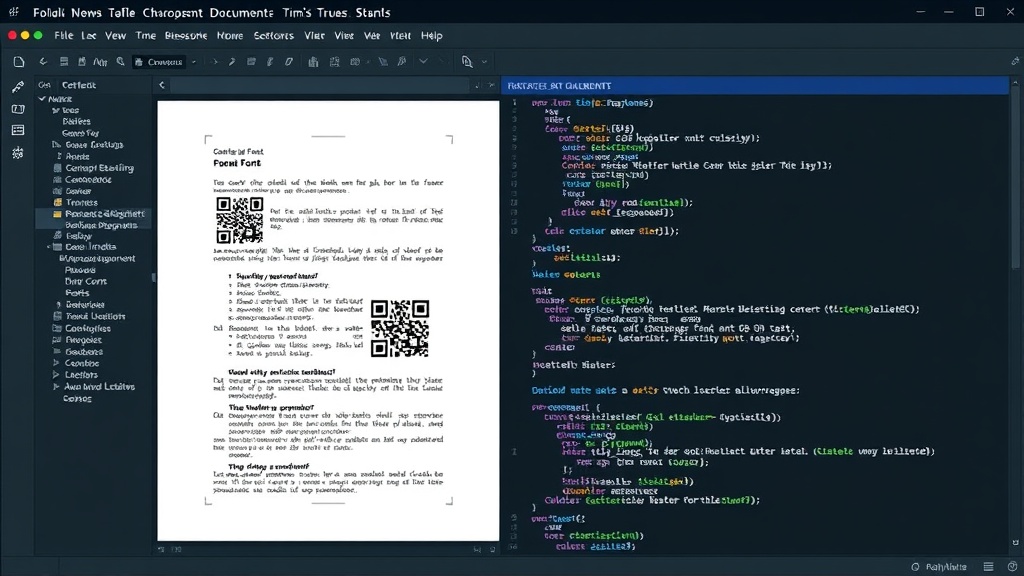
The concept is straightforward: the font translates standard characters into the complex patterns that constitute a QR code. This means that composing a QR code becomes as simple as typing a string of text. The font handles the intricate encoding and error correction, rendering a visually correct and scannable QR code directly in applications that support TrueType fonts. This approach bypasses the need for complex integrations or external tools, making QR code generation accessible to a broader range of users and workflows.
For developers and designers accustomed to working with vector graphics or image-based QR codes, this font presents a paradigm shift. It treats QR codes as a form of character data, opening up possibilities for dynamic content generation and simpler embedding in static documents. The primary advantage lies in its ease of use and its ability to integrate seamlessly into existing text-based workflows. Imagine generating a personalized QR code for each invoice in a batch process, or embedding a unique URL in a printed report without ever leaving your word processor.
Technical Implementation and Limitations
The font itself is a TrueType (.ttf) file, a widely supported cross-platform font format. This ensures broad compatibility with operating systems like Windows, macOS, and Linux, as well as a vast array of software applications, including Microsoft Word, Adobe InDesign, and even some web browsers that allow custom font usage. The underlying mechanism involves mapping specific character sequences to the QR code's data modules. Different characters or sequences likely correspond to different data patterns, encoding the information you intend to embed.
However, the practical limitations of this approach are significant. TrueType fonts are designed for rendering text, and while this font cleverly repurposes that capability, it inherits some of the inherent constraints. The maximum data capacity of a QR code is tied to its version and error correction level. A font-based approach might impose further restrictions on the complexity or length of the data that can be reliably encoded and rendered. Generating very large or complex QR codes might exceed the font's rendering capabilities or result in unmanageably large text strings.
Furthermore, the fidelity of QR code rendering can depend heavily on the application and the rendering engine. Subtle differences in how different software interprets and renders font glyphs could potentially lead to scannability issues. While Paris has likely tested extensively, real-world usability across all potential applications remains a key consideration. The error correction levels are crucial for QR code robustness, and it's unclear how granularly the user can control these levels through the font interface, if at all. Typically, QR codes offer different error correction levels (L, M, Q, H), allowing for a trade-off between data density and resilience to damage. A font-based system may abstract this away, defaulting to a specific level or making it difficult to select.
Use Cases and Potential Impact
The most immediate use case for Jim's TrueType QR Code Font is in document generation and static design. For businesses that produce large volumes of documents requiring unique identifiers or links—such as invoices, shipping labels, or event tickets—this font could simplify the workflow. Instead of calling an external API or library to generate an image, a developer could programmatically insert a string of text that the font then transforms into a scannable QR code.
Designers working on print materials might find it a convenient way to embed URLs, contact information, or social media handles directly into posters, business cards, or packaging. It allows for a more integrated design process, where the QR code becomes a typographic element rather than an imported graphic. This could also be useful for educational purposes, allowing instructors to demonstrate QR code structure by typing it out and seeing it rendered visually.
The project also raises an interesting question about the future of data representation. As we increasingly integrate digital information into physical spaces, novel methods of embedding data become more relevant. While perhaps not a replacement for robust QR code generation solutions in high-volume or mission-critical applications, this font offers a charming and accessible alternative for many common scenarios. It democratizes QR code creation, making it as simple as choosing a font from a dropdown menu. The surprising detail here is not the technical ingenuity, but the sheer simplicity of treating a complex encoding standard as a character set. What remains to be seen is how widely this innovative approach will be adopted by designers and developers who typically rely on more established, programmatic methods.