
Moving Beyond Traditional XML Layouts
Android development has undergone a seismic shift. The era of wrestling with XML layouts, `findViewById`, or even basic View Binding is rapidly becoming a relic. Today's native Android applications demand a modern approach: clean architecture, reactive state management, and declarative UI toolkits like Jetpack Compose.
This article dives deep into structuring scalable, maintainable, and highly testable native Android applications. We will explore the synergy between the Model-View-ViewModel (MVVM) architectural pattern and Jetpack Compose, demonstrating how to build robust applications that stand the test of time and complexity.
Why MVVM with Jetpack Compose?
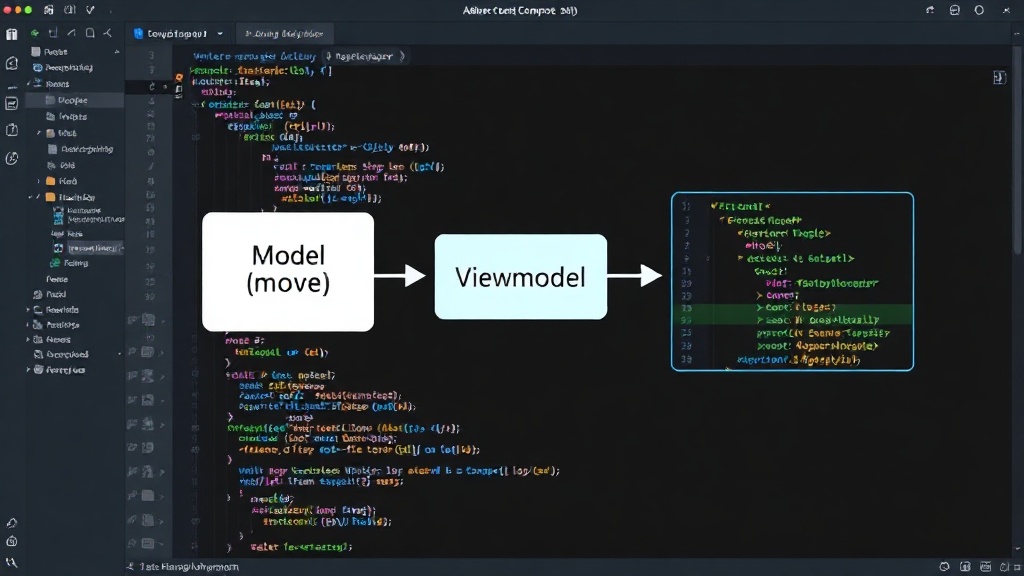
The Model-View-ViewModel (MVVM) pattern is a cornerstone of modern Android development, offering a clear separation of concerns crucial for maintainability and testability. It divides application logic into three interconnected components:
Model
The Model is responsible for data operations. This includes interacting with local data sources, such as databases managed by Room, and fetching data from remote APIs using libraries like Retrofit. It encapsulates the application's data and business rules, acting as the single source of truth for data.
ViewModel
The ViewModel serves as the intermediary between the Model and the View. Its primary role is to preserve UI state across configuration changes (like screen rotations), manage business logic, and expose observable data streams that the View can consume. ViewModels do not hold direct references to Android UI components, preventing memory leaks and ensuring they survive process death. They communicate UI-related data to the View via observable patterns, such as Kotlin Flows or LiveData.
View (Compose)
In the context of Jetpack Compose, the View is represented by declarative UI composables. These composables describe what the UI should look like at any given point in time based on the state provided by the ViewModel. Compose's reactive nature means that when the observed state changes, the relevant composables automatically re-compose, updating the UI efficiently without manual intervention. This declarative approach drastically simplifies UI development compared to imperative XML-based layouts.
Integrating MVVM with Jetpack Compose
The combination of MVVM and Jetpack Compose offers a powerful paradigm for building Android UIs. Jetpack Compose's composable functions are stateless by default, making them ideal candidates for receiving state from a ViewModel. The ViewModel, in turn, manages the complex state and business logic, ensuring that the UI remains a passive observer of data changes.
Consider a typical scenario: a list of items displayed on screen. The ViewModel would fetch this list from the Model and expose it as a `StateFlow
Applying Clean Code Principles
Beyond architectural patterns, adhering to Clean Code principles is paramount for building truly excellent Android applications. These principles, popularized by Robert C. Martin, focus on writing code that is readable, understandable, and maintainable by humans.
Meaningful Names
Use descriptive names for variables, functions, classes, and packages. Avoid abbreviations and cryptic names. For instance, instead of `usrMgr`, use `userManager`. In Compose, composable functions should clearly indicate their purpose, e.g., `UserProfileCard` instead of `Comp1`.
Functions
Functions should be small, focused, and do one thing well. Aim for functions that are less than 20 lines of code. If a function grows too large, it likely needs to be broken down into smaller, more manageable units. This principle extends to composables; a complex UI screen should be composed of smaller, reusable composable functions.
Comments
Comments should explain why something is done, not what is done. Well-written code with meaningful names often negates the need for extensive comments explaining the logic. If a comment is necessary, it typically highlights a complex algorithm or a business-critical decision.
Error Handling
Robust error handling is critical. In MVVM with Compose, errors originating from the Model or ViewModel should be propagated to the View in a way that can be gracefully displayed to the user. This might involve exposing an error state (e.g., `StateFlow
Benefits of This Architecture
Adopting MVVM with Jetpack Compose and Clean Code principles yields significant advantages:
- Maintainability: Clear separation of concerns makes it easier to modify or extend functionality without introducing regressions. Changes in the UI layer should not necessitate changes in the business logic, and vice versa.
- Testability: ViewModels and Models can be tested in isolation without requiring a running Android emulator or device. This allows for comprehensive unit and integration testing, leading to more stable applications. Compose UI tests can also be written to verify UI behavior based on state.
- Scalability: The modular nature of this architecture allows applications to grow in complexity without becoming unmanageable. New features can be added by introducing new ViewModels, Models, and composables, fitting seamlessly into the existing structure.
- Developer Productivity: Declarative UI and predictable state management reduce cognitive load and boilerplate code, allowing developers to focus on building features rather than managing UI state and updates.
By embracing Jetpack Compose for declarative UIs, MVVM for architectural separation, and Clean Code principles for code quality, Android developers can build applications that are not only modern and efficient but also robust, scalable, and a joy to maintain.