
Amy by Jellyfish: Automating Recruitment Sourcing
Jellyfish, a company focused on enabling talent acquisition teams, has launched Amy, an AI-powered sourcing employee. Amy is designed to automate the time-consuming initial stages of the recruitment process, allowing human recruiters to focus on more strategic and relationship-driven aspects of their roles.
The core problem Amy addresses is the sheer volume of manual work involved in identifying and engaging potential candidates. Recruiters often spend hours sifting through resumes, searching databases, and crafting outreach messages. This process, while critical, can lead to burnout and divert attention from building candidate relationships, assessing fit, and closing offers. Amy is positioned as a solution to offload this initial, repetitive burden.
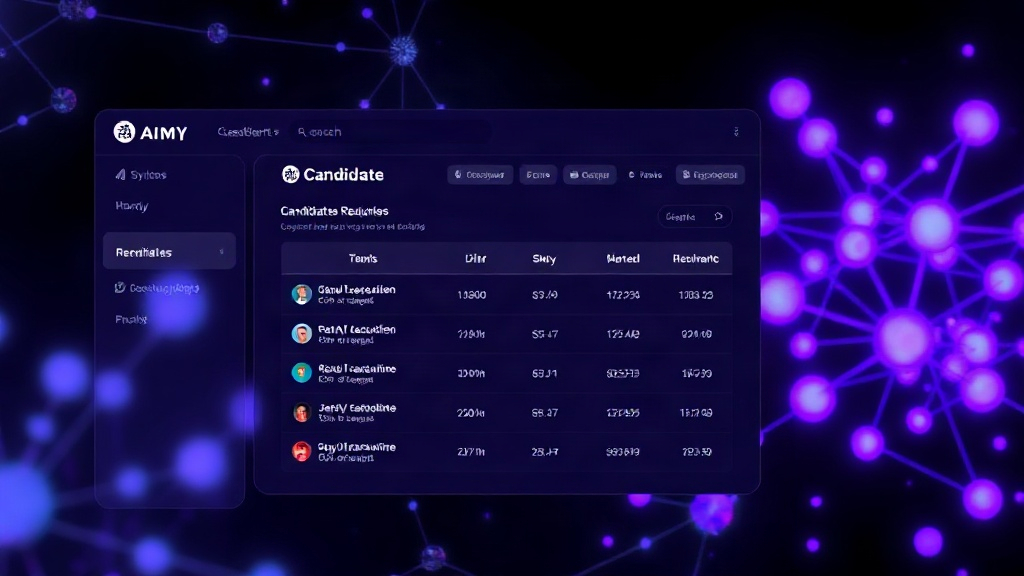
Amy functions as an AI assistant that integrates with existing recruitment workflows. Its primary capability is to identify and source candidates across various platforms. The system is built to understand job requirements and then proactively search for individuals who match those criteria. This goes beyond simple keyword matching; Amy is designed to interpret nuanced requirements and identify passive candidates who might not be actively looking but possess the desired skills and experience.
Key Functionalities and Workflow Integration
The AI sourcing employee operates by leveraging data from multiple sources. While specific platforms are not detailed, it's understood that Amy can tap into professional networks, job boards, and potentially internal candidate databases. The goal is to create a comprehensive candidate pool tailored to specific job openings. Once potential candidates are identified, Amy can also assist in the initial outreach. This typically involves generating personalized messages that highlight the opportunity and encourage a response.
This automation is particularly valuable in high-volume hiring scenarios or for roles requiring niche skill sets, where the candidate pool might be limited or difficult to access. By automating the front end of the sourcing funnel, recruiters can dedicate more time to engaging with promising candidates, conducting initial screenings, and building rapport. This shift in focus is intended to improve the quality of hires and the overall candidate experience.
Amy's integration into existing Applicant Tracking Systems (ATS) and other HR technology stacks is a key aspect of its design. The aim is to provide a seamless experience for recruiting teams, minimizing disruption and maximizing adoption. By working within familiar tools, Amy can deliver its AI-powered sourcing capabilities without requiring recruiters to learn entirely new systems or manage separate, disconnected workflows.
The Strategic Value of AI in Talent Acquisition
The introduction of Amy by Jellyfish reflects a broader trend in talent acquisition: the increasing adoption of AI and automation to enhance efficiency and effectiveness. In a competitive labor market, organizations that can source and engage candidates more effectively gain a significant advantage. AI tools like Amy promise to democratize access to sophisticated sourcing strategies, enabling smaller teams or those with limited resources to compete with larger organizations.
However, the success of such tools hinges on their ability to strike a balance between automation and the human element of recruitment. While Amy can identify candidates and initiate contact, the nuanced aspects of assessing cultural fit, understanding candidate motivations, and negotiating offers still require human judgment and empathy. The intention, as stated by Jellyfish, is not to replace recruiters but to augment their capabilities, transforming their roles from transactional task managers to strategic talent advisors.
The development of Amy also raises questions about the future of recruitment roles. As AI takes on more of the initial sourcing and screening tasks, recruiters will need to evolve their skill sets. This may involve developing stronger skills in candidate experience management, data analysis for recruitment insights, and building strategic partnerships with hiring managers. The emphasis will likely shift towards higher-level strategic thinking and interpersonal skills that AI cannot replicate.
Addressing the Challenges of Modern Recruitment
Recruitment is an area ripe for technological innovation. The constant demand for talent, coupled with the complexity of identifying the right individuals, makes it a prime candidate for AI-driven solutions. Companies are increasingly looking for ways to streamline their hiring processes, reduce time-to-hire, and improve the quality of their workforce. Amy is positioned to address these critical business needs.
Jellyfish's offering enters a market where several companies are exploring AI for recruitment. Differentiating factors will likely include the sophistication of Amy's AI, its ease of integration, the quality of candidates it surfaces, and the overall return on investment for recruiting teams. The ability to accurately interpret complex job requirements and identify high-potential passive candidates will be crucial for Amy's success.
The launch of Amy by Jellyfish signifies a move towards more intelligent and automated recruitment processes. By empowering recruiters with AI-driven sourcing capabilities, Jellyfish aims to help organizations build stronger teams more efficiently. The true measure of Amy's impact will be its ability to demonstrably improve key recruitment metrics, such as time-to-fill, cost-per-hire, and candidate quality, while also enhancing the strategic value of the recruiting function within organizations.