The Challenge of AI Agent Concurrency
As AI coding assistants evolve, developers are moving past single-session interactions. The emerging paradigm involves running multiple autonomous agents concurrently. Imagine one agent refactoring a class, another writing unit tests, and a third updating documentation, all operating simultaneously. This multi-agent approach promises significant productivity gains, allowing complex development tasks to be parallelized. However, managing these parallel AI sessions presents a substantial challenge. Running numerous agents can rapidly consume a machine's Random Access Memory (RAM) and severely degrade execution speed, creating a performance bottleneck that negates the intended benefits. This is the problem jcode aims to solve.
Introducing jcode: A Rust-Native Solution
jcode emerges as a Rust-native agent harness designed to address the performance and resource management issues associated with multi-agent AI development environments. Built in Rust, jcode leverages the language's inherent strengths in performance, memory safety, and concurrency to provide a robust and efficient platform for managing AI agent swarms. Unlike solutions that might rely on less performant languages or less optimized concurrency models, jcode's Rust foundation ensures that it can handle demanding workloads without becoming a resource hog itself. This makes it an ideal choice for developers who need to run multiple AI agents for tasks like code generation, refactoring, testing, and documentation without sacrificing system responsiveness.
Key Features and Benefits
jcode's core value proposition lies in its ability to optimize the execution of multiple AI agents. By providing a centralized harness, it allows developers to orchestrate and monitor their AI agents effectively. The Rust-native implementation means that jcode itself has a minimal performance overhead, allowing the AI agents to utilize system resources more efficiently. This translates to faster execution times for individual agent tasks and the ability to run more agents concurrently on the same hardware. The benefits are tangible: reduced waiting times for AI-generated code or suggestions, smoother development workflows, and the capacity to tackle larger, more complex development projects with AI assistance.
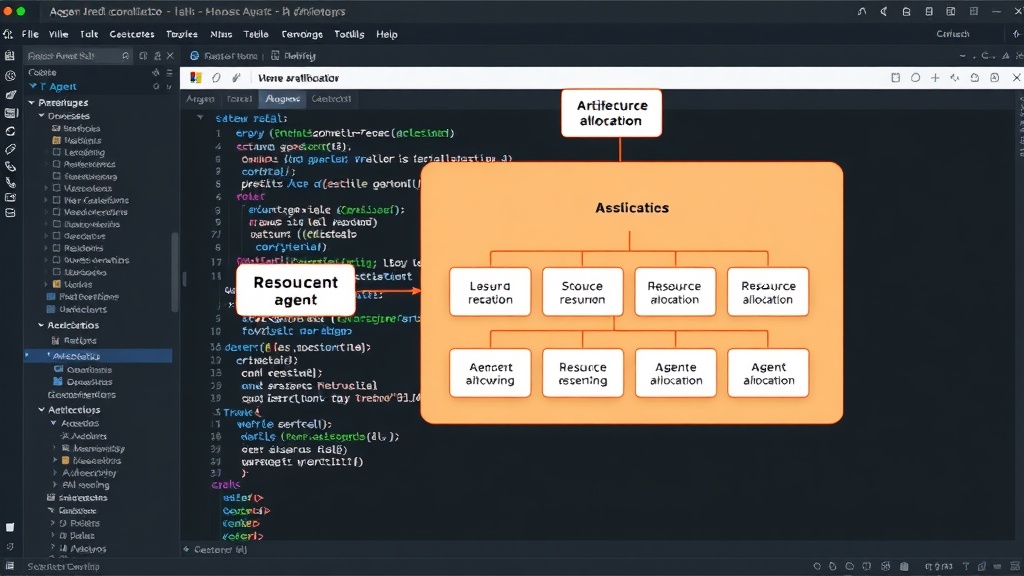
The architecture of jcode is built around efficient process management and inter-agent communication. It aims to abstract away the complexities of managing individual agent processes, providing a unified interface for developers. This includes features for starting, stopping, and monitoring agents, as well as managing their resource allocation. For developers accustomed to juggling multiple terminal windows or complex shell scripts to manage their AI tools, jcode offers a streamlined and integrated experience. This consolidation is crucial for maintaining focus and productivity in increasingly complex development environments.
Why Rust?
The choice of Rust for jcode is deliberate and strategic. Rust offers unparalleled performance, often comparable to C and C++, without sacrificing memory safety. This is critical for a tool that manages multiple, potentially resource-intensive processes. Memory leaks or race conditions, common pitfalls in concurrent programming, are largely prevented by Rust's strict compiler and ownership model. This reliability is paramount when developers are entrusting complex coding tasks to AI agents managed by jcode. Furthermore, Rust's modern concurrency primitives make it easier to build highly parallel and efficient applications. For a tool designed to orchestrate multiple AI agents, these capabilities are not just beneficial; they are essential for achieving high performance and stability.
The Future of AI-Assisted Development
jcode represents a significant step forward in the practical application of AI in software development. As AI models become more capable, the ability to run them in sophisticated, multi-agent configurations will become increasingly important. Tools like jcode are essential for unlocking the full potential of these advanced AI capabilities. They bridge the gap between powerful AI models and the practical demands of developer workflows, ensuring that AI assistance enhances, rather than hinders, productivity. The ability to run swarms of specialized AI agents—one for debugging, another for code completion, a third for performance optimization—all managed efficiently by a single harness, points towards a future where AI is an integrated, seamless partner in the development process. This shift could fundamentally alter how software is built, making development faster, more efficient, and potentially more creative.
What's Next?
While jcode provides a robust solution for current needs, the field of AI-assisted development is rapidly evolving. Future iterations will likely see deeper integrations with IDEs, more sophisticated agent coordination strategies, and enhanced capabilities for managing distributed agent swarms. The ongoing development in AI model performance and efficiency will also play a crucial role. As models become smaller and faster, the demands on harnesses like jcode may shift, but the fundamental need for efficient, reliable management of concurrent AI agents will remain. Developers looking to push the boundaries of AI-assisted coding should keep an eye on tools like jcode as they pave the way for more powerful and integrated AI development environments.