
The Promise of ServiceLoader: Decoupling Capabilities
Java's `java.util.ServiceLoader` offers a compelling way to achieve true decoupling in applications. The core idea is to depend on a capability, not a specific implementation. This means your application code interacts with an abstract contract, such as a JSON handling interface or a JWT library interface, rather than a concrete class from a particular vendor. The benefit is clear: you can swap out implementations—like switching JSON libraries from Jackson to Gson, or JOSE implementations—without modifying the core application logic. This approach, often termed treating `ServiceLoader` as capability discovery rather than merely a plugin system, promotes maintainable and flexible software architectures.
The motivation behind this pattern is simple: applications should rely on what a component *does* (its capability) rather than *how* it does it (its specific implementation). This is crucial for long-term maintainability, especially in complex systems where dependencies can become tangled. By using `ServiceLoader`, developers can define interfaces and then allow different implementations to be discovered at runtime. This dynamic discovery mechanism is powerful, but it comes with a significant hurdle that often prevents its full potential from being realized.
The Core Limitation: The No-Argument Constructor
The primary obstacle developers encounter when trying to leverage `ServiceLoader` for sophisticated capability discovery is its strict requirement for implementations to have a public, no-argument constructor. When `ServiceLoader` instantiates a discovered service, it relies on reflection to call the default constructor. This imposes a severe limitation: any service implementation that requires constructor arguments—such as configuration objects, other dependencies, or specific initialization parameters—cannot be directly loaded by `ServiceLoader`.
Consider a scenario where a logging capability needs access to a `LoggerConfig` object that contains logging levels, output destinations, and formatting rules. If the `Logger` implementation requires this `LoggerConfig` in its constructor, `ServiceLoader` will fail to instantiate it. This forces developers into awkward workarounds. Common strategies include:
- Default Constructor + Setter Injection: The implementation has a no-arg constructor, and then setters are used to inject required dependencies after instantiation. This works, but it spreads the dependency injection logic and can lead to objects being in an incomplete state before setters are called.
- Static Factory Methods: The service interface might expose static methods that act as factories, but this moves away from the standard `ServiceLoader` pattern and requires custom bootstrapping.
- Dynamic Proxies: As hinted at in earlier discussions, one might use dynamic proxies to wrap the discovered service and inject dependencies. This adds complexity and indirection.
These workarounds introduce boilerplate code, reduce type safety, and increase the cognitive load for developers trying to integrate these capabilities. The elegance of `ServiceLoader` is diminished when it forces such contortions.
Introducing the Provider Factory Pattern
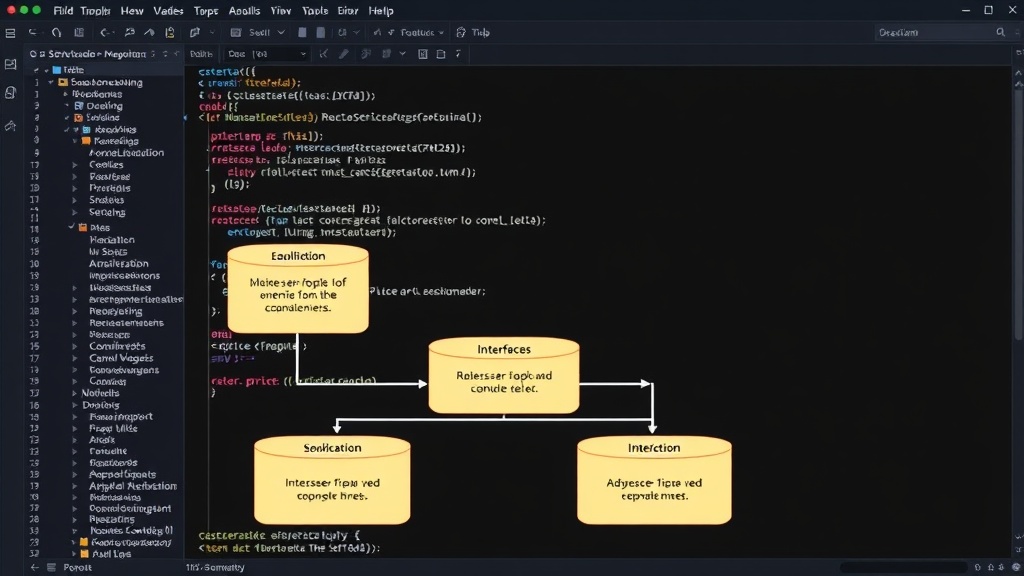
To address the no-argument constructor limitation directly, a more robust pattern is needed: the provider factory. Instead of `ServiceLoader` directly instantiating implementations, it would load a factory responsible for creating those implementations. This factory would have access to the necessary dependencies and configuration, allowing it to construct the actual service instances correctly.
The workflow would change as follows:
- Define the Capability Contract: As before, define an interface for the capability (e.g., `JsonParser`).
- Define a Factory Interface: Introduce a parallel interface for the factory (e.g., `JsonParserFactory`). This factory interface would have a method like `create(Configuration config)` or `create()`, depending on how dependencies are managed.
- Implement the Factory: Create concrete implementations of the `JsonParserFactory` that know how to instantiate the specific `JsonParser` implementations. These factory classes *can* have constructor arguments, perhaps to receive a shared configuration object or other services.
- Register Factories with ServiceLoader: Instead of registering `JsonParser` implementations, register `JsonParserFactory` implementations using `ServiceLoader`.
- Application Bootstrapping: The application would load the `JsonParserFactory` using `ServiceLoader`. It would then use the loaded factory instance to create the required `JsonParser` instances, passing in any necessary configuration or dependencies.
This approach elegantly sidesteps the no-argument constructor restriction. The factory, loaded via `ServiceLoader`, can have its own constructor arguments handled through a higher-level bootstrapping mechanism. Once loaded, the factory is responsible for the correct instantiation of the actual service implementations.
Benefits of the Provider Factory Approach
Adopting the provider factory pattern for `ServiceLoader` unlocks several significant advantages:
- True Decoupling: The core application remains unaware of concrete implementation classes and their constructor requirements. It only needs to know about the capability contract and the factory interface.
- Dependency Management: Implementations requiring complex dependencies or configurations can be instantiated correctly without resorting to fragile workarounds. The factory encapsulates this instantiation logic.
- Testability: Test code can easily provide mock or stub factories, which in turn create mock or stub service implementations, simplifying unit testing.
- Runtime Flexibility: The core benefit of `ServiceLoader` is preserved: different implementations can be swapped out by simply changing the classpath or configuration, without touching application code.
- Reduced Boilerplate: Eliminates the need for manual setter injection or other convoluted patterns to satisfy the no-argument constructor rule.
This pattern transforms `ServiceLoader` from a mechanism that is often hobbled by its instantiation constraints into a powerful tool for managing architectural capabilities. It allows developers to build more modular, maintainable, and testable Java applications by cleanly separating concerns and handling complex dependency scenarios at instantiation time.
What's Next?
While `ServiceLoader` has been a part of Java for a long time, its practical application for anything beyond simple plugins is often hampered by the constructor limitation. The provider factory pattern offers a clear path forward, enabling developers to fully realize the benefits of capability-based architecture. The question remains: will Java itself, or community libraries, embrace and formalize this pattern to make `ServiceLoader` truly usable for modern, dependency-heavy applications?