
The Genesis: Bare-Metal Java I/O
The pursuit of understanding fundamental system behavior often leads developers down the path of building from first principles. This series documents the journey of constructing an HTTP server in Java, eschewing all frameworks and libraries like Tomcat or Spring. The goal is to work directly with raw sockets using only Java’s java.net package. This approach, while stripped down, immediately surfaces complexities that are typically abstracted away by higher-level tools. It’s akin to learning to drive by building an engine from scratch before even touching the steering wheel.
The initial phase involved cramming all logic into a single main() method. This is a common starting point for many small projects, but for a server, it quickly becomes unwieldy. The core of the server's operation revolves around listening on a specific port for incoming connections and then handling those connections. This involves creating a ServerSocket, binding it to a port, and entering a loop to accept client connections.
public class App {
    public static void main(String[] args) {
        try (ServerSocket sc = new ServerSocket(8080)) {
            System.out.println("Server started on port 8080");
            while (true) {
                Socket clientSocket = sc.accept();
                // Handle client connection
            }
        } catch (IOException e) {
            e.printStackTrace();
        }
    }
}
The accept() method blocks until a client connects. Once a connection is established, a Socket object representing that connection is returned. This socket is then used to read data from the client and write data back. For a basic HTTP server, this involves reading the incoming HTTP request, parsing it, and sending back an HTTP response.
The "Invisible" Bug: Blocking I/O and Threading
The first major hurdle encountered was the inherently blocking nature of standard socket operations in Java. When sc.accept() is called, the thread executing it pauses, waiting for a connection. Similarly, when reading from or writing to a client socket using InputStream.read() or OutputStream.write(), these operations can also block if data isn't immediately available or if the network buffer is full. In a single-threaded server, this is manageable for very low traffic. However, any real-world server needs to handle multiple client connections concurrently.
The naive solution is to spawn a new thread for each incoming client connection. This is where the "invisible" bug begins to manifest. While seemingly straightforward, creating and managing threads incurs overhead. Each thread consumes memory for its stack and requires context switching by the operating system. For servers handling hundreds or thousands of concurrent connections, this thread-per-connection model quickly becomes unsustainable, leading to resource exhaustion and severe performance degradation. The server doesn't crash in a spectacular way; it simply becomes unresponsive, its CPU cycles eaten up by thread management rather than actual work.
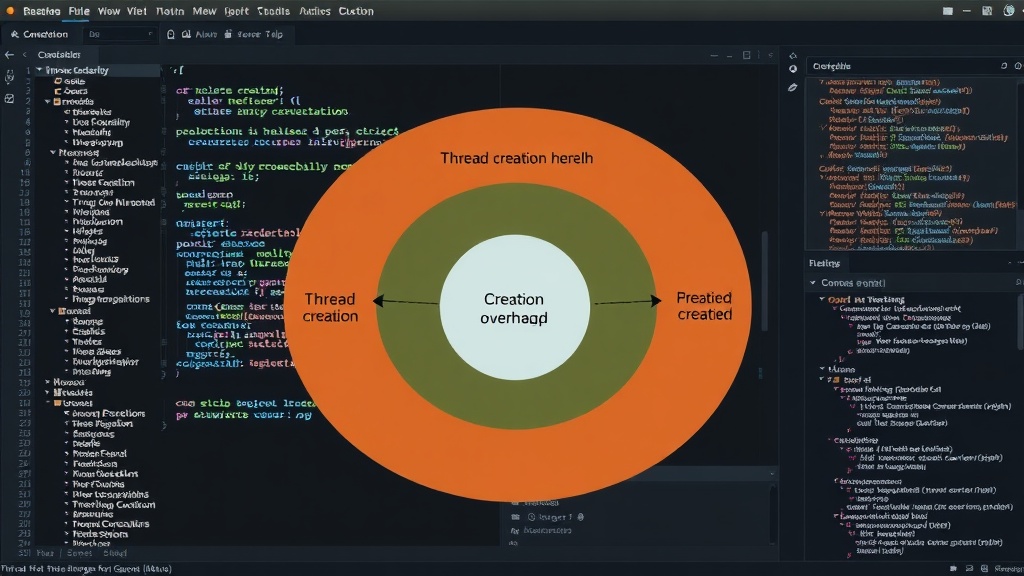
The author’s experience highlighted this: as more connections arrived, the server’s responsiveness plummeted. It wasn't a CPU-bound problem in the traditional sense (e.g., heavy computation), but rather an I/O-bound problem exacerbated by inefficient concurrency management. The blocking I/O operations meant that a single slow client could tie up a thread indefinitely, preventing it from handling other requests and contributing to the overall bottleneck. This is the "invisible" bug: the system appears to be working, but its capacity is silently eroding due to unmanaged blocking I/O and excessive thread usage.
Beyond Threads: Exploring Non-Blocking I/O (NIO)
The limitations of the thread-per-connection model necessitate exploring more advanced I/O paradigms. Java's Non-blocking I/O (NIO) API, introduced in Java 1.4, provides a more scalable alternative. NIO allows a single thread to manage multiple I/O channels concurrently. It achieves this through mechanisms like selectors, which monitor multiple channels for readiness (e.g., data available for reading, ready for writing, connection accepted).
With NIO, instead of a thread blocking on a single operation, it can register interest in events on multiple channels with a selector. The selector then wakes up when one or more channels are ready for an operation. The thread can then perform the non-blocking operations on those ready channels. This drastically reduces the number of threads required, often down to a small pool of threads that handle all I/O events. This is a fundamental shift: instead of waiting idly for I/O, threads actively poll for readiness and execute when work is available.
Implementing NIO involves a different set of classes and concepts: Selector, ServerSocketChannel, SocketChannel, ByteBuffer, and SelectionKey. A ServerSocketChannel replaces ServerSocket for accepting connections, and SocketChannel replaces Socket for communication. Data is read into and written from ByteBuffers. The Selector is the heart of the NIO event loop, managing the registration of channels and the dispatching of events.
The transition to NIO is not trivial. It requires a different mindset for handling asynchronous operations and managing state across multiple requests within a single thread. Error handling also becomes more complex, as operations that would have thrown exceptions in blocking I/O might now return special values or require checking status flags.
Lessons Learned: The Nuances of Network Performance
Building a bare-metal server reveals that network programming is far more than just sending and receiving bytes. It involves a deep understanding of operating system behavior, network protocols, and the intricacies of concurrency. The "invisible" bug, stemming from blocking I/O and inefficient threading, is a prime example of how seemingly small architectural choices can lead to significant performance cliffs.
Key takeaways from this endeavor include:
- The cost of threads: Each thread is not free. Excessive thread creation for I/O-bound tasks is a common performance killer.
- Blocking vs. Non-Blocking: Understanding when and how to use blocking and non-blocking I/O is crucial for scalability. NIO offers a more efficient model for high-concurrency scenarios.
- Buffer management: Efficiently managing data buffers (like
ByteBufferin NIO) is critical for throughput. Inefficient buffer handling can lead to unnecessary data copying and memory churn. - System calls: Every read or write operation ultimately translates to system calls. The efficiency of these calls and how they are managed by the OS and the application layer profoundly impacts performance.
This hands-on experience underscores that frameworks and libraries exist for a reason. They abstract away these low-level complexities, offering optimized solutions for common problems. However, for developers aiming to optimize performance-critical applications or understand the underpinnings of network services, diving into bare-metal development provides invaluable insights. The journey into building an HTTP server from raw sockets has illuminated the subtle, yet powerful, impact of I/O operations on application performance and scalability. It’s a reminder that even in the age of high-level abstractions, the fundamental mechanics of data transfer remain a critical area of study.