%22%20%2F%3E%0A%20%20%3C%2Fsvg%3E)
Introducing Incremental
Jane Street, a quantitative trading firm renowned for its sophisticated technology stack, has open-sourced its Incremental library. This library provides a robust framework for building and managing incremental computations. Incremental computation is a paradigm where the result of a computation is updated efficiently when its inputs change, rather than being recomputed from scratch. This is particularly useful in scenarios where computations are performed repeatedly on slightly modified data, such as in compilers, data processing pipelines, and interactive user interfaces.
The core idea behind Incremental is to allow developers to express computations in a declarative way. The library then takes care of maintaining the state and updating results only when necessary. This can lead to significant performance improvements compared to naive recomputation, especially for complex dependency graphs. Think of it less like a chef constantly recooking an entire meal every time a single ingredient is swapped, and more like a skilled sous chef who precisely adjusts the existing dish based on the new input.
Key Concepts and Features
Incremental computations revolve around several key concepts:
- Values: The fundamental building blocks of computations. A value can be a simple literal or the result of a more complex computation.
- Dependencies: Values can depend on other values. When a dependency changes, the dependent value must be recomputed.
- Memoization: Incremental automatically caches the results of computations. If a value's dependencies haven't changed, its cached result is returned, avoiding redundant work.
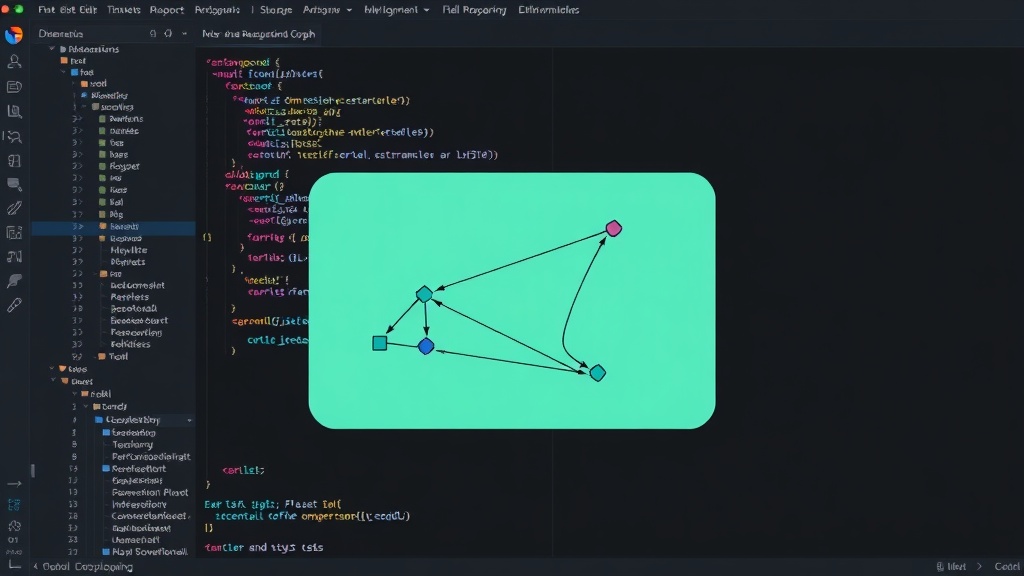
- Change Propagation: The library efficiently propagates changes through the dependency graph, ensuring that only affected values are recomputed.
The library is designed to be flexible and adaptable. It can handle complex dependency structures, including cycles, and provides mechanisms for managing side effects. Developers can define computations using a clear, functional style, which enhances code readability and maintainability. The underlying implementation is optimized for performance, leveraging techniques like lazy evaluation and fine-grained change detection.
Use Cases and Applications
The Incremental library is well-suited for a wide range of applications:
- Compilers and Language Servers: Incremental compilation and analysis can drastically speed up development cycles by only recompiling or re-analyzing changed code sections. This is crucial for large codebases and fast feedback loops in IDEs.
- Data Processing and Analytics: In scenarios involving large datasets and frequent updates, incremental computation can provide near real-time analytics by updating aggregates or derived metrics efficiently.
- User Interface Frameworks: Many modern UI frameworks use incremental concepts to efficiently update the rendered output when application state changes. Incremental computation can serve as a foundational layer for such systems.
- Simulation and Modeling: In scientific simulations or financial modeling, where state changes iteratively, incremental updates can make simulations run faster and more responsively.
One of the surprising aspects of incremental computation is how it can be applied to seemingly unrelated domains. For instance, optimizing a UI rendering pipeline shares fundamental principles with optimizing a compiler's dependency analysis. The Incremental library abstracts these common patterns, allowing developers to leverage battle-tested techniques across different problem spaces.
Developer Experience and Integration
Jane Street has a strong reputation for producing high-quality, well-documented libraries, and Incremental appears to follow this tradition. The library is designed to integrate smoothly into existing projects, particularly those already using OCaml or other functional programming languages where Jane Street's expertise lies. The declarative nature of the API means developers can focus more on the logic of their computations and less on the intricacies of state management and update scheduling.
The library's emphasis on purity and functional principles also contributes to easier reasoning about code and improved testability. By isolating computations and managing dependencies explicitly, it becomes simpler to write correct and robust software. The potential for performance gains is substantial, especially as datasets grow and computation graphs become more intricate. If you're building any system that involves repeated computations on changing data, exploring how Incremental can streamline your approach is a worthwhile endeavor.
The Future of Incremental
The open-sourcing of Incremental by Jane Street signals a commitment to fostering broader adoption and community involvement. As more developers experiment with and contribute to the library, its capabilities are likely to expand. We can anticipate seeing Incremental adopted in new and innovative ways, pushing the boundaries of what's possible with efficient computation. The broader impact could be a shift towards more declarative and performant software architectures across various industries.