Why TLS for Internal Services is Non-Negotiable
Many organizations initially secure only public-facing endpoints, leaving internal traffic unencrypted. This creates a significant attack surface. An attacker gaining access to your internal network (e.g., via a compromised employee machine or an exposed development server) can then easily snoop on or tamper with unencrypted communications. This is akin to leaving the back door of your house wide open while diligently locking the front door. For secure DevOps, unencrypted internal traffic is an unacceptable risk.
TLS (Transport Layer Security) encrypts data in transit, ensuring confidentiality and integrity. When applied to internal services, it prevents man-in-the-middle attacks, eavesdropping, and data tampering between microservices, databases, and other internal components. This layer of security is not a luxury; it's a fundamental requirement for protecting sensitive data and maintaining system integrity.
Establishing Your Internal Certificate Authority (CA)
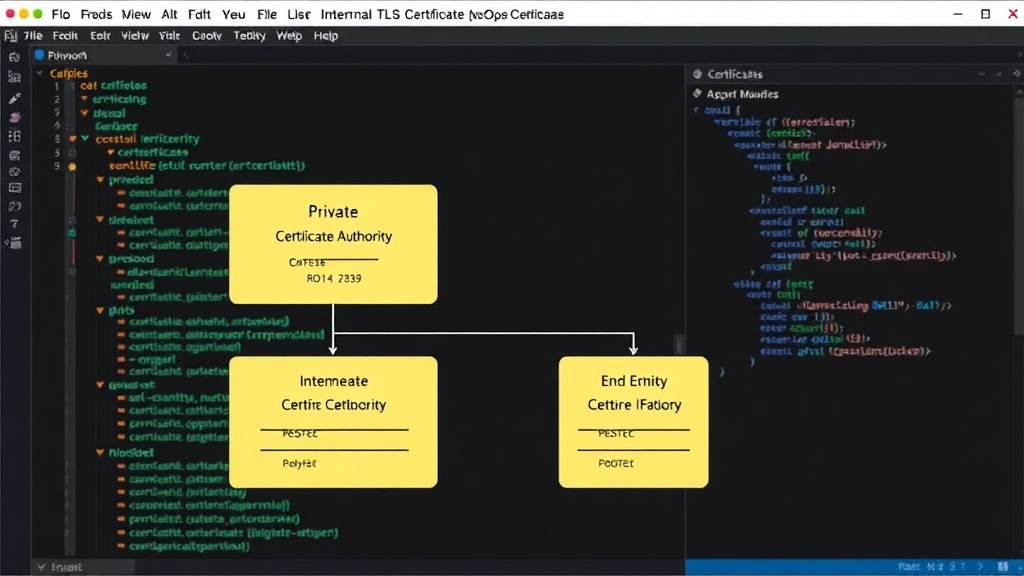
Public CAs issue certificates trusted by default by browsers and operating systems. For internal services, this model is often impractical or overly expensive. Instead, organizations should establish their own Private Certificate Authority (CA). This CA will be responsible for issuing and managing certificates for all internal services.
Setting up an internal CA involves several key steps:
- Root CA: Create a highly secure root CA. This CA's private key must be protected with extreme care, ideally offline or in a Hardware Security Module (HSM), as its compromise would invalidate all issued certificates.
- Intermediate CA: For operational flexibility and to further protect the root CA, it's best practice to use an intermediate CA. The root CA signs the intermediate CA's certificate, and the intermediate CA then signs the end-entity certificates used by services.
- Certificate Issuance Policy: Define clear policies for certificate issuance, including validity periods, key usage, and subject alternative names (SANs).
- Revocation Mechanism: Implement a Certificate Revocation List (CRL) or Online Certificate Status Protocol (OCSP) mechanism to invalidate compromised or expired certificates.
Issuing and Managing Service Certificates
Once the internal CA is established, you can begin issuing certificates to your internal services. This process should be automated as much as possible within your DevOps pipeline.
- Certificate Generation: Services will generate their own private keys and certificate signing requests (CSRs).
- CSR Submission: The CSR is submitted to the internal CA for signing.
- Automated Deployment: The signed certificate, along with the CA's root certificate, is then automatically deployed to the service. Tools like cert-manager in Kubernetes or custom scripts can manage this process.
Key considerations for service certificates:
- Short Lifespans: Issue certificates with short validity periods (e.g., 30-90 days). This significantly reduces the window of opportunity for a compromised certificate to be exploited.
- Automated Renewal: Implement automated renewal processes. Services should be able to request and install new certificates well before their current ones expire.
- Subject Alternative Names (SANs): Ensure SANs in certificates accurately reflect all hostnames and IP addresses the service will be accessed by.
- Strong Key Algorithms: Use strong cryptographic algorithms like RSA 2048-bit or ECDSA with appropriate curve lengths.
Integrating with DevOps Workflows
The success of internal TLS certificate management hinges on its seamless integration into the DevOps lifecycle. This means treating certificates as code and automating their management.
- Infrastructure as Code (IaC): Manage CA infrastructure and certificate policies using tools like Terraform or Ansible.
- CI/CD Pipelines: Integrate certificate issuance and renewal into your Continuous Integration/Continuous Deployment pipelines. Services should not be deployed without valid, short-lived certificates.
- Monitoring and Alerting: Implement robust monitoring for certificate expiry, renewal failures, and revocation status. Alert relevant teams immediately when issues arise.
- Secrets Management: Use secure secrets management solutions (e.g., HashiCorp Vault, AWS Secrets Manager, Azure Key Vault) to store CA private keys and distribute service certificates securely.
Trusting Your Internal CA
For services to trust certificates signed by your internal CA, the root certificate of your internal CA must be distributed and trusted by all clients and services within your network. This often involves configuring operating systems, container runtimes, and application trust stores to include your internal root CA certificate.
This distribution can be managed via:
- Configuration Management Tools: Deploy the root CA certificate to all servers and endpoints.
- Container Images: Bake the root CA certificate into base container images.
- Orchestration Platforms: Utilize Kubernetes ConfigMaps or similar mechanisms to distribute certificates to pods.
The surprising detail here is not the complexity of setting up an internal CA, but how often organizations overlook this crucial step, leaving their internal networks vulnerable. Treating internal TLS certificate management as an afterthought is a common, yet dangerous, oversight.
Conclusion: A Foundation for Zero Trust
Implementing robust TLS certificate management for internal services is a cornerstone of a modern secure DevOps strategy. It moves organizations closer to a Zero Trust security model by ensuring that every service-to-service communication is authenticated and encrypted. By establishing a private CA, automating certificate issuance and renewal, and integrating these processes into CI/CD pipelines, organizations can significantly enhance their security posture and protect their internal network from a wide range of threats.