
Intel Accelerates Expansion Amidst Global Competition
Intel is making significant strides in its manufacturing expansion plans, aiming to bolster its foundry services and regain market leadership. The company's ambitious roadmap involves building new fabs and expanding existing ones, particularly its Yongin facility in South Korea, which is now slated for an earlier completion. This aggressive push is a direct response to the intensifying global competition in semiconductor manufacturing, with nations and corporations alike investing heavily to secure supply chains and technological advantage. Intel's strategy hinges on delivering advanced process nodes and attracting external chip design customers to its foundry business, a critical pivot for the company's future growth.
The expansion is not just about capacity; it's also about technological prowess. Intel is investing in next-generation manufacturing techniques to compete with rivals like TSMC and Samsung. The accelerated timeline for the Yongin fab suggests a sense of urgency, as the demand for advanced chips, particularly for AI and high-performance computing, continues to surge. This move positions Intel to capture a larger share of the foundry market, which has historically been dominated by a few key players.
Cadence Leverages AI for Advanced Chip and Package Design
Cadence Design Systems is pushing the boundaries of electronic design automation (EDA) with its new AI-driven "super agent" for PCB and advanced packaging. This development signifies a major leap in how complex integrated circuits and their physical layouts are designed. Traditional PCB design is a painstaking, iterative process. Cadence's AI agent aims to automate significant portions of this workflow, from initial placement and routing to optimization for signal integrity and power delivery. The focus on advanced packaging is particularly noteworthy, as the industry increasingly relies on heterogeneous integration—combining multiple chiplets into a single package—to achieve higher performance and functionality. This AI agent is designed to navigate the intricate constraints and interdependencies inherent in these complex designs, promising faster design cycles and improved end-product performance.
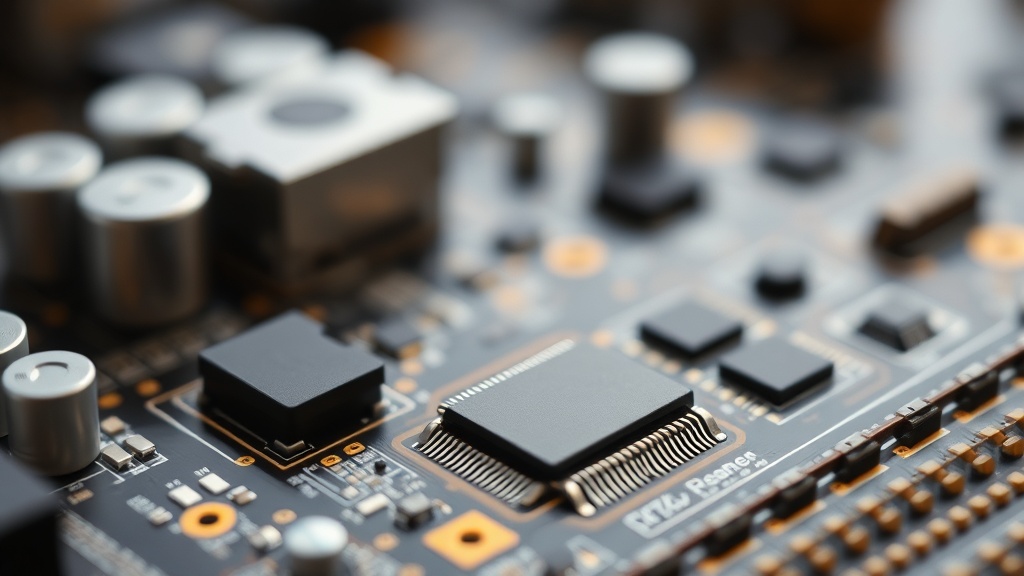
The implications for chip designers are profound. By reducing the manual effort required for complex tasks, Cadence's AI agent can free up engineers to focus on higher-level architectural decisions and innovation. This could lead to quicker time-to-market for new products and enable the creation of more sophisticated and power-efficient designs that were previously unfeasible due to design complexity and time constraints.
Photonics Fab Wars and HBM Standards Take Center Stage
The battle for dominance in photonics fabrication is intensifying. Photonics, which uses light instead of electrons for data transmission and processing, is seen as a critical technology for future high-speed computing and communications. Several companies are investing heavily in developing and scaling up silicon photonics foundries, leading to what can be described as a "fab war." This competition is driven by the demand for faster, more energy-efficient data transfer, especially in data centers and high-performance computing environments.
Parallel to this, the standardization of High Bandwidth Memory (HBM) is gaining traction. HBM is essential for AI accelerators and high-performance GPUs, providing the necessary memory bandwidth to feed these compute-intensive applications. Efforts to solidify HBM standards are crucial for ensuring interoperability and driving wider adoption. As AI models grow in complexity and data requirements, the need for efficient, high-bandwidth memory solutions becomes paramount. Companies are working to define specifications that will allow for greater compatibility and performance gains across different vendors and platforms.
Government Funding and Strategic Partnerships Fuel Growth
Governments worldwide are actively stimulating the semiconductor industry through substantial funding initiatives. Germany has announced significant financial support for its domestic chip manufacturing sector, signaling a broader European strategy to onshore critical semiconductor production capabilities. This aligns with the global trend of governments recognizing the strategic importance of a robust domestic semiconductor supply chain, spurred by recent geopolitical tensions and supply chain disruptions.
The U.S. CHIPS Act continues to be a major driver, with new awards being announced that will further boost domestic semiconductor research, development, and manufacturing. These government investments are designed to de-risk private sector investments, encourage innovation, and create a more resilient semiconductor ecosystem. Such funding is critical for enabling the capital-intensive nature of advanced semiconductor manufacturing and R&D.
In parallel, strategic partnerships are forming to accelerate progress. Rapidus, a Japanese consortium aiming to revive the country's chip manufacturing prowess, has teamed up with key international players. These collaborations are essential for sharing expertise, accessing cutting-edge technology, and building the necessary infrastructure to compete on a global scale. The formation of such alliances underscores the collaborative nature of the modern semiconductor industry, where no single entity can achieve cutting-edge advancements alone.
Quadric Secures Funding, AMS Acquires, and Earnings Reports Surface
In the venture capital space, Quadric, a company focused on specialized AI hardware, has successfully secured new funding. While the exact amount is not specified, this investment signals continued investor confidence in the burgeoning market for AI-specific silicon solutions. Companies like Quadric are developing novel architectures designed to accelerate machine learning inference and training, offering alternatives to general-purpose processors.
On the M&A front, AMS has completed an acquisition, though details of the target and the strategic rationale are not provided in this summary. Such consolidations are common in the semiconductor industry as companies seek to expand their product portfolios, gain market share, or acquire critical technologies and talent.
Finally, the week saw the release of several earnings reports from semiconductor companies. While specific figures are not detailed, the general trend of earnings reports provides crucial insights into the financial health and market performance of key players. Investors and analysts closely scrutinize these reports for indicators of demand, profitability, and future outlook across different segments of the chip industry, from foundries to equipment manufacturers and chip designers.