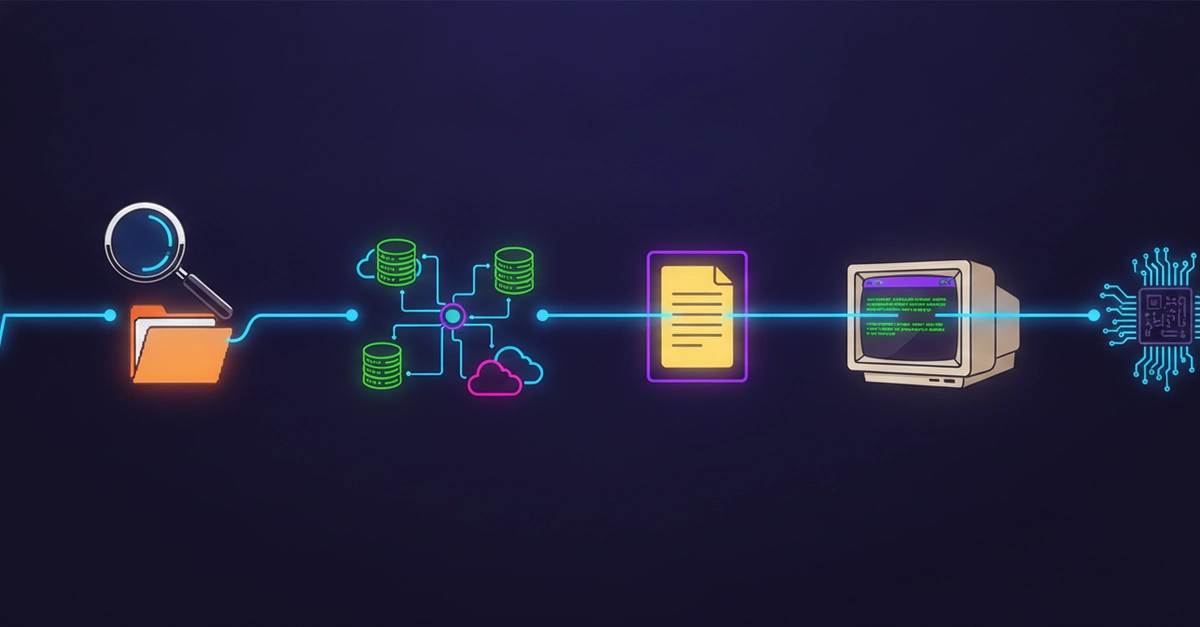
Adding AI coding assistants like Claude Code to AWS projects typically involves a tedious setup process. Developers often resort to manually crafting configuration files, such as .mcp.json, and hunting down precise command strings from documentation. This loop is frustrating: typos in absolute paths, missing configuration files, and editors that fail to recognize the AI server can quickly derail adoption, leaving developers with tools that don't deliver on their promise.
Infrawise, an open-source tool available on npm, aims to collapse this entire setup loop into a single command. It achieves this by statically analyzing a project's codebase, its AWS infrastructure, and database schemas. This analysis exposes crucial context, such as partition keys, Global Secondary Indexes (GSIs), and database indexes, directly to AI coding assistants via the MCP (Meta-Channel Protocol). This ensures Claude Code understands the actual structure of your AWS resources, rather than relying on guesswork derived solely from source files.
Streamlining AI Context with Infrawise
The primary hurdle for AI coding assistants in cloud environments is the lack of direct, accurate context about the underlying infrastructure. While AI models can ingest source code, they often lack insight into the deployed AWS services, their configurations, and the specific database schemas being used. This gap forces the AI to make assumptions, which can lead to incorrect code suggestions, inefficient resource utilization, or even outright errors when interacting with AWS services.
Infrawise addresses this by acting as a bridge. Its static analysis engine scans your project to build a comprehensive map of your AWS footprint. This includes identifying resources like DynamoDB tables, their primary keys, GSIs, and other critical indexing strategies. For databases, it parses schemas to understand table structures, relationships, and constraints.
Once this context is gathered, Infrawise exposes it to AI coding assistants through the MCP. This protocol allows the AI to query and understand the infrastructure details dynamically. Instead of the AI inferring information from code snippets, it receives precise data about your AWS setup. This is akin to a new employee starting a job not just with the company handbook, but also with a live, interactive map of all company assets and their exact locations. The difference in onboarding speed and effectiveness is profound.
The Setup Process: A Single Command Solution
The core value proposition of Infrawise lies in its drastically simplified setup. Traditional methods require a sequence of manual steps:
- Locating and copying the correct command-line interface (CLI) commands from documentation.
- Manually creating and editing configuration files (e.g.,
.mcp.json). - Ensuring absolute paths in configuration files are correct and error-free.
- Restarting development environments (IDEs) for changes to take effect.
- Verifying that the AI server is properly connected and has access to the necessary context.
Infrawise replaces this multi-step, error-prone process with a single command. Developers can initiate the analysis and context-sharing process with minimal effort. The tool handles the discovery of AWS resources, the generation of necessary configuration, and the establishment of the communication channel with the AI assistant automatically. This dramatically reduces the time to value, allowing developers to start leveraging AI for code generation and infrastructure management much faster.
Under the Hood: Static Analysis and MCP
Infrawise's effectiveness hinges on two key components: its static analysis engine and its use of the MCP protocol.
The static analysis engine is designed to be non-intrusive. It parses project files, including Infrastructure as Code (IaC) definitions (like CloudFormation or Terraform, though the provided source doesn't specify which IaC tools are directly supported, it implies broad compatibility with AWS infrastructure definitions), and database schema files. By examining these artifacts, Infrawise can build a model of the deployed or intended infrastructure. This includes identifying resource types, their configurations, dependencies, and relationships. For instance, it can detect a DynamoDB table, identify its primary key, and list any GSIs or LSIs defined for it. This level of detail is crucial for an AI to generate contextually relevant code.
The Meta-Channel Protocol (MCP) is a standardized way for development tools to communicate. By leveraging MCP, Infrawise ensures compatibility with a growing ecosystem of AI coding assistants that support the protocol. Instead of building custom integrations for each AI tool, Infrawise provides a universal interface. This makes it a future-proof solution that can adapt as new AI coding assistants emerge or existing ones evolve.
The surprising detail here is not the existence of a tool that analyzes AWS infrastructure, but the aggressive simplification of the setup process. Many sophisticated tools fail not due to technical limitations, but because their initial barrier to entry is too high. Infrawise appears to have learned this lesson, focusing on making the integration seamless.
Broader Implications for AI in Cloud Development
The success of tools like Infrawise has significant implications for the broader adoption of AI in cloud development workflows. When AI coding assistants have accurate, up-to-date context about the infrastructure they are interacting with, their utility increases exponentially. They can assist with tasks such as:
- Generating boilerplate code for AWS services based on existing patterns.
- Suggesting optimizations for database queries or resource configurations.
- Identifying potential security vulnerabilities or misconfigurations in IaC scripts.
- Writing unit tests that accurately reflect the deployed environment.
- Refactoring code to align with best practices for specific AWS services.
If you're a developer working with AWS and an AI coding assistant, you should consider how much context your AI actually has. Does it know your DynamoDB partition keys? Does it understand your VPC peering setup? If not, it's likely operating with incomplete information, akin to a chef trying to cook without knowing the available ingredients. Infrawise aims to change that by making this essential context readily available.
The challenge for Infrawise, and similar tools, will be maintaining accuracy as cloud environments become increasingly dynamic. Continuous analysis and robust diffing capabilities will be key to keeping the AI's understanding synchronized with the actual deployed infrastructure. However, by solving the initial setup problem so effectively, Infrawise has cleared a major hurdle for developers looking to harness the power of AI in their AWS projects.