The Indie Developer's Market Research Advantage
Big companies invest heavily in market research, employing surveys, consultants, and focus groups. For an indie developer, however, the goal is different: to determine if an app idea is worth a few months of focused effort, not to justify multi-million dollar development budgets. This requires a more agile, data-driven approach that leverages publicly available information, bypassing the need for costly subscriptions or extensive internal teams.
The core question for an indie developer isn't about total addressable market (TAM) or serviceable obtainable market (SOM). Instead, it boils down to three critical points:
- Are users genuinely frustrated with current solutions?
- Is the potential market large enough to support a solo developer or small team?
- Is there a specific, underserved angle or niche that incumbents are overlooking?
Answering these questions effectively means looking for signals of unmet needs and market gaps. This guide outlines a practical, accessible method for indie developers to conduct this research.
Identifying User Frustration and Unmet Needs
The first step in finding a viable app idea is to identify pain points. Users express frustration and unmet needs in various online communities. These are fertile grounds for discovering opportunities.
Where to Find Signals of Frustration:
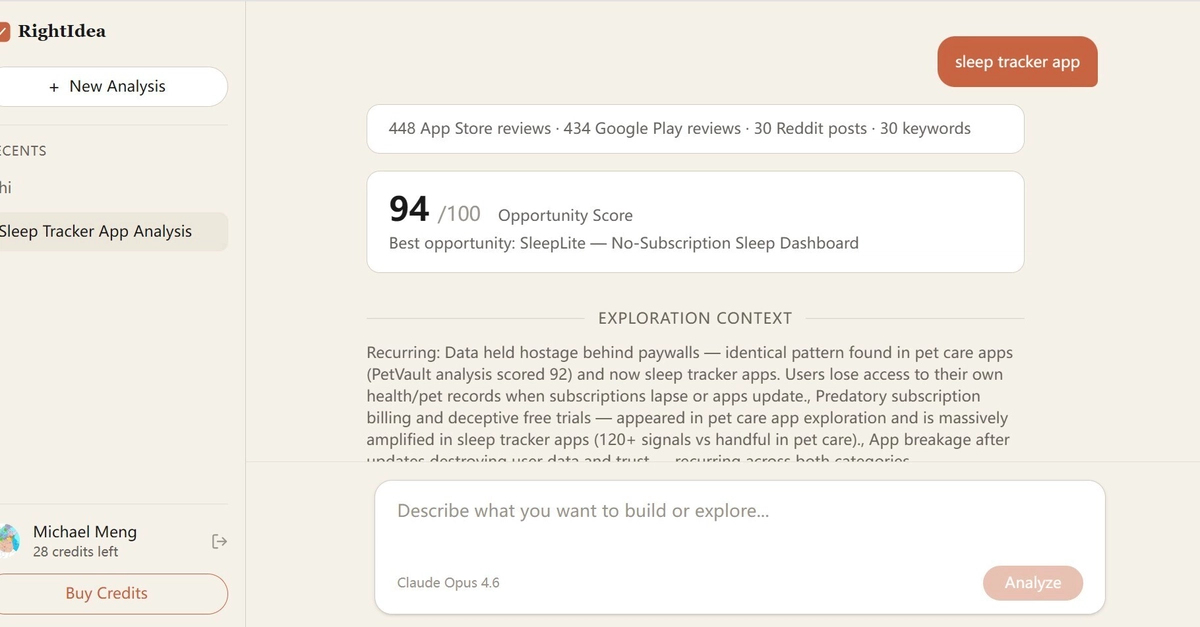
- App Store Reviews: Dive deep into reviews for existing apps in your target category. Look for recurring complaints, feature requests, or comments about missing functionality. Negative reviews are goldmines for identifying what users dislike or wish existed.
- Online Forums and Communities: Platforms like Reddit (subreddits related to specific apps, software categories, or developer communities), Stack Overflow, and specialized forums are where users discuss problems and seek solutions. Search for keywords related to your potential app idea and look for threads where users express dissatisfaction or ask for help that isn't adequately met by current tools.
- Social Media: Twitter, LinkedIn, and other social platforms can reveal trending topics and user sentiments. Monitor hashtags and discussions related to your industry or potential app functionality.
- Product Hunt and Similar Launch Platforms: Observe what's being launched, what gains traction, and critically, what users are saying in the comments. Often, early feedback on new products highlights areas for improvement or features users wish were included.
When analyzing these sources, look for patterns. A single complaint might be an outlier, but consistent feedback across multiple platforms and users indicates a genuine market need. Think of these online discussions less like casual chatter and more like a direct feed of user requirements, unfiltered by corporate marketing speak.
Assessing Market Size and Viability for Indie Developers
Once you've identified potential pain points, the next step is to gauge if the market is large enough to sustain your development efforts. For an indie developer, this doesn't mean capturing a massive market share; it means finding a niche where a dedicated user base exists and is willing to pay for a better solution.
Methods for Market Sizing:
- Competitor Analysis: Identify direct and indirect competitors. Examine their app store rankings, download estimates (where available), user reviews, and pricing models. Tools like Sensor Tower or App Annie (though often paid, some data may be accessible or comparable through free tools and manual analysis) can offer insights. However, even without these, observing the number of reviews, the frequency of updates, and the general buzz around competitors can indicate market activity.
- Keyword Research: Use tools like Google Keyword Planner (free with a Google Ads account) or Ahrefs/SEMrush (paid, but often offer limited free searches) to research search volumes for terms related to your app idea and its features. High search volume suggests significant user interest and potential demand.
- Analyze Community Engagement: The size and activity level of online communities discussing a particular problem or app category can be a proxy for market size. A thriving subreddit or active forum suggests an engaged user base that is passionate about the topic.
- Evaluate Monetization Potential: Consider how users in this market currently pay for solutions. Are they accustomed to subscriptions, one-time purchases, or in-app purchases? This indicates their willingness to spend and can inform your own monetization strategy.
The key is to find a balance. A market that is too small might not be sustainable, but a market dominated by giants with little room for differentiation might be equally challenging. Look for segments within larger markets that are underserved or where a specific user group has unique needs that aren't being fully addressed.
Finding Your Unique Angle and Competitive Edge
With an understanding of user frustrations and market potential, the final crucial step is to define your unique value proposition. How will your app be different and better than existing options?
Strategies for Differentiation:
- Focus on a Niche: Instead of trying to serve everyone, target a specific sub-segment of the market with tailored features and a focused user experience. For example, instead of a general task manager, build one specifically for freelance graphic designers.
- Superior User Experience (UX): Many apps are functional but clunky. A clean, intuitive, and delightful user interface can be a significant differentiator, especially for less tech-savvy users.
- Innovative Features: Identify a specific feature that is missing from competitors or implement an existing feature in a novel way. This could involve leveraging new technologies or rethinking a common workflow.
- Better Pricing or Monetization: Offer a more accessible price point, a more transparent model, or a free tier that provides genuine value, attracting users who are priced out or dissatisfied with competitor models.
- Exceptional Support: As an indie developer, you can often provide more personal and responsive customer support than larger companies, building strong user loyalty.
This isn't about reinventing the wheel. It's about finding a specific, tangible improvement or a unique perspective that resonates with a defined audience. The incumbents might have the scale, but you have the agility to pivot and refine based on direct user feedback, a critical advantage in carving out your space.
Putting It All Together: A Practical Workflow
For an indie developer, app market research should be an iterative process, not a one-off task. Start broad by identifying general areas of interest or problems you've personally encountered. Then, narrow your focus by:
- Brainstorming: Generate a list of potential app ideas based on your interests and observed problems.
- Problem Validation: Use online communities and app store reviews to confirm if these problems are widely felt and if existing solutions are inadequate.
- Market Sizing Lite: Perform quick competitor analysis and keyword research to estimate demand and identify potential niches.
- Angle Definition: Articulate how your app will solve the problem uniquely or better than alternatives.
- MVP Planning: Focus on building a Minimum Viable Product (MVP) that addresses the core pain point and validates your chosen angle.
This data-driven approach ensures that your development time is spent on ideas with a higher probability of success, allowing you to compete effectively without massive overhead. Your ability to be nimble and directly engage with user feedback is your superpower.