The Challenge of Seamless Game Music
In large-scale games, music isn't static. It shifts fluidly to match gameplay – transitioning from exploration themes to intense combat tracks, or swelling with a victory fanfare. This dynamic scoring, known as adaptive music, typically relies on sophisticated, often costly middleware solutions like FMOD or Wwise. These tools are designed to manage complex audio states and ensure smooth transitions that don't disrupt the player's immersion.
However, this capability has largely remained out of reach for independent web game developers. Their budgets and technical resources are often constrained, making the integration of such advanced audio systems a significant hurdle. The core problem lies in how to change musical tracks in response to game states without jarring cuts. A simple crossfade sounds amateurish because it breaks the musical rhythm and timing. The transition needs to happen precisely at a musically appropriate moment, like the end of a musical phrase or the start of a new bar.
Architecture: Layered Music and Beat-Synchronized Crossfades
To bridge this gap, a new SDK has emerged, aiming to bring professional-grade adaptive music capabilities to the indie web game scene. The goal is an SDK that integrates with minimal code – ideally, under ten lines. This approach democratizes a feature previously reserved for AAA titles.
The SDK's architecture is built around two key concepts: musical layers and beat-synchronized crossfading. It manages multiple audio layers, each representing a different game state or mood – think 'town,' 'explore,' 'combat,' and 'victory.' Crucially, these layers are designed to share a common tempo and musical structure. When the game logic dictates a change in state – for instance, entering combat from exploration – the SDK doesn't abruptly cut the current music. Instead, it schedules a crossfade that is precisely synchronized to the beat of the music. This is achieved by leveraging the high-precision clock available in the Web Audio API. The system waits for the next musically opportune moment, such as the end of a musical bar or a specific beat, to initiate the transition. This ensures that the switch between music states is imperceptible, maintaining the game's flow and musical integrity.
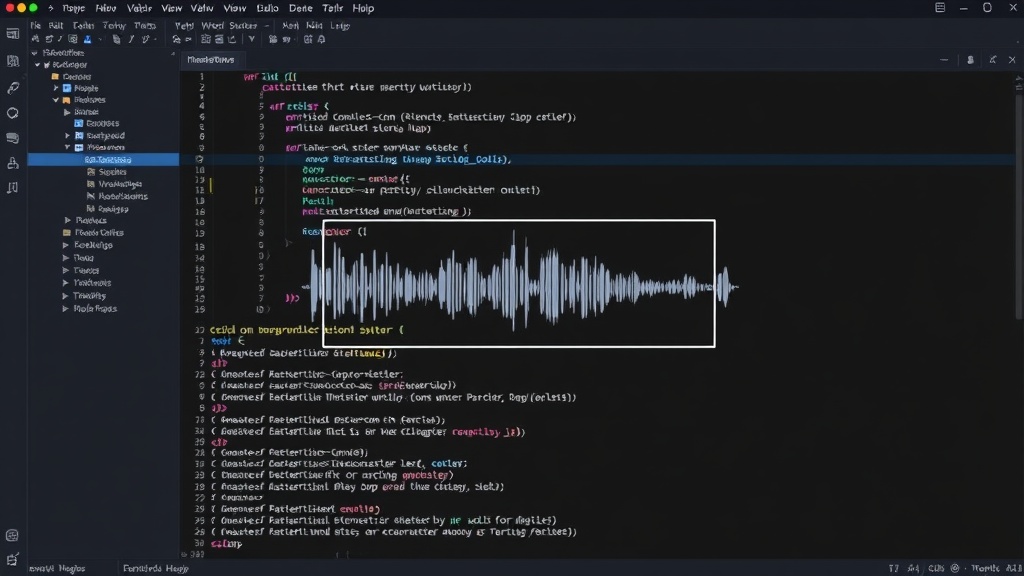
The Web Audio API is fundamental to this process. Its capabilities for precise timing, scheduling of audio events, and manipulation of audio nodes (like gain nodes for crossfades) are essential. By using the API's internal clock, the SDK can achieve synchronization down to the millisecond, far beyond what standard JavaScript timers can offer. This allows for transitions that feel natural and musically coherent, even under demanding real-time conditions.
Developer Integration and Usage
The promise of a simple integration is key to the SDK's appeal for indie developers. The typical workflow involves initializing the SDK with a set of audio assets, each tagged with its corresponding game state and musical properties (like tempo and key). Developers then hook into game events. When a game state changes, they simply call a function on the SDK instance, passing the new target state. The SDK handles the rest: monitoring the music's current position, calculating the optimal transition point based on the shared tempo, and executing a smooth crossfade between the outgoing and incoming audio layers. This abstraction shields developers from the complexities of audio synchronization and timing, allowing them to focus on game design and core mechanics.
Consider a scenario where a player is exploring a peaceful forest. The music layer is set to 'explore.' If enemies suddenly appear, the game triggers a transition to 'combat.' The SDK, aware of the 'explore' track's current beat and tempo, will schedule the fade out of the 'explore' music and fade in of the 'combat' music to align with the next major beat or musical phrase. This prevents the awkwardness of a cut-off note or a sudden tempo change, making the shift feel like a natural escalation of the game's tension.
The SDK also needs to accommodate variations within states. For instance, within the 'combat' state, there might be sub-states like 'danger' or 'boss fight.' The SDK's design should allow for these hierarchical transitions, perhaps through nested layers or by providing parameters for transition intensity and duration. This level of control, while abstracted, is what allows for truly dynamic and responsive soundtracks.
Implications for Web Game Audio
This SDK represents a significant step forward for audio in web-based games. It lowers the barrier to entry for sophisticated audio design, enabling smaller teams to create more immersive and polished experiences. The reliance on the Web Audio API means the solution is inherently cross-platform, working wherever modern web browsers are found, without requiring external plugins or downloads beyond the game's assets themselves.
The success of such an SDK could influence future web game audio development. It encourages a more thoughtful approach to soundtrack design, moving beyond simple loop-based tracks. Developers might start planning their music with adaptive layers from the outset, knowing that the tools are available to implement these ideas effectively. This could lead to a richer, more nuanced audio landscape in the browser-based gaming ecosystem.
The surprising detail here is not the complexity of the Web Audio API itself, but how a relatively simple SDK can abstract its power to solve a long-standing problem for indie developers. The challenge was always in the implementation, not the underlying technology. By providing a clean interface and smart defaults, this SDK makes advanced audio design accessible.
Future Possibilities
What remains to be seen is how this SDK will evolve. Will it incorporate more advanced audio effects that can also be dynamically triggered? Can it support procedural audio generation or AI-driven music composition in real-time? The current focus on beat-synced crossfades is a strong foundation, but the potential for deeper integration with game logic and more complex audio manipulation opens up exciting avenues for future development.