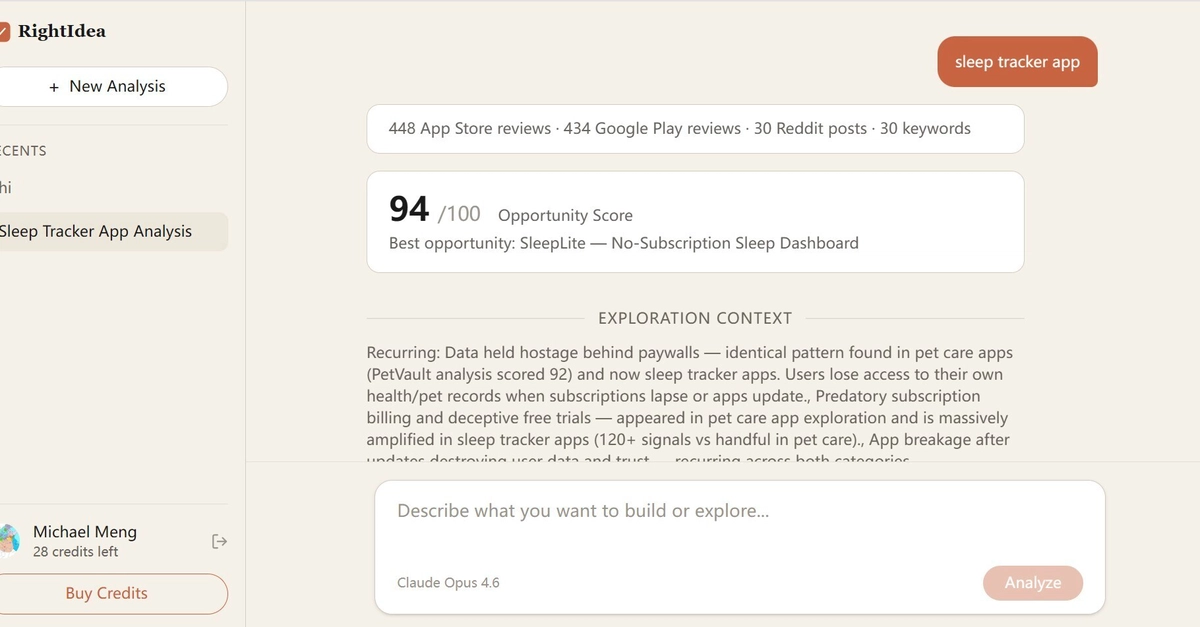
Beyond the Hype: What Makes an App Profitable for Indies?
The app market is saturated with advice promising the next big thing. Lists of "profitable app ideas" often steer indie developers and small teams toward building the next Uber or a broad social network. These ventures demand millions in funding and massive teams, a far cry from the reality of independent development. The true path to profitability for those operating with limited resources isn't about scale; it's about precision. For an indie developer, "profitable" typically means generating between $5,000 and $50,000 per month with a lean operation. This fundamental difference reshapes the entire approach to identifying viable app ideas.
Success hinges on a few core principles:
- A Problem Worth Paying For: The app must solve a pain point that users are willing to pay to alleviate. Free downloads alone don't translate to revenue.
- Low Competition from Giants: Identify markets not already dominated by heavily funded incumbents. Direct competition with deep-pocketed companies is a losing battle for indies.
- Niche Dominance: Broad categories like "productivity" are too crowded. Success lies in hyper-specific niches, such as a "time tracker for freelance writers" or a "meal planner for keto athletes."
- Clear Monetization Strategy: The revenue model must align with the niche and the problem solved.
The Data-Driven Approach to Niche App Identification
Instead of chasing generic, high-volume ideas, the data points toward a different strategy: identifying and serving underserved niches. This approach leverages the strengths of small teams – agility, deep understanding of specific user needs, and the ability to pivot quickly. The key is to move away from the "build it and they will come" mentality and towards a "find a specific pain and solve it better than anyone else" philosophy.
Consider the landscape of successful indie apps. Many operate in spaces that are too small or too specialized for large corporations to focus on. These might include:
- Specialized Tools: Software tailored for very specific professions or hobbies. Think a dedicated app for managing a rare coin collection, a tool for calculating specific physics equations for a niche engineering field, or a digital logbook for amateur astronomers.
- Hyper-Local Services: Apps that cater to the unique needs of a very specific geographic community, provided there's a clear monetization path and limited local competition.
- Accessibility Aids: Tools designed to help individuals with specific disabilities navigate digital or physical environments. These often require deep empathy and understanding of user needs, which small, focused teams can provide.
- Niche Hobbyist Platforms: Apps for collectors, crafters, or enthusiasts of specific, non-mainstream interests. These users are often passionate and willing to pay for tools that enhance their hobby.
The underlying theme is specificity. The more precisely an app addresses a particular problem for a particular group of people, the higher the likelihood of success for an indie developer. This is because a well-defined niche reduces marketing costs, simplifies product development, and allows for deeper customer engagement.
Monetization Models That Work for Niche Apps
Once a niche problem is identified, the next critical step is selecting the right monetization model. For indie developers, models that provide predictable recurring revenue are often preferred over one-off purchases or ad-heavy approaches that can alienate niche users.
Effective models include:
- Subscription Services: Offering premium features, ongoing content updates, or essential services on a recurring basis. This is particularly effective for tools that provide continuous value, such as specialized software or curated content platforms. For example, an app that provides daily customized workout plans for a specific sport could thrive on a monthly subscription.
- Freemium with Value-Added Features: Providing a basic version of the app for free to attract users, then offering advanced features, increased capacity, or enhanced support through a paid upgrade. This model works well when the free version offers genuine utility, but the paid version unlocks significant additional value. A photo editing app might offer basic filters for free and advanced AI-powered retouching tools as a paid add-on.
- One-Time Purchases for Specialized Tools: For utility apps that solve a singular, significant problem and don't require ongoing updates or content, a single purchase can be effective. This is common for highly specialized calculators, converters, or reference tools. A complex unit converter for a specific industry might justify a one-time purchase.
- Paid Templates or Content Packs: If the app provides a framework or platform, selling curated content packs, templates, or design assets can be a lucrative supplementary revenue stream. A journaling app might sell themed journaling prompt packs.
The crucial factor is aligning the monetization strategy with the user's perceived value and the problem being solved. An app that helps freelance writers track billable hours and generate invoices, for instance, could offer a tiered subscription based on the number of clients or invoices generated per month. The value proposition is clear: the app saves them time, reduces errors, and helps them get paid faster.
The Counterintuitive Truth: Avoid "Big" Ideas
The most surprising insight from analyzing successful indie apps is that the "big" ideas – the ones that aim for mass appeal and disrupt entire industries – are precisely the ones most likely to fail for small teams. These require immense capital for user acquisition, engineering, and marketing. Trying to compete here is akin to a rowboat challenging a supertanker.
Instead, the data suggests that focusing on a small, dedicated user base with a specific, unmet need is a more sustainable and profitable strategy. These users are often more forgiving of minor imperfections, more willing to provide feedback, and more loyal to a product that genuinely solves their problem. They are also less likely to be poached by a competitor offering a slightly cheaper or superficially similar alternative because the core value is often deeply tied to the specific functionality and understanding of their unique context.
What nobody has explicitly quantified yet is the precise point at which a niche becomes too small to be viable, but the anecdotal evidence strongly suggests that "too small" is far larger than many developers assume, especially when combined with a strong monetization strategy and a passionate user base.
Building for the Long Haul: Sustainability and Growth
Profitability for indie developers isn't just about the initial launch; it's about building a sustainable business. This means focusing on user retention, continuous improvement based on feedback, and smart growth strategies.
For developers targeting niche markets:
- Engage with Your Users: Actively solicit feedback through forums, surveys, or direct communication. Understand their evolving needs and pain points.
- Iterate Based on Feedback: Use user input to guide your roadmap. Small, meaningful improvements can significantly boost retention and satisfaction.
- Expand Within the Niche: Once you dominate a specific niche, consider adjacent problems or features that would appeal to the same user base.
- Explore Strategic Partnerships: Collaborate with influencers, communities, or complementary services within your niche to expand reach.
The path to indie app profitability is not paved with generic ideas, but with deep understanding, precise execution, and a relentless focus on solving specific problems for dedicated users. It’s a marathon, not a sprint, built on solving real problems for real people.