
The Foundational Imperative: Power Before Pixels
African nations are increasingly ambitious about leveraging artificial intelligence (AI) to drive economic growth. From Rwanda to Nigeria, governments are rolling out national AI strategies, envisioning a future where intelligent technologies propel their economies forward. However, a stark reality check from the International Monetary Fund (IMF) casts a shadow over these digital aspirations. The IMF's message is clear and unequivocal: before Africa can truly bet on AI, it must first ensure its citizens and industries have reliable access to electricity. This fundamental need for power is not merely a logistical hurdle; it is the bedrock upon which any meaningful digital transformation can be built.
The current energy deficit across sub-Saharan Africa is staggering. Approximately half the region's population still lacks access to reliable electricity. This isn't just an inconvenience; it's a critical barrier to development. Without consistent power, the infrastructure required for widespread AI adoption—data centers, high-speed internet, and the devices themselves—cannot function. The ambition to leapfrog traditional development stages into an AI-driven future is commendable, but it overlooks the most basic requirement for powering the digital age. It's akin to planning a skyscraper without ensuring the ground can support its weight. The energy gap represents a fundamental disconnect between policy aspirations and on-the-ground realities.

The Economic Case for Electrification
The IMF's stance is rooted in a pragmatic economic assessment. AI, like any advanced technology, is power-intensive. Training complex models, running sophisticated algorithms, and deploying AI-powered services all demand significant and stable energy supplies. For businesses, this translates into higher operational costs due to reliance on expensive backup generators, or outright inability to implement digital solutions. For citizens, it means limited access to online education, digital healthcare, and e-commerce, all of which rely on a consistent power grid. The economic multiplier effect of electrification is well-documented. It enables manufacturing, supports small and medium-sized enterprises (SMEs), improves public services, and fosters innovation. Without it, the potential gains from AI remain theoretical, inaccessible to the vast majority.
Consider the implications for industrial development. Many of the AI applications promising to boost productivity in manufacturing, agriculture, and logistics require continuous operation. A factory relying on intermittent power cannot integrate advanced automation or predictive maintenance systems effectively. A farmer using AI-driven precision agriculture tools needs reliable power for sensors and data processing units. The IMF's argument posits that investing in electrification yields broader and more immediate economic returns than a premature focus on AI. This investment creates the essential conditions for a digital economy to flourish, rather than attempting to build advanced digital capabilities on a shaky foundation.
Digital Strategies vs. Digital Realities
The disconnect between national AI strategies and energy infrastructure is a critical point. Governments are rightly looking for new engines of economic growth, and AI presents a compelling narrative. However, these strategies often appear to be developed in a vacuum, detached from the immediate, pressing need for basic infrastructure. The publication of AI roadmaps is a positive step in signaling intent and attracting potential investment, but their success hinges on the availability of fundamental resources. The IMF's intervention serves as a crucial reminder that policy must align with practical capabilities.
The challenge is not to dismiss AI, but to sequence development priorities correctly. Electrification is not just about lighting homes; it's about powering the digital future. It enables the development of local tech talent by providing reliable internet access and computing resources. It allows for the creation of digital marketplaces and the expansion of financial inclusion through mobile banking and digital payment systems. These are all prerequisites for any AI-driven service to gain traction. The IMF's perspective suggests that a focus on universal electrification will unlock a cascade of benefits, including the capacity to adopt and benefit from AI technologies more effectively and equitably.
The Path Forward: A Balanced Approach
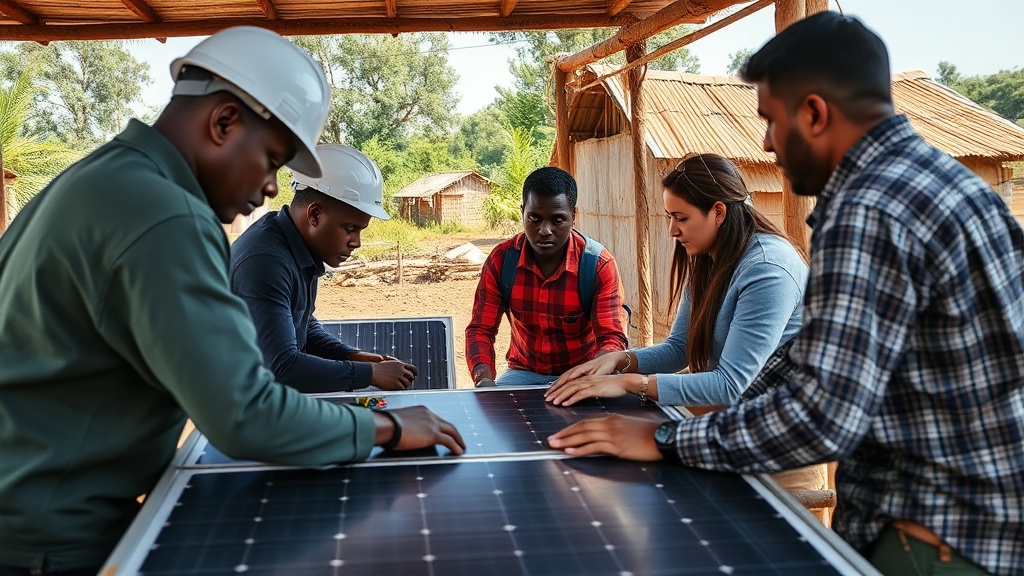
The IMF's guidance is not a rejection of AI but a call for a more grounded, phased approach to digital transformation in Africa. It implies that resources, both financial and political, must be directed towards strengthening energy infrastructure as a matter of urgency. This includes investing in diverse energy sources, from traditional grids to renewable solutions like solar and wind power, tailored to the specific needs and contexts of different regions. Bridging the energy gap will not only facilitate AI adoption but will also drive broader economic development, improve quality of life, and create a more resilient and competitive continent.
The question for policymakers is how to balance these immediate infrastructure needs with long-term technological ambitions. The answer likely lies in integrated planning, where energy development is seen as a core component of digital strategy, not a separate, secondary concern. By prioritizing reliable electricity, African nations can build a robust foundation upon which the transformative potential of AI can be truly realized, ensuring that technological advancement benefits all citizens, not just a select few.