
Hyprland 0.55: A Paradigm Shift in Configuration
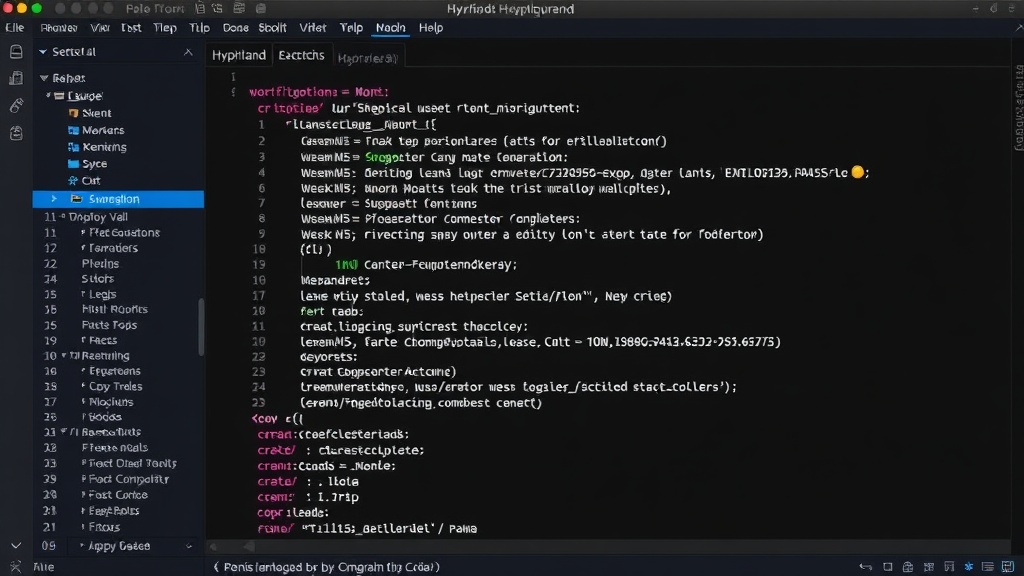
Hyprland, the dynamic tiling Wayland compositor known for its performance and customizability, has released version 0.55. This update marks a significant departure from previous versions, fundamentally changing how users interact with and configure their desktop environment. The headline feature is the complete switch from plain text configuration files to Lua scripting. This move transforms Hyprland's configuration from a static set of directives into a dynamic, programmable system, opening up a vast new landscape of possibilities for user customization and automation.
Previously, Hyprland's configuration involved editing a text file with specific key-value pairs and simple conditional logic. While effective for many users, it imposed limitations on what could be achieved. Complex logic, dynamic adjustments based on application state, or intricate window management rules were either impossible or required cumbersome external scripting. Version 0.55 eradicates these limitations by embedding a full Lua interpreter directly into the compositor.
The implications are profound. Users can now write sophisticated scripts to manage their workflow. Imagine automatically switching workspaces based on the application launched, dynamically adjusting gaps and borders based on monitor configuration, or creating complex keybinds that trigger sequences of actions. This is no longer theoretical; it is now the default operational mode for Hyprland.
Unlocking Dynamic Configuration with Lua
The adoption of Lua is not merely a syntactic change; it's a fundamental enhancement of Hyprland's capabilities. Lua is a lightweight, powerful, and embeddable scripting language widely used in game development and system configuration. Its integration into Hyprland means users can leverage its full feature set to tailor their environment. This includes:
- Advanced Logic and Control Flow: Implement `if-then-else` statements, loops, and functions directly within the configuration to create truly responsive desktop setups.
- Dynamic Variable Management: Define variables that can change during runtime, allowing for configurations that adapt to user actions or system states.
- Integration with External Processes: Potentially interact with other system processes or services through Lua's FFI (Foreign Function Interface) or by spawning external commands, further extending the compositor's reach.
- Modular Configuration: Break down complex configurations into smaller, reusable Lua modules, making management and sharing easier.
This shift is analogous to moving from a simple recipe card to a full-fledged culinary textbook. The recipe card (old config) tells you exactly what to do for a specific dish. The textbook (Lua config) provides the fundamental techniques, ingredients, and principles, allowing you to invent entirely new dishes or adapt existing ones infinitely. For developers and power users, this offers a level of control previously only dreamt of in tiling window managers.
Migration and Developer Experience
For existing Hyprland users, this update necessitates a migration of their configuration files. The Hyprland team has provided documentation and examples to ease this transition. While it requires learning some Lua syntax, the benefits in terms of power and flexibility are expected to outweigh the initial learning curve. The decision to use Lua was likely driven by its small footprint, fast execution, and relatively simple syntax, making it an ideal candidate for embedding within a resource-constrained environment like a compositor.
The development team behind Hyprland has consistently focused on performance and user experience. This move to Lua aligns with that philosophy by providing a more powerful and expressive toolset for customization without sacrificing the compositor's speed. The ability to script intricate window rules, manage multiple monitor setups with dynamic per-monitor settings, or even automate common tasks directly from the configuration file streamlines workflows significantly.
One of the most exciting aspects is the potential for community-driven configuration frameworks and plugins. With Lua as the configuration language, developers can create and share complex scripts for specific use cases, much like how plugins extend editors or game engines. This fosters a more collaborative and innovative ecosystem around Hyprland.
What This Means for the Wayland Ecosystem
Hyprland's adoption of Lua positions it as a leader in user-configurable Wayland compositors. While other compositors offer various levels of customization, few provide the deep programmatic control that Lua enables. This move could influence other Wayland projects to consider more robust configuration methods, potentially pushing the boundaries of what users expect from their desktop environments.
The transition is not without its challenges. Users unfamiliar with Lua will need to invest time in learning the basics. However, the language's reputation for being easy to learn and embed makes this a more accessible challenge than adopting a more complex language. The Hyprland wiki and community forums are likely to become hubs for Lua configuration examples and troubleshooting.
Ultimately, Hyprland 0.55 is more than just an update; it's a statement of intent. It signals a commitment to providing users with the ultimate control over their desktop, treating the configuration not as a static file but as a living, breathing script that defines their entire user experience. This granular control, combined with Hyprland's already impressive performance, makes it a compelling choice for developers, system administrators, and anyone who demands a truly personalized and automated computing environment.