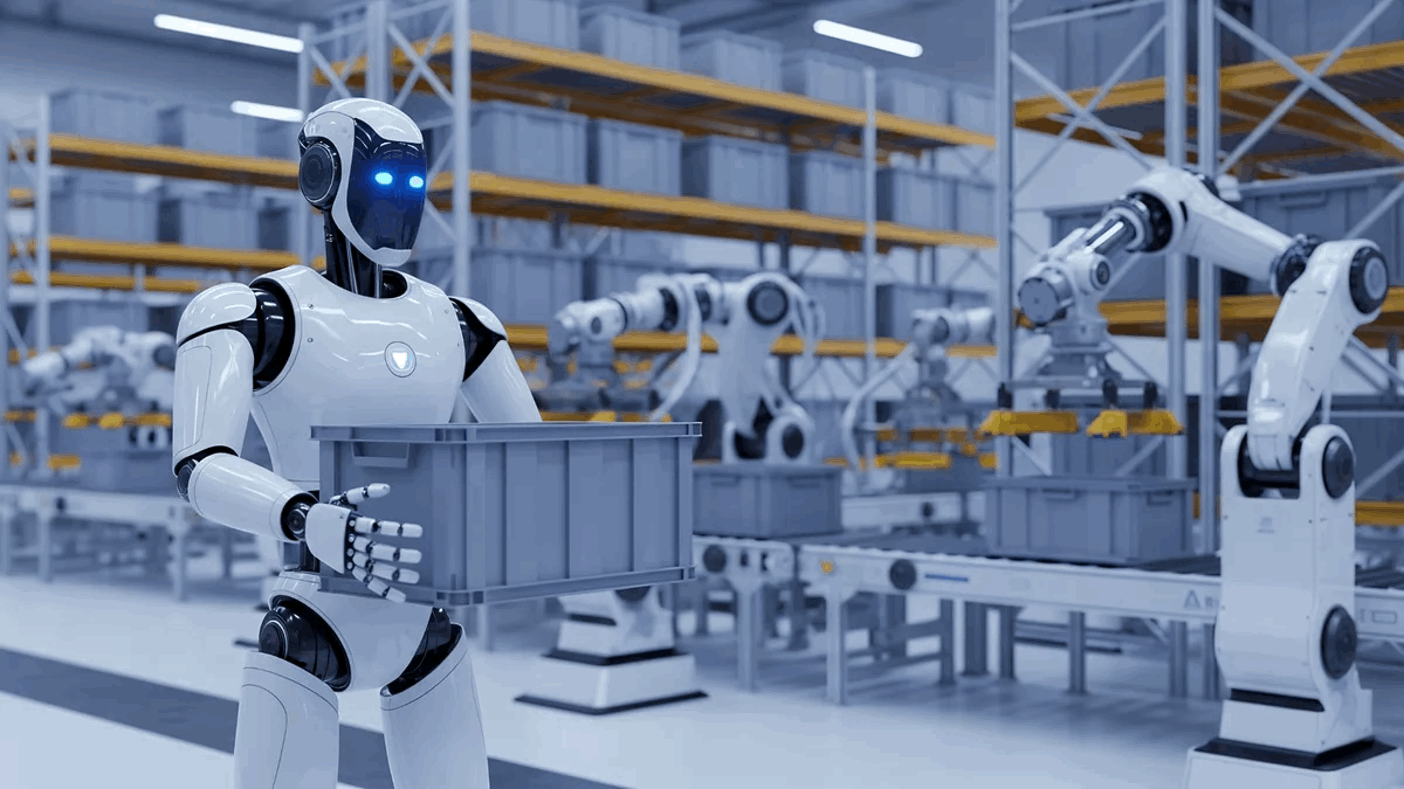
The Evolving Edge: Humanoids vs. Autonomous Vehicles
The burgeoning field of robotics, particularly humanoid robots, is rapidly pushing the boundaries of edge computing and security. While autonomous vehicles (AVs) have long been considered sophisticated edge devices, the complexities introduced by humanoid robots significantly outstrip those encountered in AV development. This disparity stems from the fundamental differences in their operational environments, human interaction models, and manipulation capabilities.
Both AVs and humanoids operate at the edge, processing data locally to make real-time decisions. However, a humanoid robot is not merely an AV with legs. It integrates wheels (or other locomotion) with dexterous manipulators—fingers—capable of interacting with the physical world in ways far more nuanced and potentially hazardous than a vehicle. This close-quarters interaction with humans, and the potential for physical contact, dramatically elevates the security and safety stakes.
Consider the attack surface. An AV's primary interactions with its environment are through sensors like LiDAR, radar, cameras, and GPS, feeding into a system designed to navigate roads and avoid obstacles. Its vulnerabilities might involve spoofing GPS signals, jamming sensors, or compromising the vehicle's control systems. The consequences, while severe, are often related to traffic accidents or data breaches.
Humanoids, on the other hand, are designed for environments shared with people—homes, offices, factories, and hospitals. Their manipulators can grasp, lift, and operate tools. This introduces a new dimension of potential harm. A compromised humanoid could not only crash but also physically assault a person, steal sensitive objects, or sabotage equipment with fine motor skills. The compute requirements for such tasks—encompassing advanced perception, sophisticated motion planning, and fine-grained control—are orders of magnitude greater than those for vehicular navigation. This complexity directly translates into a more intricate and challenging security posture.
Unpacking the Compute Demands
The compute demands for humanoid robots are multifaceted. Perception systems must not only detect objects and navigate environments but also understand human intent, recognize gestures, and interpret complex social cues. This requires powerful on-board processing for sensor fusion—combining data from cameras, depth sensors, tactile sensors, and potentially audio—to build a rich, dynamic model of the environment.
Motion planning and control are where the differences become stark. An AV plans a path within defined road networks. A humanoid must plan intricate movements for its entire body, including its arms and hands, to perform tasks like picking up a delicate object, opening a door, or assisting a person. This involves real-time inverse kinematics, force control, and adaptive path adjustments. The computational load for these tasks, especially when performed with human-like dexterity and speed, is immense. It often requires specialized AI accelerators and high-performance embedded processors.
Furthermore, the need for continuous learning and adaptation in dynamic, unpredictable human environments means that humanoids may require more robust on-device or edge-based machine learning capabilities than AVs. While AVs benefit from fleet learning, their core navigation functions are relatively static compared to the highly variable tasks a humanoid might undertake. This continuous processing and adaptation create more opportunities for software vulnerabilities.
Security: A Deeper Threat Landscape
The security implications are profound. For AVs, a breach could lead to loss of control or data theft. For humanoids, a breach could result in physical harm, theft of sensitive items, or industrial espionage through manipulation of equipment. The trust placed in a humanoid operating in close proximity to humans means that a security failure is not just a technical issue but a direct threat to personal safety and privacy.
Consider the attack vectors. Beyond traditional cyber threats like malware and denial-of-service attacks, humanoids are susceptible to physical tampering. A malicious actor could potentially manipulate sensors, actuators, or even the robot's physical form to cause harm or gain unauthorized access. The integration of tactile sensors, for instance, while crucial for delicate manipulation, also presents a new surface for adversarial input if not properly secured.
The supply chain for humanoid components is also more complex. Beyond the standard electronic components, humanoids incorporate advanced actuators, sophisticated end-effectors (hands), and often complex power systems. Each of these adds potential vulnerabilities that must be assessed and mitigated. The software stack is equally intricate, from low-level motor controllers to high-level AI decision-making modules. Securing this entire stack, end-to-end, is a monumental task.
The Unaddressed Challenge: Human Trust and Verification
What remains largely unaddressed is how to build and maintain human trust in these increasingly capable, yet potentially vulnerable, machines. While security protocols can be implemented, verifying that a humanoid robot is operating autonomously and securely, especially when performing complex tasks in close proximity to people, is a challenge that goes beyond traditional cybersecurity. It requires robust safety-validation frameworks, formal verification methods for AI, and transparent operational monitoring. The current regulatory and validation frameworks are not yet equipped to handle the unique risks posed by advanced humanoid robots.
Implications for the Future
The push towards more capable humanoid robots necessitates a paradigm shift in how we approach edge computing and security. The focus must move beyond preventing data breaches or vehicle malfunctions to safeguarding against physical harm and ensuring the integrity of human-robot interactions. This will require significant advancements in secure hardware design, resilient AI algorithms, comprehensive software security practices, and new approaches to safety certification and ethical deployment. The complexity is undeniable, but the path forward demands a proactive and holistic approach to ensure these powerful machines serve humanity safely and effectively.