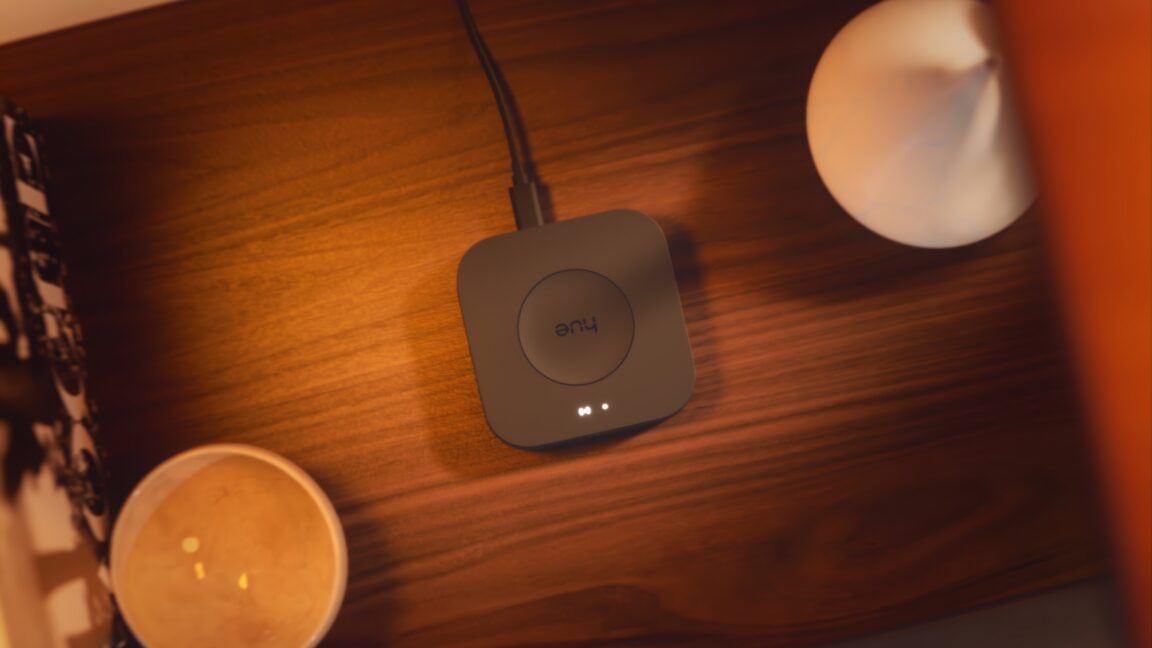
Firmware Failure Bricks Hue Bridge Pro Devices
A recent firmware update intended to enhance the functionality of Philips Hue Bridge Pro devices has inadvertently rendered a number of them completely inoperable. Users reporting the issue found their bridges stuck in a persistent reboot loop, unable to connect to their smart home networks or control their Hue lights. The problem appears to be specific to the Bridge Pro model, with standard Hue Bridge users seemingly unaffected.
The affected devices become unresponsive, displaying no network activity and failing to be recognized by the Philips Hue app. This effectively turns the central hub of a sophisticated smart lighting system into an expensive paperweight. For users who have invested heavily in the Hue ecosystem, particularly those with extensive lighting setups and automations, this failure represents a significant disruption. The inconvenience is compounded by the need to reconfigure an entire smart home lighting system from scratch once a replacement is obtained.
Philips Hue has acknowledged the issue and is offering free replacements to all affected customers. The company stated that the problematic firmware update was pushed out automatically, leading to the widespread failure. While the offer of replacement is a necessary step, it does little to alleviate the immediate frustration and time investment required for users to get their smart lighting back online.
Impact on Users and System Reconfiguration
The primary impact of this firmware bricking is the loss of control over connected Hue lights. Users are reporting that their bridges are unresponsive, meaning all automations, scenes, and manual controls through the Hue app or third-party integrations cease to function. This is particularly disruptive for those who rely on their smart lighting for security, convenience, or ambiance. The loss of the central bridge means that even smart bulbs that might have some limited direct connectivity are rendered largely useless without their orchestrator.
The process of setting up a replacement bridge is not trivial. Users will need to unpair their existing, bricked bridge from their account and then pair the new one. Following this, all lights, sensors, switches, and other accessories must be rediscovered and re-added to the new bridge. This is followed by the meticulous task of recreating all custom scenes, routines, and automations that were previously configured. For users with dozens of lights or complex multi-room setups, this can easily take several hours. The situation is akin to a home router failing; the internet goes down, but then you also have to re-enter all your Wi-Fi passwords and reconnect every device.
Moreover, third-party integrations that rely on the Hue Bridge API may also need to be re-authorized or reconfigured. This could include smart home platforms like Google Home, Amazon Alexa, Apple HomeKit, or specialized automation software. The reliance of the Hue ecosystem on a stable, central bridge highlights the potential fragility of even sophisticated smart home systems when a single component fails due to a software error.
Philips Hue's Response and Replacement Process
Philips Hue has responded to the widespread reports by confirming the issue and initiating a replacement program. The company has stated that it is working to identify affected users and facilitate the shipment of new Hue Bridge Pro units. Customers experiencing the problem are advised to contact Philips Hue customer support directly. The company has indicated that replacements will be provided free of charge.
The exact timeline for receiving a replacement unit can vary depending on regional availability and the volume of support requests. However, the company's commitment to providing replacements underscores the severity of the failure and the need to restore service to its premium product users. The replacement process, while necessary, still involves significant user effort in reconfiguring their systems, a point of frustration that cannot be entirely mitigated by a hardware swap.
This incident raises questions about the rigorousness of the testing protocols for firmware updates, especially for critical infrastructure components like smart home hubs. While updates are essential for security and feature enhancements, a failure of this magnitude can erode user trust and highlight the risks inherent in connected devices. The company's swift action to offer replacements is a positive step, but the underlying cause of the firmware failure will likely be a subject of internal review and potentially future transparency efforts.
Broader Implications for Smart Home Reliability
The bricking of Hue Bridge Pro devices serves as a stark reminder of the potential vulnerabilities within increasingly complex smart home ecosystems. While these systems offer convenience and advanced control, they also introduce single points of failure. A faulty update, a security breach, or a service outage can cascade into significant disruption for homeowners.
For manufacturers, this event underscores the critical importance of robust quality assurance and phased rollout strategies for firmware updates. Pushing updates to a small subset of users first, monitoring for issues, and then gradually expanding the rollout can prevent widespread failures. The failure to do so in this instance has led to considerable user dissatisfaction and a black eye for a brand known for its reliability.
Users, in turn, may need to consider their own backup and recovery strategies for critical smart home components. While not always feasible, understanding how to quickly restore functionality or having redundant systems for essential services can be a valuable approach to mitigating the impact of such failures. The convenience of smart homes comes with an inherent dependency that can be exposed by events like this.
Ultimately, the Philips Hue Bridge Pro incident highlights the ongoing tension between rapid innovation and steadfast reliability in the consumer electronics space. While Philips is making amends with replacements, the experience leaves users with a lingering concern about the stability of the software that underpins their connected lives.