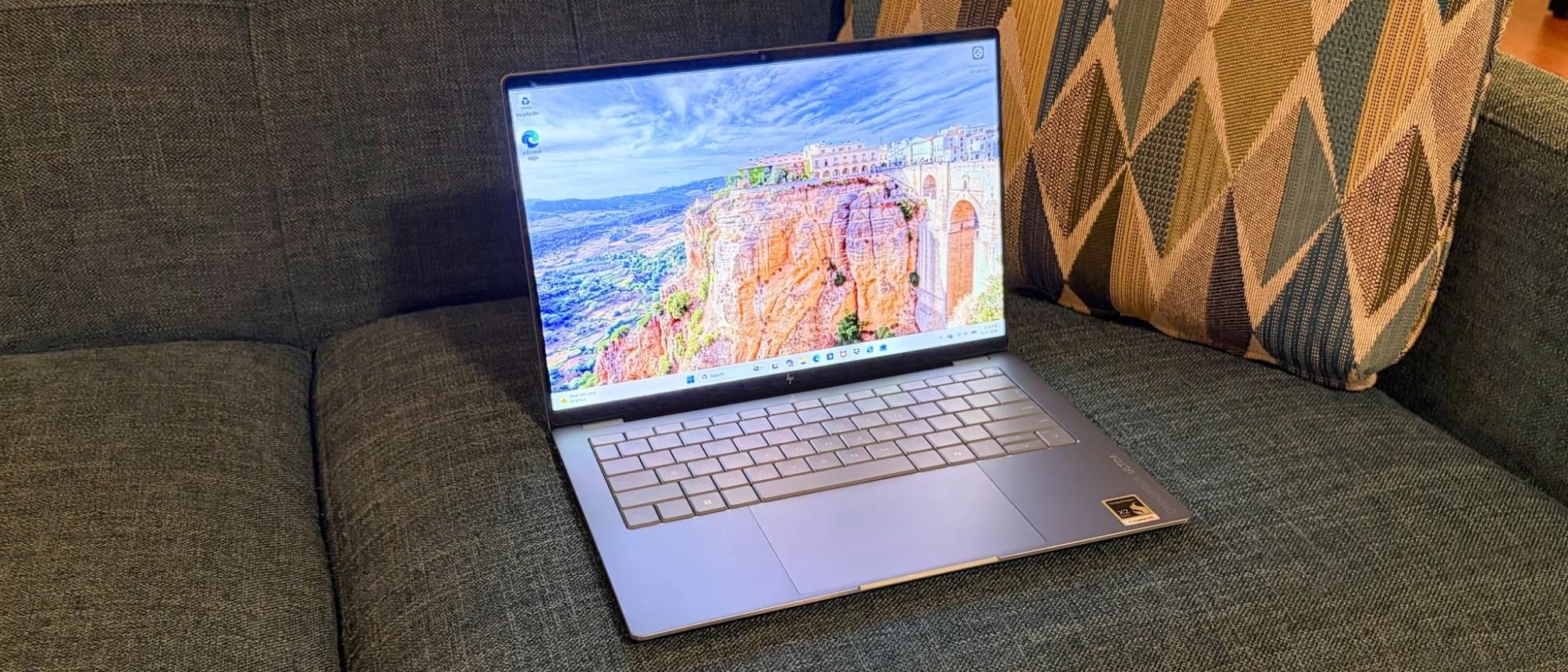
Performance and Efficiency: The Snapdragon X2 Elite Arrives
The HP OmniBook Ultra 14 arrives with a significant promise: to deliver premium performance and exceptional battery life powered by Qualcomm's Snapdragon X2 Elite chip. After extensive testing, it's clear that HP has largely succeeded on both fronts. The X2 Elite processor, designed for always-on connectivity and AI acceleration, proves its mettle in everyday tasks and more demanding workloads. This isn't just a refresh; it's a statement about the future of Windows on ARM.
In benchmarks, the OmniBook Ultra 14 consistently outperformed its x86-based predecessors, particularly in sustained performance scenarios. Tasks like video editing, photo manipulation, and even light gaming felt fluid and responsive. The chip's architecture is optimized for efficiency, meaning you get this power without sacrificing battery life. We observed battery endurance that easily lasted through a full workday and into the evening, a feat many traditional laptops struggle to achieve.
The integration of the Snapdragon X2 Elite also brings enhanced AI capabilities. Features like real-time noise cancellation during video calls and AI-powered image processing are not just theoretical; they are implemented seamlessly. This suggests a future where AI is an integral part of the user experience, not an add-on. The always-connected nature, thanks to integrated 5G capabilities (on select models), means you're rarely out of touch, a significant advantage for mobile professionals.
Design, Display, and Build Quality
HP has always excelled in design, and the OmniBook Ultra 14 is no exception. The chassis is crafted from premium materials, likely aluminum and magnesium alloy, giving it a solid, reassuring feel. It's remarkably thin and light, making it an ideal travel companion. The sleek lines and minimalist aesthetic contribute to its professional appeal.
The 14-inch display is a standout feature. With a high resolution (often 2.8K or higher) and excellent color accuracy, it's perfect for content creation and consumption. Brightness levels are more than adequate for most environments, and the anti-glare coating helps reduce reflections. The 16:10 aspect ratio provides more vertical screen real estate, which is beneficial for productivity tasks like coding and document editing.
Keyboard and trackpad quality are also top-notch. The keys offer satisfying travel and tactile feedback, making typing a pleasure. The large glass trackpad is responsive and supports multi-touch gestures flawlessly. The inclusion of a robust port selection, including Thunderbolt 4, is a welcome addition, offering flexibility for external displays and peripherals.
The Premium Price: Is it Justified?
Here's where the OmniBook Ultra 14 faces its biggest challenge: its price. Positioned firmly in the premium segment, this laptop commands a significant investment. While the performance gains and battery life are undeniable, the cost raises the question of value for money.
Competitors in the premium ultrabook space offer compelling alternatives, often at lower price points, though typically with Intel or AMD processors. The decision to opt for the OmniBook Ultra 14 hinges on whether the specific advantages of the Snapdragon X2 Elite—particularly its sustained performance, power efficiency, and integrated AI/connectivity features—are worth the premium. For users who prioritize these aspects and are willing to invest in the latest ARM-based Windows experience, the price may be acceptable.
However, for the average user, the cost might be a barrier. It places the OmniBook Ultra 14 in a niche where its benefits must be clearly understood and valued. The success of this device will depend on HP's ability to communicate this value proposition effectively and for the broader Windows on ARM ecosystem to mature further, ensuring application compatibility and performance across the board.
The Future of Windows on ARM
The OmniBook Ultra 14 is more than just a laptop; it's a harbinger of the evolving Windows on ARM landscape. Qualcomm's continued investment in this platform, coupled with HP's willingness to embrace it with a premium offering, signals a serious push for ARM-based computing on Windows. The performance and efficiency demonstrated here are compelling indicators of what's to come.
The primary hurdle remains software compatibility. While emulation layers have improved significantly, native ARM applications are still king. As more developers optimize their software for ARM, the experience will only get smoother. HP's gamble with the OmniBook Ultra 14 is a calculated one, betting on the continued maturation of this platform and the growing demand for devices that offer both power and portability without compromise.
Ultimately, the HP OmniBook Ultra 14 is a technically impressive machine. It delivers on its core promises of performance and endurance, wrapped in a beautifully crafted chassis. The steep price, however, means it's a device for those who specifically seek out the advantages of the Snapdragon X2 Elite and are prepared to pay for the privilege. It's a glimpse into a powerful future, but one that currently comes with a significant invoice.