
The Two-in-One Device: Gimbal Camera Meets Self-Flying Drone
The HoverAir Versa arrives with a compelling proposition: a single device that functions as both a high-quality pocket gimbal camera and an autonomous, self-flying drone. This dual-purpose design aims to simplify content creation by eliminating the need to carry multiple gadgets. The core innovation lies in its modular nature, allowing users to seamlessly transition between handheld filming and aerial capture with an effortless magnetic connection. This design promises to make capturing dynamic video footage, particularly for solo creators and vloggers, more convenient than ever before.
At its heart, the Versa is a sophisticated gimbal camera designed for stable, smooth handheld shots. When detached from its drone module, it functions much like a premium action camera or smartphone gimbal, offering precise control over framing and movement. This aspect is crucial for creators who need reliable terrestrial video capabilities. The gimbal stabilization system is engineered to counteract shakes and jitters, ensuring professional-looking footage whether you're walking, running, or panning across a scene.
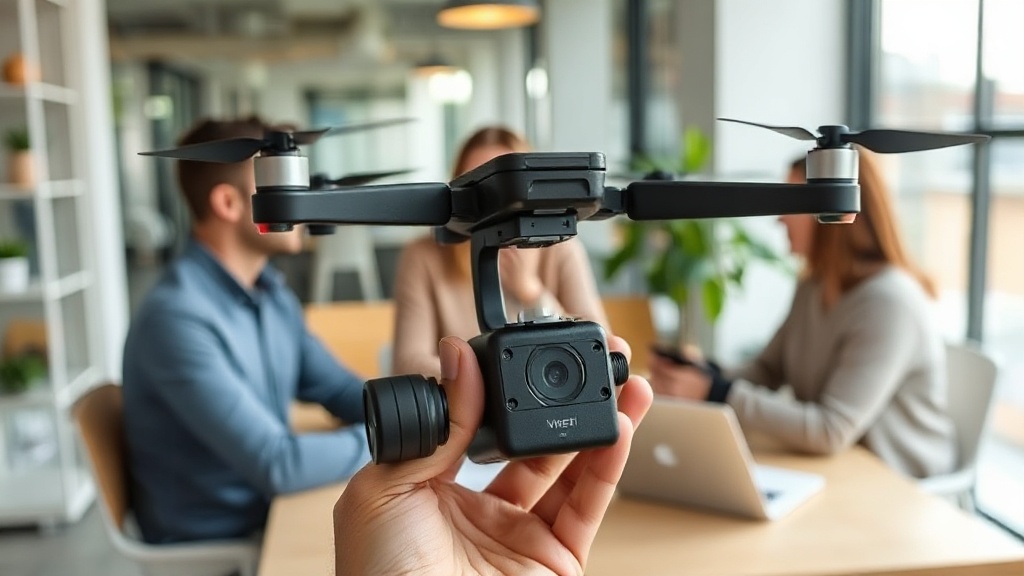
Transforming from Handheld to Aerial in Seconds
The true magic of the HoverAir Versa unfolds when the camera module magnetically snaps onto its drone base. This connection is not merely physical; it's an intelligent integration that transforms the device into an autonomous aerial platform. The magnetic coupling is designed for speed and simplicity, enabling what HoverAir calls an "instant palm launch." This means users can theoretically hold the combined device, launch the drone from their hand, and have it immediately begin its programmed flight path or tracking sequence.
This modularity addresses a key pain point for drone users: setup time and portability. Traditional drones often require assembly, calibration, and careful deployment. The Versa's design bypasses much of this, allowing for rapid deployment in situations where timing is critical. Imagine wanting to capture a dynamic selfie while hiking or biking; the ability to transition from handheld to aerial capture without fumbling with separate devices or complex launch procedures is a significant advantage.
AI-Powered Autonomous Flight and Tracking
Once airborne, the Versa leverages artificial intelligence for its autonomous flight capabilities. The primary advertised feature is AI tracking, which allows the drone to follow a subject – presumably the user – automatically. This is particularly useful for action shots, vlogging, or capturing events where the creator needs to be in the frame without an external operator. The AI system is designed to recognize and maintain focus on the subject, adapting to movement and environmental changes.
The AI tracking system likely employs computer vision algorithms to identify and lock onto the subject. This could involve facial recognition, body tracking, or even object recognition depending on the sophistication of the onboard processing. The goal is to provide a hands-off aerial filming experience, freeing the user to focus on their activity rather than piloting the drone. The "self-flying" aspect suggests that beyond tracking, the drone can execute pre-programmed flight patterns or respond to simple commands, further enhancing its utility for content creation.
Design Philosophy: Portability Meets Versatility
The HoverAir Versa embodies a design philosophy centered on portability and versatility. By integrating two distinct functions into a single, transformable unit, the company aims to appeal to a broad audience of content creators, from casual users to professional vloggers. The pocket-sized nature of the gimbal camera module ensures it can be carried easily in a pocket or small bag, while the drone module, when attached, remains compact enough for convenient transport.
This approach contrasts with the more specialized nature of dedicated gimbal cameras and traditional camera drones. While those devices may offer higher performance in their specific domains, the Versa's strength lies in its adaptability and ease of use. The success of such a product hinges on the seamlessness of the transition between modes and the reliability of both the gimbal stabilization and the autonomous flight features. The magnetic modularity is key here; it’s less like a complex assembly and more like snapping LEGO bricks together, a deliberate design choice to lower the barrier to entry for aerial videography.
What This Means for the Creator Economy
The emergence of devices like the HoverAir Versa signals a potential shift in the tools available to the creator economy. As the demand for dynamic, high-quality video content continues to surge, creators are constantly seeking more efficient and accessible ways to produce it. The Versa's ability to provide both stable ground shots and autonomous aerial perspectives from a single, portable device could democratize certain types of filmmaking that were previously more complex or expensive to achieve.
For solo creators, the appeal is immense. The challenge of filming oneself effectively, especially with dynamic movement or complex camera angles, is significant. An AI-powered drone that can autonomously follow and frame shots removes a major technical hurdle. This could lead to a proliferation of more ambitious video projects from individuals who might not have the budget or technical expertise to operate traditional drone setups. The ease of use, particularly the instant palm launch and magnetic transformation, positions the Versa as a tool for spontaneous creation, enabling creators to capture compelling moments as they happen.
The Unanswered Question: Performance Benchmarks
While the concept of a modular camera-drone is undeniably exciting, what remains largely unaddressed by the initial announcement is the performance benchmark across its dual functionalities. How does the gimbal stabilization compare to dedicated pocket gimbals in terms of smoothness and responsiveness? What is the actual flight time of the drone module, and how robust is its AI tracking in varied lighting conditions or against complex backgrounds? The promise of a two-in-one device is strong, but its ultimate success will depend on whether it can deliver competent performance in both its gimbal and drone roles without significant compromise.
Users will be keen to see real-world tests that quantify the Versa's capabilities. This includes examining the video quality from its camera sensor, the precision of the gimbal's stabilization, the accuracy and reliability of the AI tracking algorithms, and the battery life for both handheld and aerial operations. Without concrete data on these aspects, the Versa remains a fascinating concept with high potential, but its practical utility for demanding creators is yet to be fully proven.