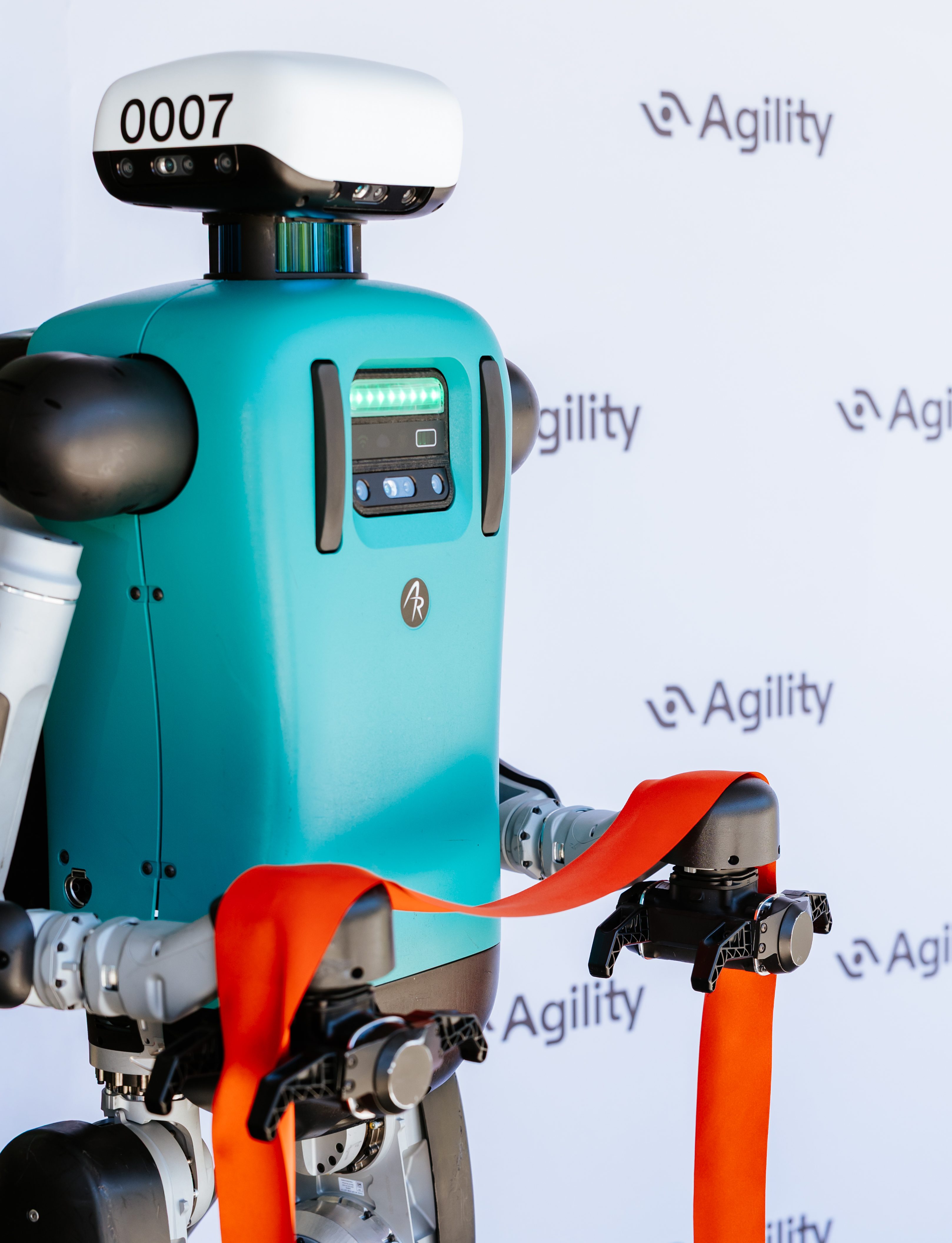
Agility Robotics Expands Footprint in Fremont
Agility Robotics, a key player in the humanoid robotics sector, has announced the opening of a new training center in Fremont, California. This strategic location places the company in close proximity to Tesla's Fremont factory, a hub for automotive manufacturing and a clear indicator of the intensifying competition in the advanced robotics and automation space.
The new facility will serve as a dedicated training ground for Agility's Digit robots. Digit, a bipedal humanoid robot designed for logistics and warehouse operations, is engineered to perform tasks such as moving boxes and working alongside human counterparts. The training center aims to accelerate the deployment and adoption of these robots by providing comprehensive instruction and support to customers and partners. This move is particularly significant as it situates Agility's operational expansion directly within the sphere of influence of Tesla, a company also making substantial investments in robotics, most notably with its Optimus humanoid robot and its autonomous vehicle initiatives.
The Competitive Landscape: Tesla's Robotaxi Setbacks and SpaceX's Infrastructure Choices
This expansion by Agility Robotics occurs against a backdrop of mixed signals from its Silicon Valley neighbor, Tesla. While Agility is actively pushing forward with its physical robotics training, recent reports indicate challenges for Tesla's ambitious robotaxi program. Data for the second quarter of 2026 revealed a significant 36% decrease in paid robotaxi miles traveled, even as the service expanded to new cities. This downturn suggests that the widespread adoption and commercial viability of autonomous ride-hailing services may be facing more hurdles than initially anticipated.
Furthermore, a separate development involving Tesla's sister company, SpaceX, highlights different infrastructure priorities. SpaceX's massive semiconductor fabrication plant, dubbed 'Terafab,' being built in Texas, will reportedly rely on traditional natural gas power plants for its substantial energy needs, rather than on Tesla's solar panel technology. This decision underscores the immense power demands of advanced manufacturing and the current limitations of renewable energy sources like solar to meet such industrial-scale requirements consistently and affordably. The contrast between Agility's physical robotics expansion and Tesla's internal operational dynamics – with its robotaxis experiencing a slowdown and its semiconductor fab opting for conventional power – paints a complex picture of the broader technological landscape.
Why Fremont? Strategic Positioning and Market Signals
The choice of Fremont, California, for Agility Robotics' new training center is far from coincidental. Fremont is not only home to Tesla's flagship manufacturing plant but also a region with a dense concentration of logistics, warehousing, and advanced manufacturing companies. By establishing a presence here, Agility aims to:
- Enhance Customer Support and Training: Proximity allows for more responsive and hands-on training, crucial for integrating complex robotic systems into existing workflows.
- Foster Partnerships: Being near potential clients and collaborators in the advanced manufacturing sector can lead to quicker adoption and pilot programs.
- Directly Engage with the Competitive Ecosystem: Operating in Tesla's backyard places Agility at the forefront of a rapidly evolving humanoid robotics market, allowing for direct observation and response to competitive advancements.
The development of humanoid robots capable of performing physical labor is a race that involves significant capital, engineering talent, and strategic market positioning. Companies like Agility Robotics and Tesla are vying for dominance in what is expected to be a multi-billion dollar industry. Agility's investment in a dedicated training facility suggests a focus on immediate, practical deployment and customer enablement, potentially offering a more tangible path to market than Tesla's broader, more futuristic ambitions with Optimus, which are still in early development stages.
The Future of Physical Automation: Agility's Approach
Agility Robotics has consistently focused on practical applications for its robots, particularly in the logistics sector. The Digit robot is designed to address labor shortages and improve efficiency in warehouses, a critical segment of the global economy. The company's strategy appears to be one of steady, demonstrable progress, building on proven capabilities and customer needs. This contrasts with the more speculative, albeit potentially more transformative, long-term vision of companies like Tesla, whose Optimus robot is still largely in the conceptual and developmental phase, with its ultimate use cases and market readiness yet to be fully defined.
The Fremont training center is a concrete step, a physical manifestation of Agility's commitment to bringing its robots into the real world. It is less about a distant future of general-purpose robots and more about solving today's pressing operational challenges. For businesses looking to automate physical tasks, Agility offers a solution that is becoming increasingly mature and accessible. The success of this training initiative will be a key indicator of Agility's ability to scale its operations and capture market share in the burgeoning field of humanoid robotics.
The broader implications of this move extend beyond mere geographical positioning. It signals a maturing market where specialized training and robust customer support are becoming critical differentiators. As more companies enter the humanoid robotics race, the focus will inevitably shift from pure technological innovation to practical deployment, reliability, and ease of integration. Agility's investment in a dedicated training hub in a key industrial region suggests they understand this market dynamic, aiming to build a strong foundation for widespread adoption before competitors fully materialize their own advanced prototypes into production-ready solutions.