Selling Digital Products Made Simple
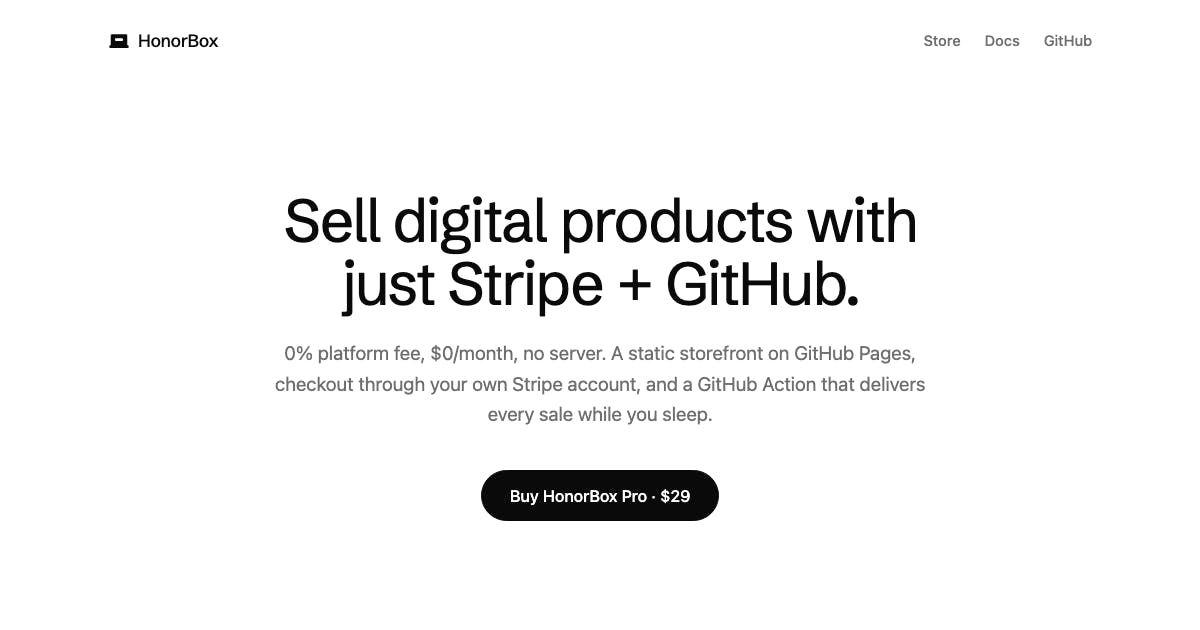
The landscape of digital product sales is often fragmented, requiring developers to juggle multiple platforms for payment processing, product delivery, and customer management. HonorBox emerges as a streamlined solution, aiming to simplify this process by integrating Stripe for payments and GitHub for product delivery. This approach offers a direct path for creators to monetize their digital assets without the overhead of complex e-commerce setups.
At its core, HonorBox functions as a bridge between a developer's Stripe account and their GitHub repository. When a customer purchases a digital product through HonorBox, the platform leverages Stripe to handle the transaction. Upon successful payment, HonorBox then interacts with the designated GitHub repository to grant the customer access to the purchased digital asset. This could range from software licenses and code snippets to e-books, templates, or any other digital good that can be stored and managed within a Git repository.
The initial setup appears straightforward. Developers are prompted to connect their Stripe account, which is essential for receiving payments. Following this, they link their GitHub account and specify the repository that will house the digital product. The platform then allows for the creation of product listings, where details such as price, description, and the specific GitHub repository and branch or tag associated with the product are defined. This allows for granular control over which version of a digital asset is being sold.
How HonorBox Streamlines the Sales Funnel
The primary value proposition of HonorBox lies in its ability to collapse multiple steps in the sales and delivery process into a single, automated workflow. Traditionally, a developer might use a platform like Gumroad or Sellfy for payment processing and then manually provide download links or access keys. With HonorBox, the integration means that once a payment is confirmed via Stripe, the customer automatically gains access to the specified asset in their GitHub repository. This automation is particularly beneficial for developers who are already heavily invested in the GitHub ecosystem for their code and project management.
Consider a scenario where a developer has created a premium code library or a set of design assets. Instead of setting up a separate storefront, managing download links, and handling potential issues with digital delivery, they can configure HonorBox. They link their Stripe account to receive funds, point HonorBox to a specific GitHub repository containing the licensed code, and set a price. A customer then visits the HonorBox product page, pays with Stripe, and is immediately granted access to the relevant files within the linked GitHub repository. This access could be facilitated through a temporary token or by adding the customer's GitHub username to a specific access list for private repositories.
The platform's reliance on GitHub as the delivery mechanism is a significant differentiator. For developers who are accustomed to version control and the structure of repositories, this feels like a natural extension of their existing workflow. It means that updates to digital products can be managed through standard Git practices – push a new tag, and HonorBox can potentially deliver that updated version to subsequent purchasers. This integration avoids the need for separate file hosting or complex digital rights management systems for many types of digital goods.
The integration with Stripe ensures that payment processing is handled by a robust and widely trusted service. Stripe's extensive features, including support for various payment methods, fraud detection, and global currency handling, are all inherited by HonorBox sellers. This offloads a significant portion of the financial infrastructure burden from the developer.
Potential Use Cases and Target Audience
HonorBox is clearly designed with developers and creators who already use GitHub as their primary platform for managing and distributing their work. This includes:
- Software Developers: Selling licenses for small software tools, plugins, themes, or premium code snippets.
- Designers: Monetizing UI kits, icon sets, templates, or stock assets stored in a repository.
- Content Creators: Distributing e-books, guides, or learning materials in digital formats that can be version-controlled.
- Educators: Selling access to course materials, code examples, or project templates.
The simplicity of the setup means that individuals who might not have the technical expertise or time to build a full-fledged e-commerce site can quickly start selling their digital creations. The platform abstracts away much of the complexity, allowing creators to focus on what they build rather than how they sell it.
However, the model's effectiveness is directly tied to the nature of the digital product. Products that benefit from version control, granular access, or are already managed within a GitHub repository are ideal. For products that are simply large files or require extensive digital rights management beyond what GitHub offers, additional solutions might be necessary. The platform's success will depend on how well it can abstract the underlying GitHub access mechanisms to provide a smooth customer experience.
One area that remains to be fully explored is the customer's experience post-purchase. While the integration promises automatic access, the specifics of how this access is granted and managed for the end-user are crucial. Will customers receive direct links, be prompted to log into a specific HonorBox portal, or have their GitHub account granted permissions? The clarity and ease of this final step will significantly impact user satisfaction and adoption. What nobody has addressed yet is how HonorBox handles updates to products that are already purchased – does the customer automatically get access to new versions, or is it a manual process?
The current offering seems to target a niche but growing segment of the creator economy. By leveraging two of the most ubiquitous developer tools, Stripe and GitHub, HonorBox positions itself as a pragmatic solution for a specific set of monetization challenges faced by technical creators.