
Introducing HitKeep: A Privacy-Centric Analytics Alternative
The dominance of Google Analytics in the web analytics space is undeniable, but its reliance on third-party data collection and extensive user tracking raises significant privacy concerns. For website owners, this often means dealing with cookie banners, explaining data usage to visitors, and ultimately sending valuable user data to Google. HitKeep emerges as a compelling alternative, offering a self-hosted, privacy-friendly web analytics solution designed to keep data under your control.
HitKeep operates on a fundamentally different principle: instead of sending data to a third party, it collects and processes analytics directly on your own server, under your domain. This approach eliminates the need for cookie banners because it is inherently cookieless. The system is built with privacy at its core, ensuring that not a single byte of visitor data is transmitted to external services. This makes it an ideal choice for businesses and individuals who prioritize user privacy and data sovereignty.
Core Functionality and Architecture
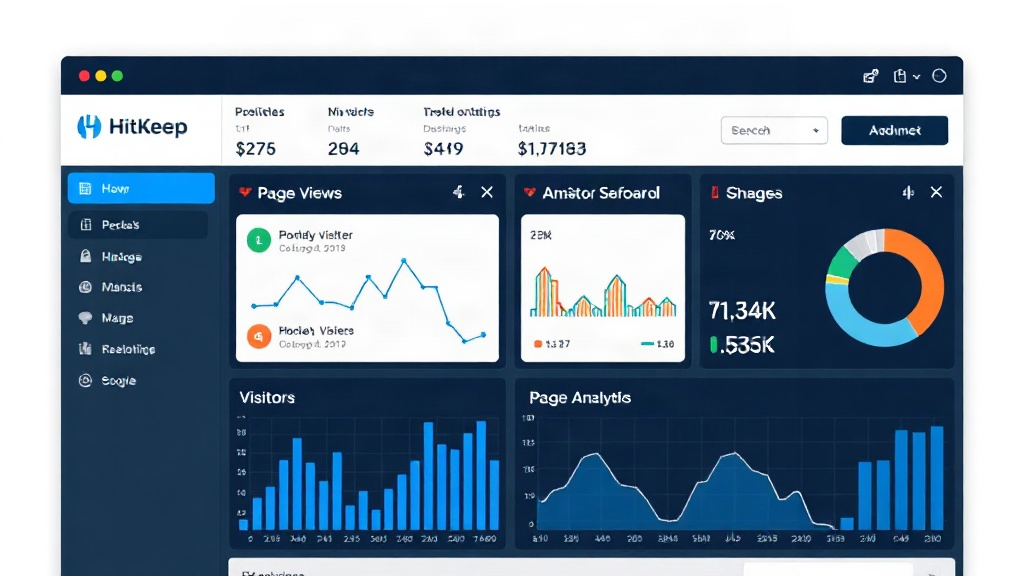
At its heart, HitKeep provides essential web analytics metrics: page views, unique visitors, time spent on page, referring sources, and device information. This data is captured via a small JavaScript snippet that website owners embed into their pages. Unlike many contemporary analytics tools, HitKeep is entirely cookieless. This means it doesn't rely on cookies to track users, sidestepping the need for explicit user consent banners and simplifying compliance with privacy regulations like GDPR and CCPA.
The architecture of HitKeep is designed for simplicity and efficiency. The current version, 2.13.18, is distributed as a single, self-contained container. This container runs behind a reverse proxy like Traefik, making it accessible via your own domain. A key design choice is the use of an embedded DuckDB database. This eliminates the need for an external database server, simplifying deployment and management, especially on smaller infrastructure like a Virtual Private Server (VPS). The container itself is a 'distroless' image, meaning it contains only the application and its runtime dependencies, resulting in a smaller download size (around 68 MB) and a reduced attack surface. Once unpacked on disk, it occupies approximately 230 MB.
Deployment and Integration
Deploying HitKeep is straightforward, particularly for those familiar with containerized applications. The single-container design simplifies setup, and integration with existing web infrastructure is typically managed through a reverse proxy. Users embed a minimal JavaScript snippet into their website's HTML. This snippet is responsible for collecting the necessary data points and sending them to the HitKeep instance running on the user's server. The minimal nature of the snippet ensures a negligible impact on website performance.
The self-hosted nature means that website owners have complete control over their data. Data is stored locally within the embedded DuckDB database, accessible only to the HitKeep instance. This level of control is a significant departure from cloud-based analytics services, where data is managed by a third party. For developers and site owners concerned about data privacy, vendor lock-in, or the potential misuse of their visitors' information, HitKeep offers a tangible solution.
Benefits Over Traditional Analytics
The primary advantage of HitKeep lies in its uncompromising approach to privacy. By eschewing cookies and third-party data sharing, it provides a transparent and ethical analytics solution. This bypasses the user friction associated with cookie consent pop-ups, which can deter visitors and negatively impact conversion rates. Furthermore, by hosting the analytics on your own server, you gain full ownership and sovereignty over your website's data. This is crucial in an era where data privacy regulations are becoming increasingly stringent and user awareness of data collection practices is growing.
The operational simplicity is another significant benefit. The single-container deployment, combined with the embedded database, means that HitKeep requires minimal server resources and administrative overhead. This makes it accessible to a wider range of users, from individual bloggers to small businesses with limited IT resources. The choice of a distroless image further enhances security and efficiency, reducing the potential for vulnerabilities and minimizing resource consumption.
What nobody has addressed yet is the long-term impact of such privacy-focused, self-hosted tools on the broader web analytics market. Will the trend towards data sovereignty and cookieless tracking gain enough momentum to challenge the established giants, or will these tools remain niche solutions for the privacy-conscious minority?
Technical Considerations and Future Potential
HitKeep's use of DuckDB is a pragmatic choice for a self-hosted analytics solution. DuckDB is an in-process analytical data management system that runs within the application process. It's optimized for analytical queries, making it well-suited for aggregating and reporting on website traffic data. Its embedded nature means there's no separate server to manage, and data is stored in a single file, simplifying backups and migrations.
The distroless container approach is a modern best practice for security and efficiency. By stripping out unnecessary components of a base operating system, the attack surface is significantly reduced, and the container size is minimized. This aligns with the tool's privacy-first ethos by minimizing the digital footprint and potential exposure.
While HitKeep currently offers a robust set of core analytics features, its open-source nature suggests potential for future expansion. Community contributions could introduce more advanced features, integrations, or support for different database backends if user demand dictates. However, the current design prioritizes simplicity and privacy, which is a strong foundation for its intended purpose.
For developers and founders, HitKeep represents a clear shift in thinking about web analytics. It moves away from the data-extractive model of large platforms towards a more respectful and transparent approach. This aligns with growing consumer demand for privacy and could become a competitive differentiator for businesses that adopt it.