
AI Assistants Lack Personal Context
AI assistants excel at explaining complex topics and generating code, but they operate with a significant blind spot: your personal context. They don't know which documentation pages you recently consulted, which articles influenced your decisions, or which GitHub issues provided critical workarounds. This vital information, often scattered across browser histories, bookmarks, local notes, and fragmented search queries, remains inaccessible to your AI.
This lack of personal context forces users to repeatedly provide background information, hindering productivity and limiting the AI's ability to offer truly tailored assistance. Without a memory of your past interactions and research, AI assistants remain general-purpose tools, unable to leverage your unique journey through information.
Introducing Hister: Your Personal Search Engine
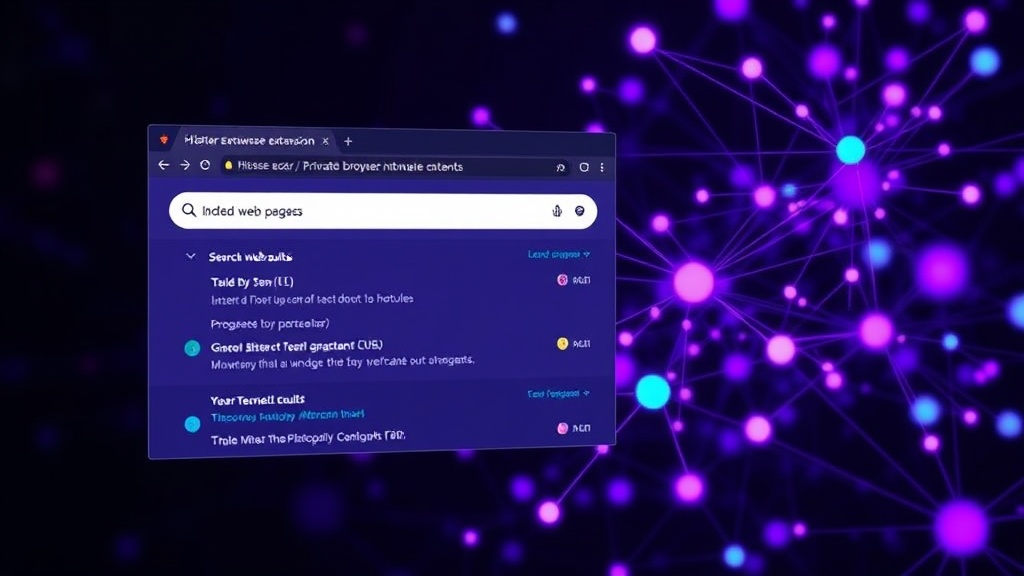
Hister aims to bridge this gap by transforming your personal digital footprint into a searchable index. It functions as a private search engine designed specifically for the pages and files that matter to you. The core of Hister is its browser extension, which automatically indexes web pages as you browse. This means every article you read, every documentation page you visit, and every forum discussion you engage with is captured.
Beyond the browser, Hister also offers a command-line tool. This utility can import your entire browser history, crawl local directories, and ingest various file types. The goal is to create a comprehensive, private repository of your digital research and interactions. Think of it less like a traditional search engine and more like an incredibly organized assistant who remembers every piece of information you've ever shown them, and can recall it instantly when needed.
MCP Support for AI Integration
The true innovation lies in Hister's support for the Memory Content Provider (MCP) interface. MCP is a specification that allows different applications to access and utilize memory stores. By implementing MCP, Hister can expose its private search index to AI assistants. This means that when you ask your AI assistant a question, it can query Hister's index for relevant personal context before generating a response.
For example, if you're working on a complex coding problem and ask your AI for help, it can now reference the specific migration guide you read last week, the GitHub issue that detailed a known bug, or a security writeup you bookmarked. This allows the AI to provide solutions that are not only technically accurate but also tailored to your specific project's history and your previous research efforts. The AI assistant essentially gains a memory, albeit a private one, that is directly tied to your digital activity.
Privacy and Control
A critical aspect of Hister is its commitment to privacy. All indexed data remains local to the user's machine. Hister does not send your browsing history or personal files to any third-party servers. This ensures that your sensitive research, proprietary information, and personal notes remain secure and under your control. The AI assistant only gains access to this information when explicitly queried through the MCP interface, and the user retains full control over what data Hister indexes and what context is shared.
The implications for developers are significant. Imagine an AI assistant that can recall every Stack Overflow answer you've found useful, every API documentation page you've referenced, and every technical blog post that clarified a difficult concept. This capability moves AI assistants from being generic knowledge bases to powerful, personalized productivity tools. Developers can iterate faster, debug more effectively, and build with greater confidence, knowing their AI partner understands their unique workflow and research history.
The Future of Personalized AI
Hister's approach to private AI memory represents a significant step towards more integrated and context-aware artificial intelligence. By allowing AI assistants to tap into a user's personal information graph, we move closer to a future where AI truly understands individual needs and workflows. This could extend beyond developers to researchers, writers, students, and anyone who deals with large amounts of information. The ability for an AI to remember what you've seen, what you've learned, and what you've found important transforms it from a passive information provider into an active, intelligent collaborator.
The unanswered question remains: how will AI models evolve to best leverage this kind of granular, personal context? Will we see new prompting techniques emerge, or entirely new classes of AI applications built around private memory stores? Hister provides the foundation, but the full potential of personalized AI memory is still being explored.