
Hi3D Agent: An LLM-Powered Workflow for 3D Asset Creation
Hi3D has announced the launch of Hi3D Agent, an AI-powered tool designed to streamline the entire 3D creation pipeline. Unveiled on September 21, the agent represents a significant step towards automating complex 3D workflows by combining the power of large language models (LLMs) with Hi3D’s existing suite of 3D tools. These tools encompass geometry manipulation, texture generation, mesh refinement, and overall model optimization, aiming to reduce the manual effort required from 3D artists and developers.
The core innovation lies in the agent’s ability to understand and execute multi-step tasks. Unlike previous AI tools that might focus on a single aspect of 3D creation, such as generating a basic shape or applying a texture, Hi3D Agent is designed to carry an asset through multiple stages of development. This includes not only initial generation but also subsequent refinement, optimization for specific platforms, and preparation for use in game engines, animation software, design projects, and even 3D printing applications.
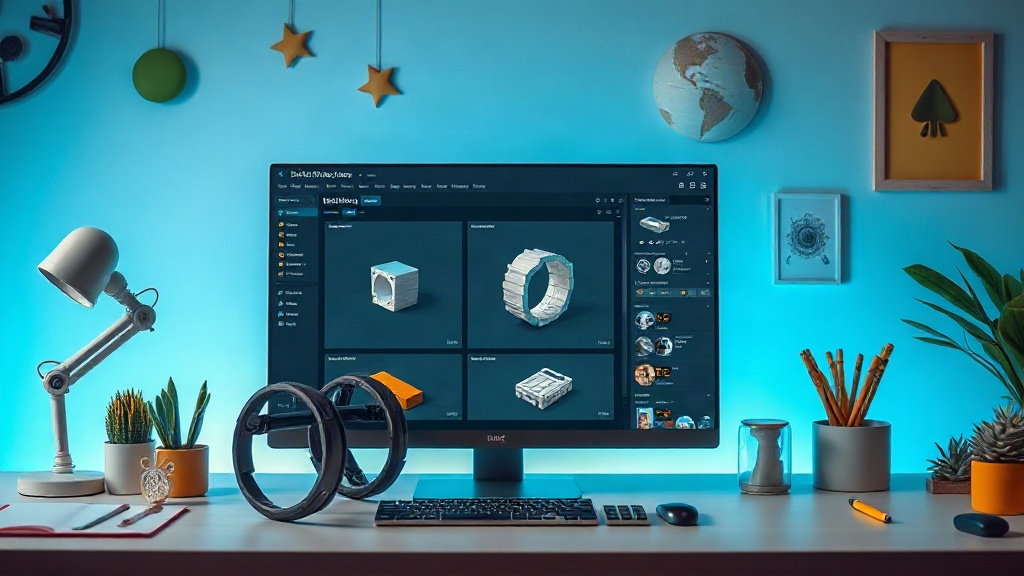
Integrated Skills for a Unified Pipeline
Hi3D Agent boasts a set of reusable “skills” that enable it to perform a variety of complex operations. These skills are designed to handle tasks such as optimizing high-polygon models for real-time performance, a critical step for game development and interactive experiences. It can also transform raw generated meshes into production-ready assets, complete with appropriate UV mapping and texturing. The agent’s capability to turn complex, high-poly models into optimized, playable demos suggests a direct pipeline into game development workflows, potentially reducing the time spent on asset conversion and performance tuning.
The company highlights a specific workflow demonstrated on its product page, which illustrates the agent’s end-to-end process. This workflow covers the generation of a 3D model, its iterative revision based on user feedback or predefined parameters, and its finalization. The agent is not merely a generative model; it is positioned as a workflow orchestrator, ensuring that assets are not just created but are also suitable for downstream applications. This ambitious scope, aiming to carry an asset from concept to a usable state across diverse industries like gaming, animation, design, and manufacturing, sets it apart from more narrowly focused AI 3D tools.
Beyond Generation: Refinement and Application
A key differentiator for Hi3D Agent is its focus on the entire asset lifecycle, not just initial creation. The integration of geometry, texture, and mesh refinement tools means the agent can take a raw AI-generated output and polish it to meet professional standards. This includes tasks like retopology, UV unwrapping, and texture baking, which are often time-consuming manual processes. The agent’s ability to perform these refinements automatically, guided by the LLM’s understanding of the desired output, could significantly accelerate production schedules.
Furthermore, the agent’s capacity to prepare models for specific applications is noteworthy. For game developers, this means generating assets optimized for engines like Unity or Unreal Engine, complete with LODs (Levels of Detail) and appropriate material setups. For animators, it might involve rigging or ensuring clean topology for deformation. For designers and 3D printing enthusiasts, it means ensuring watertight meshes and accurate dimensions. This adaptability suggests that Hi3D Agent is not a one-trick pony but a versatile assistant capable of understanding the nuances of different 3D pipelines.
Creator Rewards Initiative
Accompanying the launch of Hi3D Agent is a “Creator Rewards Initiative.” While details are sparse, this suggests Hi3D is looking to incentivize adoption and contribution from the 3D artist community. Such initiatives often involve rewarding creators for developing new skills for the agent, contributing high-quality assets generated by the agent, or providing valuable feedback. This approach not only helps build a community around the product but also crowdsources the development of new capabilities and use cases, effectively turning users into co-developers.
The platform currently offers a Windows client, indicating its initial target audience and operating system compatibility. The success of Hi3D Agent will likely depend on its ability to deliver on the promise of a truly integrated and automated 3D workflow, reducing the technical barriers and time investments traditionally associated with 3D asset creation. The integration of LLMs into these complex visual pipelines is a growing trend, and Hi3D Agent’s comprehensive approach positions it as a potentially significant player in this evolving landscape.
What remains to be seen is how effectively the agent handles complex or highly stylized artistic requirements that often demand human intuition and subjective judgment. While AI excels at pattern recognition and optimization, capturing unique artistic intent can be a challenge. Developers and artists will be watching closely to see if Hi3D Agent can bridge this gap, offering both efficiency and creative control.