The Core Problem: Ephemeral AI Agent Knowledge
Artificial intelligence agents are rapidly evolving from simple chatbots to sophisticated tools capable of complex task execution. However, a fundamental challenge persists: managing and versioning the 'knowledge' and 'skills' that empower these agents. Unlike human developers who rely on Git for code versioning, AI agents often operate with static, unmanaged, or implicitly learned capabilities. When an agent needs to perform a new task, update a tool, or access specific domain knowledge, there's no robust, auditable way to track these changes or revert to previous states. This makes debugging, collaboration, and ensuring predictable agent behavior incredibly difficult.
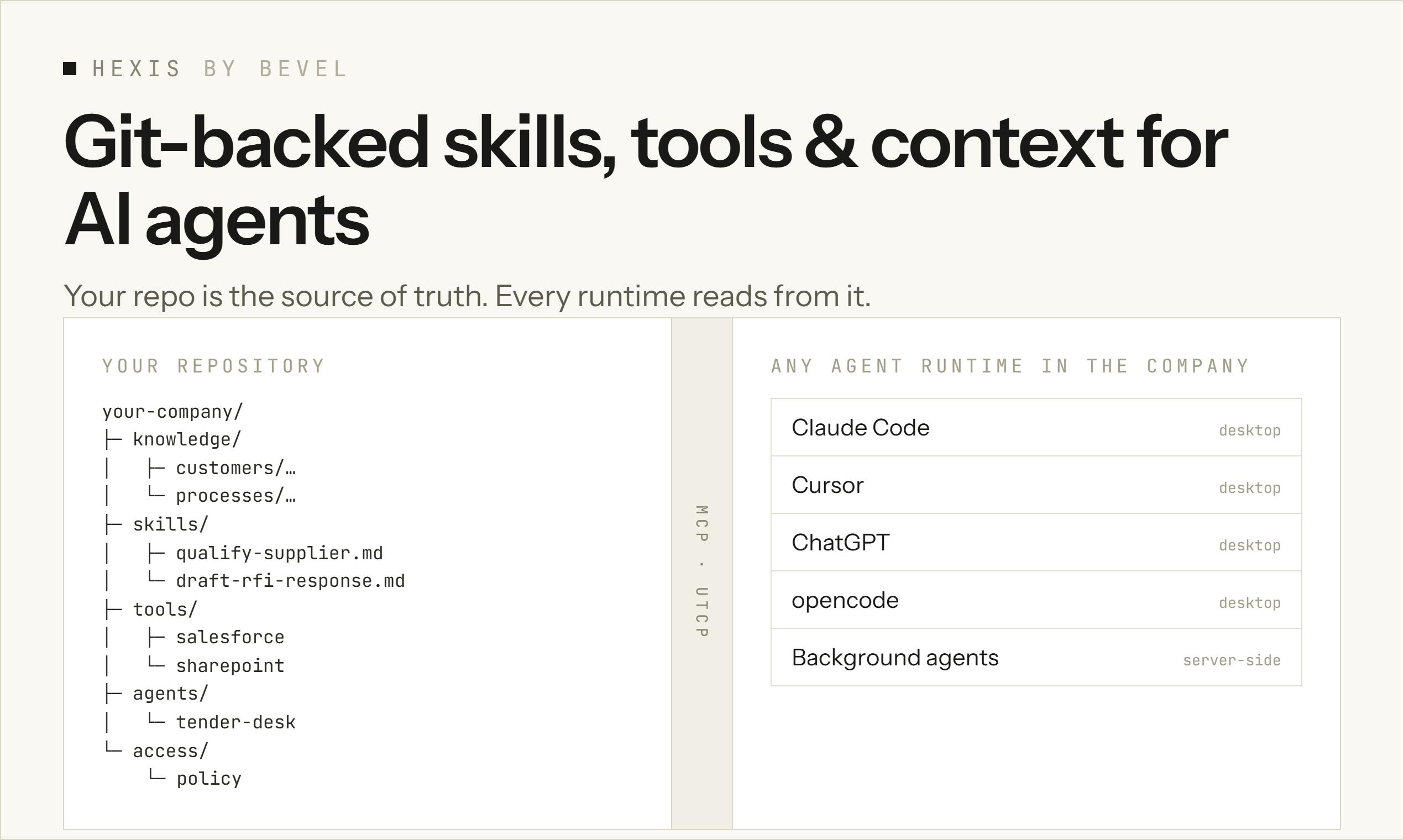
Hexis emerges to address this gap, proposing a novel approach: treating AI agent capabilities much like software development projects are managed. By leveraging a Git-like model, Hexis provides a persistent, version-controlled repository for an agent's skills, the tools it uses, and the context it requires to operate effectively.
Introducing Hexis: Version Control for AI Agents
Hexis positions itself as a Git-backed system for AI agents. This means that the core components of an AI agent's operational capacity – its skills, its toolset, and its contextual data – are treated as distinct entities that can be tracked, modified, and rolled back. Think of it less like a traditional database and more like a structured, version-controlled knowledge base that mirrors the lifecycle of software development.
The platform aims to provide:
- Skills Management: The ability to define, refine, and version control the specific functions or behaviors an AI agent can perform. This could range from executing API calls to performing complex data analysis or creative generation.
- Tool Versioning: Agents often rely on external tools or internal modules. Hexis allows these tools to be versioned, ensuring that an agent always uses the correct, intended version of a tool, preventing compatibility issues or unexpected behavior.
- Contextual Data Versioning: AI agents require context – specific datasets, user preferences, or domain-specific information – to operate. Hexis enables this context to be versioned, allowing agents to access historical or specific contextual states as needed.
The underlying principle is to bring software engineering best practices to the AI agent development lifecycle. This includes the ability to branch, merge, commit, and revert changes, providing a much-needed layer of discipline and traceability.
Potential Use Cases and Implications
The implications of a Git-backed system for AI agents are far-reaching. For developers building and deploying AI agents, Hexis offers:
- Reproducibility: Ensuring that an agent's behavior can be reproduced by reverting to a specific version of its skills, tools, or context. This is critical for debugging and auditing.
- Collaboration: Multiple developers or teams can work on different aspects of an agent's capabilities simultaneously, using branching and merging to integrate changes safely.
- Rollbacks: If a new skill or tool update introduces errors, a quick rollback to a stable previous version becomes possible, minimizing downtime and disruption.
- Auditing and Compliance: A clear, versioned history of an agent's evolution provides an auditable trail, essential for regulated industries or for understanding how an agent arrived at a particular decision.
For creators and end-users of AI agents, this translates to more reliable, predictable, and trustworthy AI assistants. The ability to understand and potentially revert an agent's 'state' could fundamentally change how users interact with and trust AI systems.
The Unanswered Question: Agent Autonomy vs. Version Control
While Hexis brings much-needed structure, a significant question remains: how does this model scale with increasingly autonomous AI agents? As agents become more capable of self-modification and learning in real-time, maintaining a strict, human-defined Git-like version control system might become a bottleneck. The surprising detail here is not the concept itself, but the potential tension between structured versioning and the emergent, adaptive nature of advanced AI. Will Hexis offer mechanisms for agents to propose and commit their own changes, or will it primarily serve as a tool for human developers to manage agent evolution?
The platform's success will likely depend on its ability to strike a balance between providing robust control and allowing for the dynamic, adaptive learning that defines modern AI agents. The ambition is to make AI agent development as manageable and reliable as software development, a goal that has significant implications for the future of AI deployment.