
From Raw Text to Structured Narrative Analysis
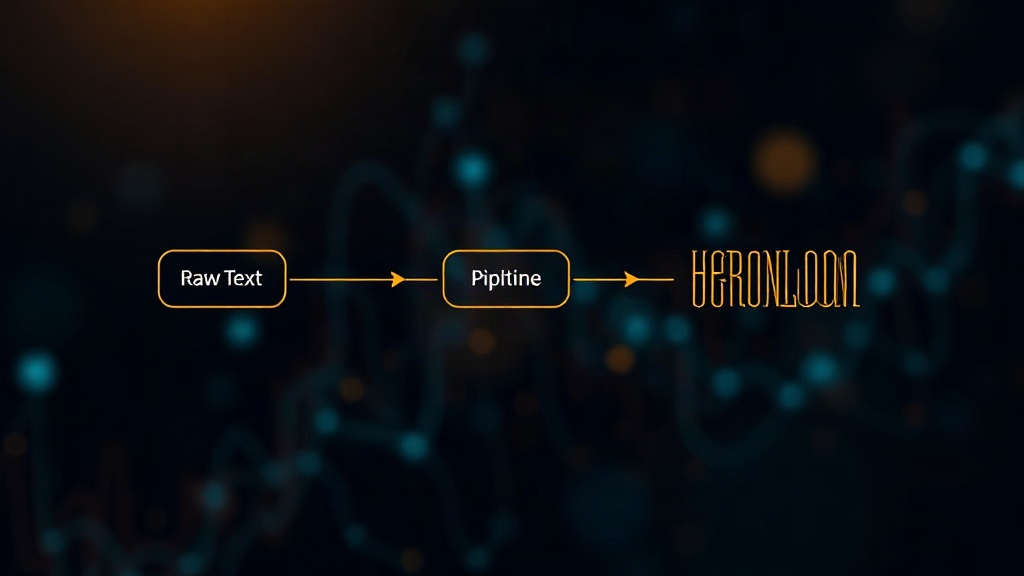
The challenge of understanding massive datasets of unstructured text, from social media discussions to internal documents, has long been a bottleneck for analysts. Traditional keyword searches and basic sentiment analysis often miss the nuances, the underlying narratives, and the evolving trends within these conversations. HeronLoom, a new tool detailed on Dev.to, aims to bridge this gap by transforming raw text into a structured narrative analysis. This approach allows users to not only identify trends and measure sentiment but also to ask complex questions about the corpus in natural language, regardless of the original language of the posts.
At its core, HeronLoom processes a corpus of text, such as social media posts or documents, and distills them into a coherent narrative. This means it goes beyond simple word frequency or positive/negative scores. Instead, it attempts to map out the relationships between ideas, the progression of topics, and the prevailing sentiments as they shift over time. The system is designed to be multilingual, meaning it can ingest and analyze text from various linguistic sources, presenting the findings in a unified, understandable format.
Consider the sheer volume of data generated daily on platforms like Reddit. For instance, the GameStop short squeeze in January 2021 saw an explosion of posts on subreddits like WallStreetBets. Manually sifting through tens of thousands of these posts to understand the sentiment, identify key talking points, and track the evolution of the narrative would be an insurmountable task. HeronLoom proposes a solution that automates this process, providing a structured output that can be queried directly.
The GameStop Short Squeeze: A Case Study
The effectiveness of HeronLoom is demonstrated through a complete run on the WallStreetBets subreddit, analyzing 43,976 posts related to the January 2021 GameStop short squeeze. This event was characterized by a rapid, meme-fueled surge in the stock price, driven by retail investors coordinating on social media. Understanding the dynamics of this event requires more than just knowing if posts were positive or negative; it necessitates grasping the collective sentiment, the specific arguments being made, the targets of the discussion (e.g., hedge funds, specific stocks), and how these elements changed as the situation unfolded.
HeronLoom's analysis of this corpus would aim to reveal:
- The key themes and narratives that emerged during the squeeze.
- The dominant sentiment towards specific actors (e.g., WallStreetBets users, hedge funds, specific stocks like GME).
- The evolution of user behavior and communication strategies over the period.
- Identification of influential posts or users that shaped the discussion.
By structuring this data, HeronLoom enables users to ask specific, analytical questions. The Dev.to post highlights two such questions asked to the system using the GameStop corpus. While the exact questions are not provided in the excerpt, the implication is that they would be complex queries that probe the narrative structure, such as “What were the primary arguments used to justify holding GME shares as the squeeze intensified?” or “How did the sentiment towards short-sellers change from the beginning to the peak of the event?” This capability transforms raw data into actionable insights, moving beyond descriptive statistics to diagnostic and even predictive analysis.
Asking Complex Questions of Text Data
The true power of HeronLoom lies in its ability to facilitate natural language querying of large text datasets. This is a significant leap from traditional search and analysis tools. Instead of crafting intricate search queries or relying on pre-defined dashboards, users can pose questions directly to the analyzed corpus. This makes sophisticated analysis accessible to a broader range of users, not just data scientists with deep technical expertise in natural language processing (NLP) or statistical modeling.
Imagine a financial analyst trying to understand market sentiment around a new product launch. They could feed all relevant news articles, press releases, and social media mentions into HeronLoom. Then, they could ask questions like, “What are the main concerns raised by consumers regarding the product’s pricing?” or “How does the sentiment towards the product differ across demographic groups mentioned in the text?” The system’s ability to generate a structured narrative means it can identify and synthesize information scattered across thousands of individual documents or posts.
The underlying technology, accessible via a GitHub repository (HeronLoom), suggests an open-source approach, which is common for tools aiming to foster community development and broader adoption. This allows developers and researchers to inspect the methodology, contribute to its improvement, and integrate it into their own workflows. The fact that the system handles corpora of tens of thousands of posts indicates a level of scalability that is crucial for real-world applications.
Implications for Trend Analysis and Predictive Modeling
HeronLoom’s approach has significant implications for how we analyze trends and potentially predict future outcomes. By providing a deeper understanding of narrative structures and sentiment evolution, it can offer more accurate forecasting than methods that rely on surface-level metrics. For example, in marketing, understanding the nuanced sentiment and narrative around a brand or product can help predict shifts in consumer behavior or identify emerging market segments.
In the realm of cybersecurity, analyzing threat intelligence forums or dark web communications could reveal evolving attack vectors and threat actor motivations. In political science, tracking public discourse on policy issues could provide early indicators of public opinion shifts. The ability to ask targeted questions also allows for rapid hypothesis testing. If a researcher suspects a particular narrative is gaining traction, they can directly query the system to confirm its presence and measure its prevalence and sentiment.
The surprising detail here is not just the capability of analyzing trends and sentiment, but the explicit emphasis on turning unstructured text into a structured narrative that can then be queried. Many tools can identify keywords or assign sentiment scores. Few, if any, offer a direct interface for asking natural language questions about the emergent story within a massive dataset. This moves the analysis from a passive observation of data to an active, conversational engagement with it. What remains to be seen is how effectively HeronLoom can maintain accuracy and coherence across highly chaotic or rapidly evolving information environments, like live-updating social media feeds during a crisis.