The Race Condition Nobody Warns You About
Software development often involves concurrent operations. Developers frequently encounter situations where multiple processes or threads attempt to access and modify the same shared resource simultaneously. This can lead to unexpected behavior, data corruption, and system instability. The classic example is two instances of an AI agent, like Claude Code, trying to refactor the same repository. One might be restructuring a module while the other fixes a typo in a shared configuration file. If both agents decide to write to that configuration file within milliseconds of each other, the second write will silently overwrite the first. The first agent's changes are lost, and neither is aware of the conflict.
This problem isn't confined to AI agents or code editors. It extends to lower-level system interactions. Consider an MCP (Meta-Compute Platform) filesystem server invoked by two separate agent processes, or a run_migration tool provided by a database server, called twice in quick succession by unrelated sessions. Before Heimdall MCP's latest update, its policy system, while robust, didn't address this specific concurrency challenge directly. Heimdall MCP v1.2 introduced tool-name policies, allowing administrators to specify which tools should never be invoked under certain conditions. Version 1.4 added argument-level policies, enabling finer-grained control such as preventing writes to sensitive files like /etc/passwd. However, these policies did not answer the critical question: what happens when two identical or similar operations are initiated concurrently against the same resource?
Introducing Resource Locks
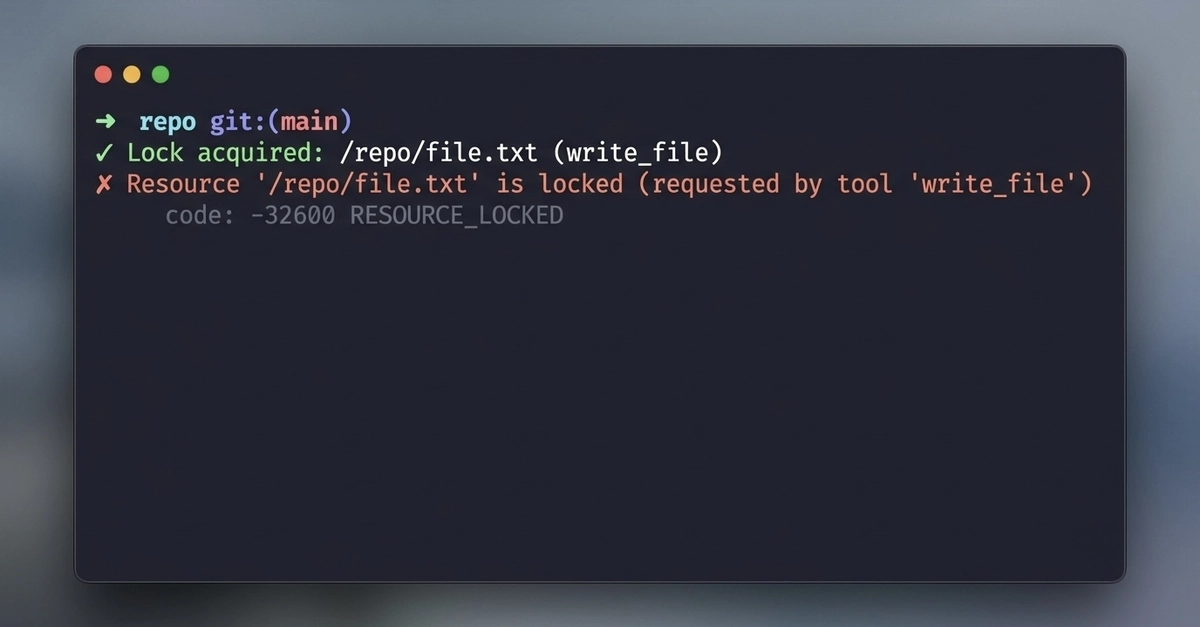
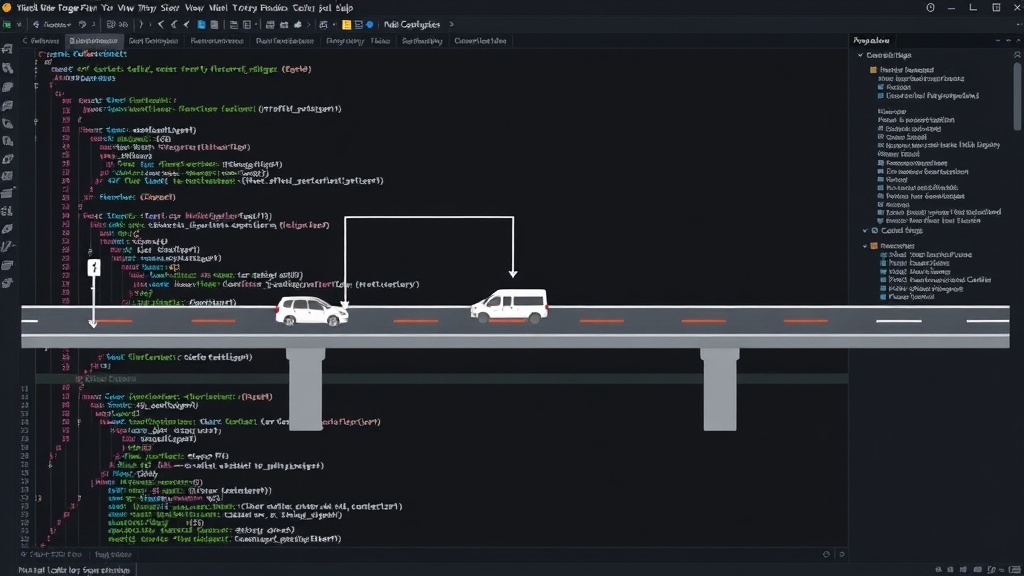
Heimdall MCP's new resource locking mechanism directly tackles this race condition. The core idea is simple: before an operation can proceed, it must acquire a lock on the specific resource it intends to modify. If another operation already holds the lock, the new operation must wait. This ensures that only one process can access and modify a given resource at any time, effectively serializing concurrent requests against that resource. This is akin to a single-lane bridge: only one car can cross at a time, preventing collisions. The bridge attendant (Heimdall MCP) manages the flow, ensuring safety.
This feature is particularly crucial for distributed systems and microservices architectures where independent components frequently interact with shared data stores, configuration files, or other critical resources. Without explicit locking, the potential for subtle, hard-to-debug race conditions increases dramatically as the system scales and more concurrent operations are introduced.
How Resource Locks Work in Heimdall MCP
The implementation involves a distributed locking mechanism that Heimdall MCP manages. When an agent or tool attempts to perform an operation on a resource (e.g., writing to a file, updating a database record, executing a migration script), it first requests a lock for that specific resource from Heimdall MCP. The lock request specifies the resource identifier and the type of operation (e.g., read, write). Heimdall MCP maintains a central registry of locks. If the resource is not currently locked, Heimdall MCP grants the lock to the requesting agent and allows the operation to proceed. The lock is held until the operation completes or is explicitly released.
If the resource is already locked by another agent, the new request is queued. The requesting agent is typically put into a waiting state, potentially with a configurable timeout. Once the existing lock is released (either upon successful completion or failure of the operation), Heimdall MCP grants the lock to the next agent in the queue. This queueing mechanism ensures that operations are processed in a predictable, serialized order, preventing data corruption and maintaining system integrity.
Granularity and Configuration
The effectiveness of a locking mechanism often depends on its granularity. Heimdall MCP's resource locks can be configured to operate at various levels. For instance, a lock can be applied to an entire file, a specific directory, a database table, or even a single record within a table. The choice of granularity depends on the specific resource and the nature of the operations being performed. For example, when refactoring code, locking an entire repository might be too coarse and hinder legitimate parallel work. However, when updating a critical shared configuration file, a fine-grained lock on that specific file is essential.
Administrators can define policies for resource locking within Heimdall MCP's configuration. These policies can specify which resources are subject to locking, the type of locks required for different operations (e.g., exclusive write locks, shared read locks), and the behavior of agents when a lock cannot be immediately acquired (e.g., wait, timeout, error). This flexibility allows organizations to tailor the locking strategy to their specific needs, balancing concurrency requirements with the need for data consistency and integrity.
The surprising detail here is not the introduction of locks themselves, which are a standard concurrency primitive. It's that Heimdall MCP, a system often operating at the intersection of diverse tools and agents, is formalizing and enforcing these locks at a platform level. Previously, developers had to rely on individual tools or custom application logic to manage concurrency, leading to fragmented and often incomplete solutions. Heimdall MCP centralizes this, providing a unified approach to preventing these insidious race conditions.
Implications for Developers and Systems
The introduction of resource locks in Heimdall MCP has significant implications for how developers build and manage complex systems. Firstly, it provides a built-in safeguard against a common class of bugs that are notoriously difficult to diagnose and fix. By ensuring that only one operation modifies a resource at a time, developers can have greater confidence in the integrity of their data and system state.
Secondly, it simplifies the development of concurrent applications. Instead of implementing complex manual locking mechanisms within each application or agent, developers can leverage Heimdall MCP's centralized system. This reduces code complexity, minimizes the risk of implementing locks incorrectly, and promotes consistency across different components of the system. If you run a team that relies on shared resources managed by MCP, you can now offload much of the burden of concurrency management to the platform itself.
For system administrators and platform engineers, this feature offers enhanced control and predictability. They can enforce consistent concurrency policies across all agents and tools interacting with critical resources, reducing operational risk and improving system stability. The ability to define granular locking policies means that performance can be optimized by avoiding unnecessary serialization while still protecting critical data paths.
What This Means for the Future
Heimdall MCP's resource locking capability moves it beyond a simple policy enforcement engine towards a more robust orchestration and safety layer for distributed computing environments. As AI agents become more sophisticated and autonomous, the need for reliable mechanisms to prevent them from interfering with each other becomes paramount. This feature is a significant step in that direction.
The question that remains is how broadly this concept will be adopted. Will other orchestration platforms and middleware solutions follow suit, building in similar platform-level concurrency controls? The success of Heimdall MCP's implementation could set a new standard for how concurrent operations are managed in complex, multi-agent systems, pushing the industry towards more resilient and predictable software infrastructure.