The Challenge of Event Orchestration
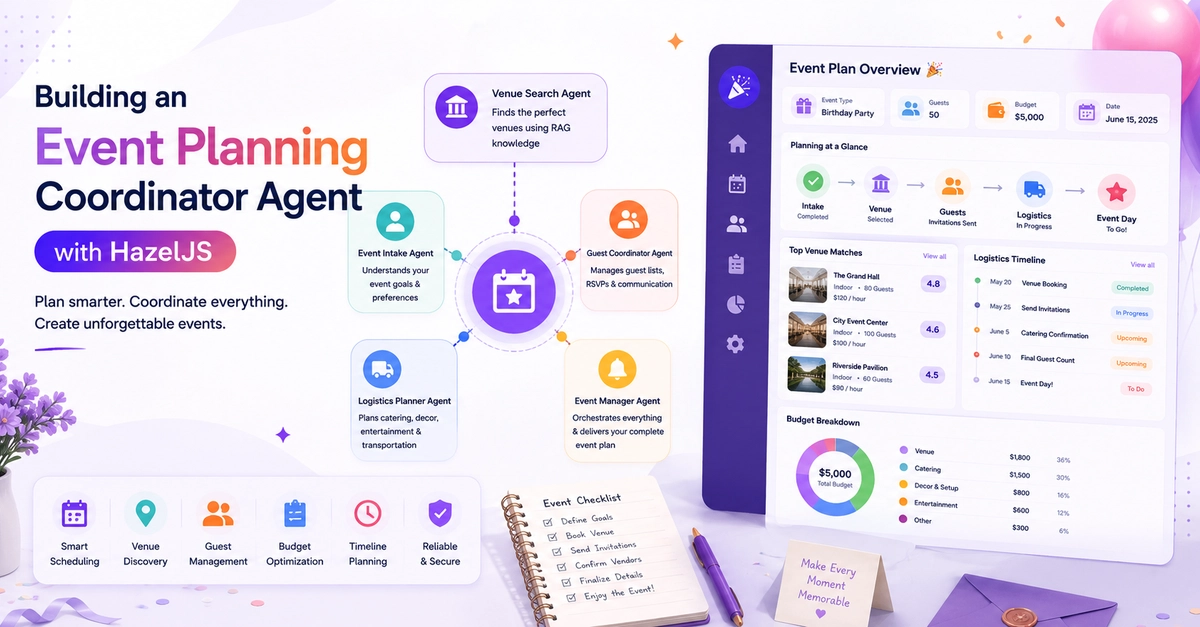
Planning an event, from intimate birthday parties to large corporate functions, is a complex undertaking. Event organizers grapple with a multitude of critical tasks that demand meticulous attention. These include identifying suitable venues that meet specific criteria such as capacity, type, and budget, a process often fraught with time constraints and a lack of centralized information. Guest management is another significant hurdle, involving tracking RSVPs, dietary preferences, and ensuring timely communication. Beyond guest lists, the intricate web of logistics—catering, decorations, entertainment, and transportation—requires careful orchestration. All of this must be managed while adhering to a strict budget, a balancing act that can compromise quality or exceed financial limits if not handled expertly.
This is where intelligent agents can offer a substantial advantage. By leveraging agent-based programming, developers can create systems that automate, streamline, and optimize these complex coordination tasks. The goal is to move beyond manual spreadsheets and scattered communication channels towards a more integrated and intelligent approach to event planning.
Introducing HazelJS for Event Agents
HazelJS, a powerful JavaScript framework for building intelligent agents, provides the ideal foundation for developing such a sophisticated event planning coordinator. Its capabilities in managing state, orchestrating complex workflows, and interacting with external services make it well-suited for the demands of event management. This agent can act as a central hub, intelligently processing information and automating decisions that would otherwise consume an event planner’s valuable time.
The core idea is to model the event planning process as a series of interconnected tasks that the agent can manage. For instance, when a user inputs event requirements—like the number of guests, preferred location, and budget—the agent can initiate a venue search. This search would involve querying potential venues, filtering results based on the provided criteria, and presenting the best options to the planner. Similarly, for guest management, the agent can handle invitation sending, RSVP tracking, and even consolidate dietary restrictions, making it easier to communicate these details to caterers.

Key Agent Capabilities
An Event Planning Coordinator Agent built with HazelJS can be designed with several key functionalities:
Intelligent Venue Search
The agent can be programmed to understand nuanced venue requirements. Instead of a simple keyword search, it can perform multi-criteria filtering. This involves querying databases or APIs for venues that match not only capacity and budget but also specific amenities, accessibility features, or even proximity to public transport. The agent can learn from past successful bookings to refine future recommendations, effectively acting as an experienced venue scout.
Streamlined Guest Coordination
Managing guest lists and their associated details is a critical, time-consuming task. The agent can automate the distribution of invitations, track responses in real-time, and compile a consolidated view of guest information, including dietary needs, plus-ones, and any special requests. This data can then be seamlessly passed to catering services or other relevant vendors. The agent can also manage communication flows, sending out reminders or updates to guests automatically.
Automated Logistics Planning
Logistics form the backbone of any successful event. The agent can assist in coordinating various service providers. This includes identifying and vetting caterers based on cuisine type and reviews, booking entertainment that fits the event's theme and audience, and arranging transportation for guests or key personnel. By maintaining a clear overview of all contracted services and their timelines, the agent helps prevent scheduling conflicts and ensures smooth execution on the event day.
Budget Optimization and Tracking
A primary concern for any event planner is staying within budget. The agent can be tasked with tracking all expenses against the allocated budget in real-time. It can flag potential overspending early, suggest alternative, more cost-effective options for services, and provide regular financial summaries. This proactive approach to budget management ensures that the event remains financially viable without compromising on essential elements.
Implementation with HazelJS
Developing this agent involves defining states and transitions within HazelJS. For example, a state might be 'Awaiting Venue Selection,' and transitions could be triggered by user input of venue preferences or by the agent finding suitable options. The agent's logic would reside in its rules, which dictate how it responds to different inputs and progresses through the event planning workflow. Integration with external APIs for venue databases, ticketing platforms, or communication services would be handled through HazelJS’s messaging capabilities.
Consider the venue search: the agent receives parameters like `guestCount: 100`, `budgetPerPerson: 50`, `eventType: 'corporate'`. It then dispatches messages to potential venue service integrations. Each integration returns available venues matching the criteria. The agent processes these responses, ranks them based on internal scoring (which could include factors like past user ratings or proximity), and presents the top 3 to the event planner. This iterative process, managed by HazelJS’s state machine, ensures a dynamic and responsive system.
The surprising detail here is not just the potential for automation, but how HazelJS enables an agent to learn and adapt. By analyzing past event successes and failures, the agent can refine its recommendations for venues, vendors, and even scheduling, becoming a more intelligent and valuable tool over time. This moves beyond simple task execution to proactive advisory, a significant leap for event planning software.
The Future of Event Planning Agents
As agent technology matures, tools like HazelJS will empower developers to build increasingly sophisticated event planning solutions. These agents will not only manage logistics but also offer predictive insights, optimize resource allocation based on historical data, and provide personalized recommendations. The event planner’s role will shift from manual coordination to strategic oversight, leveraging the agent as an indispensable co-pilot. The ultimate benefit is more efficient, cost-effective, and successful events, freeing human planners to focus on creativity and client relationships.