The Limits of a Single Agent
For years, the cybersecurity AI tool Halo has operated on a single-agent model. This meant one core AI process was responsible for every aspect of a penetration test: reconnaissance, identifying vulnerabilities, executing exploits, and self-correction. While this approach successfully integrated over two dozen tools and managed engagement-specific failure caches, it's now showing the strain of trying to do too much at once. Complex engagements lead to a crowded context window, making reasoning less clear over extended periods. A single misstep in an early phase, such as a flawed assumption during reconnaissance, can cascade and negatively impact all subsequent stages of the test.
Recognizing these limitations, Halo is embarking on its next major evolution: multi-agent orchestration. This shift is not merely an upgrade; it's a fundamental architectural change designed to tackle the inherent complexity of cybersecurity engagements by breaking them down into specialized roles.
Why Splitting Up Matters for Pentesting
A comprehensive penetration test is not a monolithic task. It's a sophisticated blend of distinct cognitive processes. These include strategic planning (figuring out what to do), tactical execution (deciding who does what and in what order), active exploitation (actually performing the actions), and continuous analysis (finding exploitable weaknesses). Asking a single AI agent to excel at all these simultaneously is akin to asking a single person to be both the lead strategist, the frontline operative, and the forensic analyst of a military operation. Each role requires different skill sets, focuses, and information processing capabilities.
The multi-agent approach aims to mirror how human teams operate. By dividing the workload among specialized agents, Halo can dedicate each agent to a specific function. This specialization allows for deeper expertise and more focused processing within each domain. For instance, one agent might be solely responsible for advanced reconnaissance, another for vulnerability analysis, a third for exploit development, and so on. This division of labor promises to alleviate the context-crowding issues of the single-agent model, leading to clearer reasoning and more robust decision-making throughout an engagement.
The Five Pillars of Halo's New Architecture
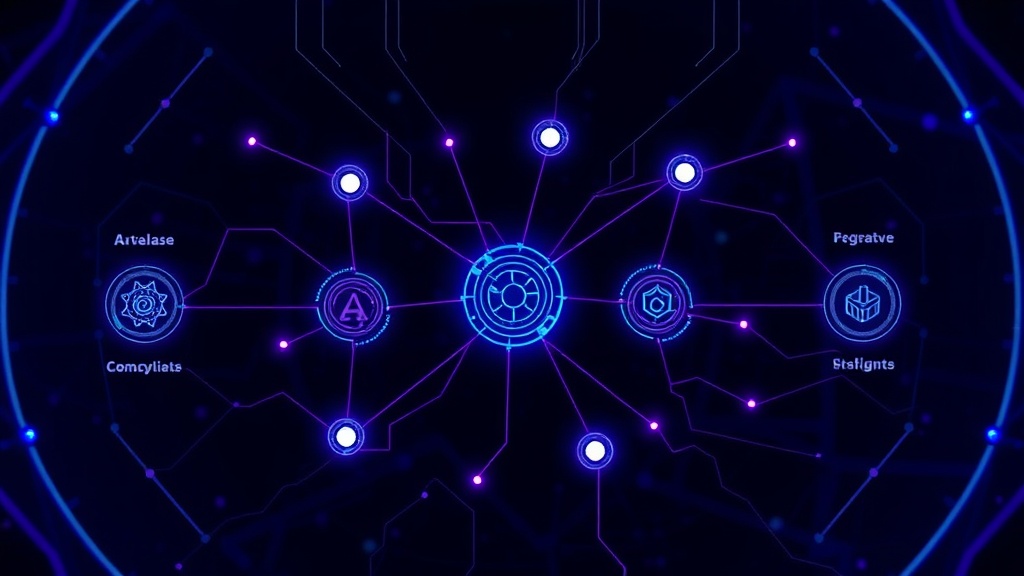
Halo's new multi-agent system will feature five distinct agents, each with a specific charter:
- The Planner: This agent is responsible for high-level strategy. It will analyze the engagement's objectives, assess the current state of the target environment, and formulate a strategic roadmap. It decides what needs to be done next, aligning actions with overall goals.
- The Executor: Tasked with carrying out the directives from the Planner. This agent focuses on operational execution, deploying tools, and performing the technical actions required by the plan. Its domain is action, not strategy.
- The Discoverer: This agent specializes in reconnaissance and information gathering. It will probe the target for new information, identify potential attack vectors, and gather intelligence that informs both the Planner and the Analyst.
- The Analyst: The core of vulnerability identification. This agent takes the information gathered by the Discoverer and the Executor, analyzes it for weaknesses, and identifies specific vulnerabilities that can be exploited.
- The Corrector: This agent acts as a quality control and self-correction mechanism. It monitors the actions of other agents, identifies errors or inefficiencies, and provides feedback for adjustment. It also manages the failure cache, learning from mistakes to prevent recurrence.
This decomposition is critical. It means that an error in the Analyst's vulnerability assessment, for example, doesn't automatically corrupt the Executor's actions or the Planner's strategy. Instead, the Corrector agent can flag the discrepancy, allowing the Planner to reassess the strategy based on more accurate information. This creates a more resilient and adaptable system, much like a human team where different members can catch each other's mistakes.
Addressing Current Limitations
The move to a multi-agent system directly addresses several key shortcomings of Halo's previous single-agent architecture. The primary benefit is the mitigation of context window limitations. By distributing the vast amount of information and task-switching required for a penetration test across five specialized agents, each agent can maintain a more focused and relevant context. This allows for deeper, more nuanced reasoning within each agent's domain.
Furthermore, the problem of a single mistake poisoning the entire engagement is significantly reduced. In a multi-agent setup, errors are more likely to be contained within the responsible agent. The feedback loop facilitated by the Corrector agent ensures that these contained errors are identified and rectified, preventing them from derailing the entire operation. This modularity makes the system more robust and less prone to cascading failures.
The implication is a more efficient, effective, and adaptable AI penetration testing tool. It moves Halo from being a single, overworked digital operative to a coordinated team, better equipped to handle the intricate and evolving landscape of modern cybersecurity threats.
What This Means for the Future of AI Pentesting
Halo's adoption of a multi-agent architecture is a significant step in the evolution of AI-driven cybersecurity. It reflects a broader trend in AI development, where complex problems are increasingly being tackled by coordinating multiple specialized models rather than relying on a single, monolithic one. This architectural shift is not just an internal improvement for Halo; it signals a potential new paradigm for automated security assessments. As AI systems become more sophisticated, the ability to decompose complex tasks into manageable, specialized sub-tasks will be crucial for achieving higher levels of performance and reliability. This move could set a new benchmark for what AI penetration testing tools can achieve, pushing competitors to adopt similar strategies to remain competitive.