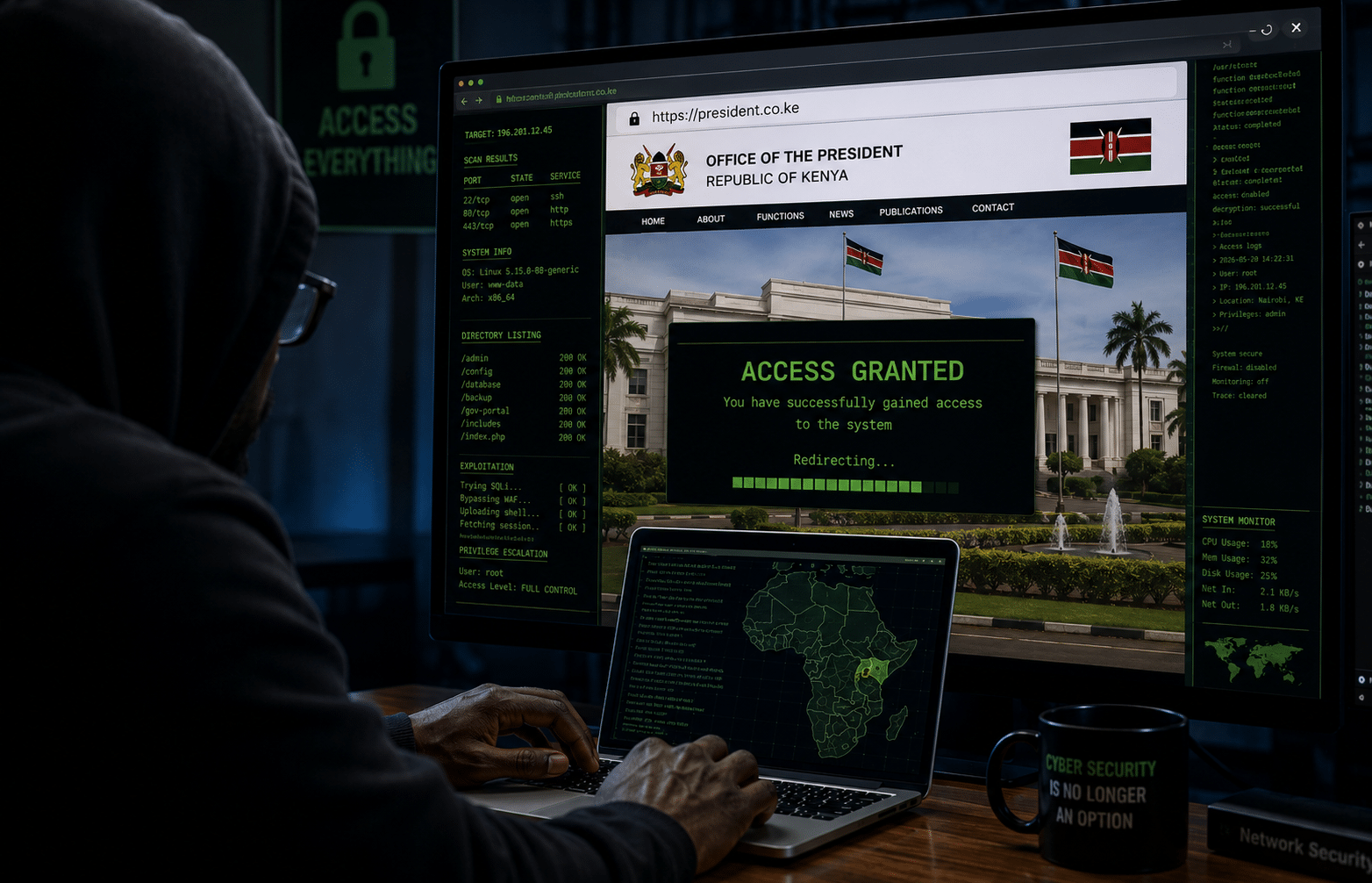
Kenyan President's Website Compromised
The official website of Kenya's president has been defaced by an unknown group of hackers. The attackers replaced legitimate content with demeaning messages targeting President William Ruto. The incident, which signifies a breach of a high-profile government digital asset, has raised immediate concerns about national cybersecurity and the protection of sensitive government infrastructure.
The group responsible for the attack has demanded a ransom of 5 Bitcoins, a sum that approximates $317,215 USD at the time of reporting. This hefty demand suggests the attackers are either highly organized and aware of the value of such a compromise, or are attempting to maximize their potential gain from the incident. The specific nature of the demeaning messages has not been fully disclosed, but their presence indicates a targeted and potentially politically motivated attack rather than a random act of vandalism.
Ransomware Tactics and Digital Security
The demand for cryptocurrency, specifically Bitcoin, is a hallmark of modern ransomware attacks. Bitcoin's decentralized nature and relative anonymity make it a preferred method of payment for cybercriminals seeking to obscure their identities and launder illicit funds. The attackers' choice of a significant ransom amount suggests they believe they have leverage, potentially by threatening to release sensitive information or to maintain access to the compromised systems if their demands are not met.
This incident highlights a critical vulnerability not just for the Kenyan government, but for governments worldwide. The defacement of a presidential website is a public and symbolic attack that can erode public trust and demonstrate a state's susceptibility to cyber threats. It underscores the ongoing global struggle to secure digital infrastructure against increasingly sophisticated threat actors.
The technical details of the breach remain unclear. It is unknown how the attackers gained unauthorized access to the website, what specific vulnerabilities were exploited, or the extent of the compromise beyond the defacement. Investigations are likely underway by Kenyan cybersecurity agencies to determine the entry point, assess the damage, and prevent future incursions. The nature of the demeaning messages could also provide clues about the attackers' motives, whether they are domestic hacktivists, foreign state-sponsored actors, or financially motivated cybercriminals.
The demand for 5 Bitcoins is substantial. This figure implies a calculation by the attackers of the potential disruption caused, the value of any data they may have exfiltrated, or simply an attempt to extract maximum profit. The cryptocurrency market's volatility means the exact USD equivalent can fluctuate, adding another layer of complexity for both the victims and the negotiators, should any be initiated.
Broader Implications and Future Preparedness
The attack serves as a stark reminder for all public institutions about the necessity of robust cybersecurity measures. This includes regular security audits, vulnerability assessments, prompt patching of software, strong access controls, and comprehensive incident response plans. The defacement of a presidential website is more than just an inconvenience; it is an act that can undermine national security and public confidence.
What remains to be seen is the response from the Kenyan government. Will they engage with the attackers, pay the ransom, or ignore the demands and focus on recovery and strengthening their defenses? The decision to pay a ransom is fraught with ethical and practical considerations, including the risk of encouraging further attacks and the potential for the attackers to provide faulty decryption keys or to have already exfiltrated data they might later leak.
This incident is part of a larger trend of state-sponsored and financially motivated cyberattacks targeting government entities globally. As governments increasingly rely on digital platforms for communication, service delivery, and administration, the security of these platforms becomes paramount. The sophistication and audacity of this attack on Kenya's presidential website underscore the persistent and evolving threat landscape that cybersecurity professionals must navigate.
The specific demeaning messages, while not detailed, likely aimed to cause maximum public embarrassment and political damage. This type of psychological warfare is often employed alongside technical breaches to amplify the impact. The attackers' success in defacing the site and publicly announcing their demands suggests a certain level of technical proficiency and a strategic approach to their operation.
Moving forward, Kenya's cybersecurity agencies will need to conduct a thorough post-mortem analysis. This includes identifying the root cause of the breach, evaluating the effectiveness of existing security protocols, and implementing necessary upgrades. The incident also presents an opportunity to review and potentially enhance international cooperation in combating cybercrime, as attribution and prosecution of cybercriminals often span multiple jurisdictions.
The demand for 5 Bitcoins, while significant, is also a potential indicator of the attackers' perceived success and the value they place on the compromised asset or any data obtained. It is a clear signal that even high-profile government websites are not immune to attack and require continuous vigilance and investment in cybersecurity.